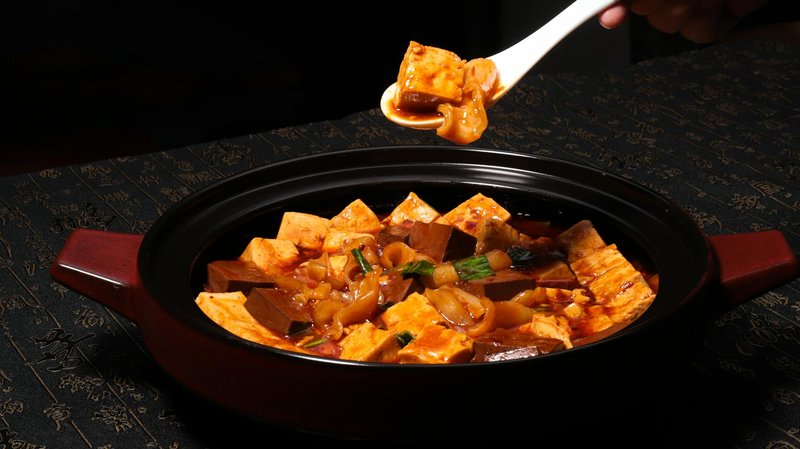
Mapo Tofu
Sichuan's mapo tofu: silken tofu cubes braised in a red-brown sauce of doubanjiang, black beans, pork mince, garlic, ginger and Sichuan peppercorns.
Overview
Silken tofu cubes are blanched briefly in salted water (firms slightly and seasons). Pork mince is fried hard in oil; doubanjiang and douchi join, cooking to release oil; garlic, ginger, chilli flakes and ground Sichuan peppercorn are toasted briefly. Stock is poured in; tofu is slipped in; gentle simmer for 5 minutes; cornflour slurry thickens. Spring onions and a final dusting of ground Sichuan peppercorn finish.
Ingredients
- 600 g silken tofu (very soft Chinese-style - not silken Japanese)
- 200 g pork mince (or beef)
- 3 tablespoons vegetable oil
- 3 tablespoons doubanjiang (Pixian fermented broad-bean paste)
- 1 tablespoon douchi (fermented black beans, rinsed and chopped, optional but classic)
- 1 tablespoon gochujang (or chilli bean sauce, optional, extra heat)
- 4 garlic cloves (very finely chopped)
- 1 thumb fresh ginger (very finely chopped)
- 1 tablespoon Shaoxing rice wine
- 350 ml chicken stock
- 1 tablespoon light soy sauce
- 1 teaspoon caster sugar
- 1 teaspoon ground Sichuan peppercorn (toasted whole then ground)
- 1 tablespoon cornflour mixed with 2 tablespoons cold water
- 4 spring onions (sliced thin)
- 1 teaspoon toasted sesame oil
- 1 teaspoon ground Sichuan peppercorn (extra, for finishing)
To serve
- 4 servings white rice
Method
Stage 1 - Prep tofu
- Cut tofu into 2 cm cubes carefully.
- Bring 1 litre of lightly salted water to a gentle simmer.
- Slide the tofu in; cook 2 minutes (firms slightly and seasons).
- Drain very gently. Set aside.
Stage 2 - Pork
- Heat the oil in a wok over medium-high.
- Add the pork mince; fry 4-5 minutes, breaking up clumps, until deep gold (almost crispy at edges).
Stage 3 - Pastes
- Reduce heat to medium. Push pork to one side.
- Add doubanjiang and douchi (if using) to the cleared half; fry 90 seconds until the oil splits and turns deep red.
- Stir into the pork.
Stage 4 - Aromatics
- Add garlic, ginger, and 1 teaspoon ground Sichuan peppercorn; cook 30 seconds.
Stage 5 - Liquid
- Pour in Shaoxing wine; let sizzle 15 seconds.
- Add stock, soy sauce, sugar.
- Bring to a simmer.
Stage 6 - Tofu
- Gently slide the blanched tofu cubes into the sauce.
- Spoon sauce over the tofu - do not stir aggressively (breaks the tofu).
- Simmer gently 5 minutes.
Stage 7 - Thicken
- Re-whisk the cornflour slurry.
- Pour into the pan in a thin stream while gently shaking the pan (rather than stirring).
- Simmer 1 minute until the sauce thickens to coat.
Stage 8 - Finish
- Drizzle sesame oil over the top.
- Scatter sliced spring onions.
- Sprinkle the remaining 1 teaspoon of ground Sichuan peppercorn over the top.
Stage 9 - Serve
- Bring the wok to the table.
- Serve over hot rice.
Notes
- Silken Chinese tofu, not Japanese: Use the very soft Chinese silken (often labelled "soft tofu" or "silken tofu" - usually in a plastic tube). Japanese silken is too delicate; medium-firm tofu doesn't have the right slipperiness.
- Don't stir-aggressively: Pushing the tofu around breaks it. Lift with a spoon, ladle sauce over.
- Ground vs whole peppercorn: Toast whole peppercorns lightly, then grind. Pre-ground loses the mala kick fast.
Storage
- Refrigerate 2 days. Reheats well, though the tofu softens further.
More like this
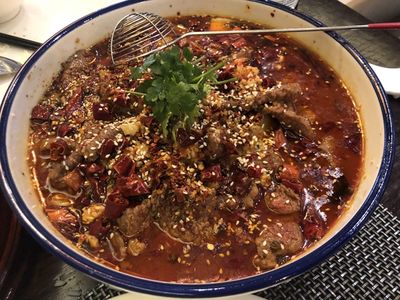
Shuizhu Niurou
Two sensations at once: the bright, immediate burn of dried chilli (la) sitting under the slow numbing-electric prickle of Sichuan peppercorn (ma). That mala pair is the whole point. Beneath that, the broth is salty and fermented-funky from doubanjiang, the deep umami of broad-bean paste that's been aged for months in clay vessels. The hot oil pour at the table is theatre but it does real work: it blooms the dried chillies and Sichuan peppercorn powder right before you smell them, so the aroma arrives in a wave. Texturally: gloriously tender silk-thin beef slices (the cornflour-and-egg-white marinade is what keeps them that way), crisp-on-the-edge bok choy or bean sprouts wilting under the heat, oil swimming on top. Easier than its restaurant-banquet reputation suggests once you have doubanjiang and Sichuan peppercorns in the pantry; the technique is mostly "don't overcook the beef" and "pour the oil while it's smoking". Originates in 1930s Chongqing as a riverboat-worker's dish, water and chillies were cheap, lean cuts of beef tough, then spread through Sichuan in the 1980s as the wider mala movement caught hold.
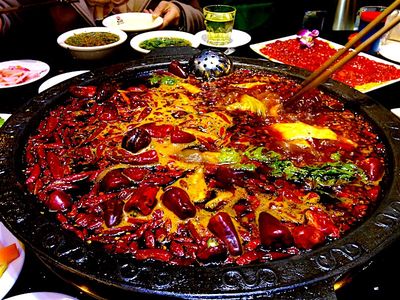
Sichuan Hot Pot
Two pots if you have them: a spicy red broth and a clear chicken broth. The red broth fries doubanjiang and chilli bean paste in beef tallow, adds Sichuan peppercorns, dried chillies, star anise, cassia, bay, ginger and garlic, then stock; simmers for 30 minutes. Diners cook their own ingredients in the simmering pot and dip in a small bowl of sesame oil + chopped garlic + coriander. The mala (numbing-hot) sensation comes from green Sichuan peppercorns + dried chilli together.
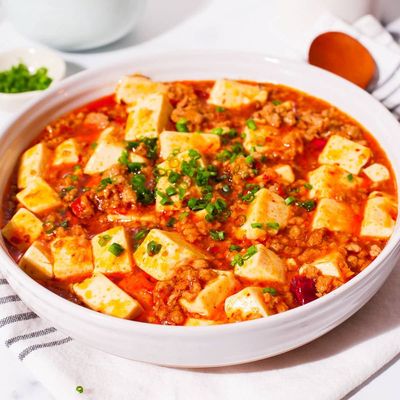
Mapo Tofu (Vegetarian)
Silken tofu poaches briefly in salted water (firms it up so it doesn't break). Dried shiitake mushrooms rehydrate and chop fine. Doubanjiang fries in oil until the oil reddens; mushrooms, garlic, ginger and chilli flakes follow. Stock loosens; tofu joins gently; cornflour slurry thickens. Sichuan peppercorn dust at the table.
Cantonese BBQ Chicken
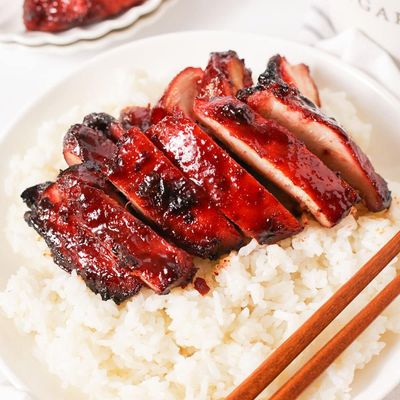
This is summer-BBQ adaptation of the lacquered red roast meats that hang in the windows of Cantonese siu mei shops. The marinade borrows from char siu (hoisin, soy, Shaoxing wine, five-spice, fermented bean curd, garlic, ginger) but pulls back on the sugar slightly because chicken does not need as much sweetness as pork shoulder. Bone-in skin-on thighs are the right cut: they stay juicy on the grill, the skin renders down and crisps, and the bones give the meat shape. A two-stage glaze does the rest. The thighs cook over indirect heat first to render the fat and set the meat, then move directly over the coals for the last few minutes while a honey-maltose mixture is brushed on repeatedly. Every brush of glaze caramelises, blackens slightly at the edges, then gets brushed again. The result is sticky-shiny with a smell that is half five-spice, half woodsmoke. Difficulty is low if you control your heat. A two-zone fire (one side coals piled high, the other side empty) is the only real requirement; on a gas grill, two burners on full and one off does the same job. Serve sliced over plain rice with sliced cucumber and a spoon of chilli oil, or stuffed into bao with hoisin and spring onion.