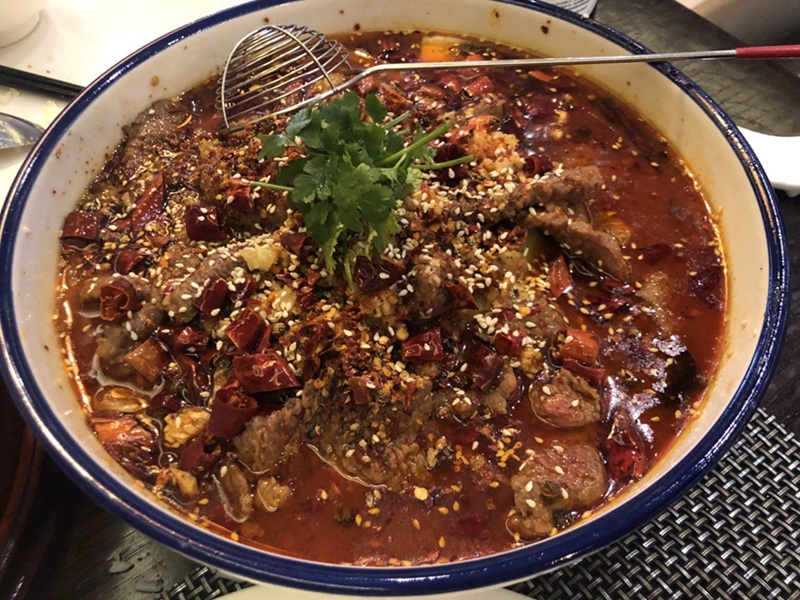
Shuizhu Niurou
Sichuan's water-boiled beef: silk-thin beef poached in a fiery doubanjiang broth, drowned in smoking chilli oil at the table.
Overview
Two sensations at once: the bright, immediate burn of dried chilli (la) sitting under the slow numbing-electric prickle of Sichuan peppercorn (ma). That mala pair is the whole point. Beneath that, the broth is salty and fermented-funky from doubanjiang, the deep umami of broad-bean paste that's been aged for months in clay vessels. The hot oil pour at the table is theatre but it does real work: it blooms the dried chillies and Sichuan peppercorn powder right before you smell them, so the aroma arrives in a wave. Texturally: gloriously tender silk-thin beef slices (the cornflour-and-egg-white marinade is what keeps them that way), crisp-on-the-edge bok choy or bean sprouts wilting under the heat, oil swimming on top. Easier than its restaurant-banquet reputation suggests once you have doubanjiang and Sichuan peppercorns in the pantry; the technique is mostly "don't overcook the beef" and "pour the oil while it's smoking". Originates in 1930s Chongqing as a riverboat-worker's dish, water and chillies were cheap, lean cuts of beef tough, then spread through Sichuan in the 1980s as the wider mala movement caught hold.
Ingredients
Beef and marinade
- 500 g beef sirloin, flank, or chuck (sliced across the grain as thinly as possible, 2-3 mm)
- 1 tablespoon light soy sauce
- 1 tablespoon Shaoxing rice wine
- 1 egg white
- 2 tablespoons cornflour (cornstarch)
- 1 teaspoon neutral oil
- ½ teaspoon salt
Aromatic broth
- 3 tablespoons neutral oil (vegetable or rapeseed)
- 3 tablespoons doubanjiang (Pixian-style Sichuan fermented chilli-bean paste)
- 2 tablespoons whole dried Sichuan chillies (broken, seeds shaken out for less heat)
- 2 teaspoons whole Sichuan peppercorns
- 25 g fresh ginger (sliced)
- 6 garlic cloves (sliced)
- 2 spring onions (white parts, cut into 4 cm batons)
- 600 ml chicken stock (or water)
- 1 tablespoon light soy sauce
- 1 teaspoon sugar
- 1 teaspoon dark soy sauce (for colour)
Bed of greens
- 200 g bean sprouts
- 200 g Napa cabbage (or bok choy), torn into wide pieces
Top dressing and finishing oil
- 3 tablespoons whole dried Sichuan chillies (broken)
- 1 teaspoon Sichuan peppercorn powder (or whole peppercorns)
- 4 garlic cloves (sliced thin)
- 2 spring onions (green parts, sliced thin)
- Handful coriander (chopped)
- 4 tablespoons neutral oil (for the final pour)
- 1 tablespoon Sichuan chilli oil with sediment (optional, for extra colour)
To serve
- Steamed jasmine rice
- Cold beer (the heat needs it)
Method
Stage 1 - Marinate the beef
- Slice the beef as thinly as you can across the grain. Freezing the beef for 30 minutes first makes this much easier.
- Combine the beef with the soy sauce, Shaoxing, egg white, cornflour, oil and salt in a bowl.
- Mix with your hand for 1 minute until the cornflour and egg white coat every slice and form a glossy slip.
- Rest 20 minutes at room temperature.
Stage 2 - Bed of greens
- Bring a wide pan of water to the boil. Salt lightly.
- Blanch the bean sprouts for 30 seconds; lift out.
- Blanch the Napa cabbage or bok choy for 60 seconds; lift out.
- Arrange the blanched greens in a wide, deep serving bowl (the kind shuizhu is traditionally served in).
Stage 3 - Fiery broth
- Heat the 3 tablespoons of oil in a wide saucepan over medium heat.
- Add the doubanjiang and stir-fry 1-2 minutes until the oil turns deep red. Don't let it scorch - keep the heat moderate.
- Add the dried Sichuan chillies, Sichuan peppercorns, ginger, garlic and spring onion whites. Stir-fry 30 seconds till fragrant.
- Pour in the chicken stock, light soy, sugar and dark soy. Bring to a simmer.
- Simmer 5 minutes to extract the flavours, then strain through a sieve into a clean pan, pressing the solids (discard solids).
- Return the broth to a gentle simmer.
Stage 4 - Poach the beef
- Add the marinated beef to the simmering broth in a single layer, one piece at a time so they don't clump.
- Poach 60-90 seconds, gently agitating with chopsticks, until each slice has just turned from red to pale brown.
- Tip the beef and broth over the bed of greens in the serving bowl. The greens will partially wilt under the hot liquid.
Stage 5 - The crackle
- Scatter the top of the bowl with the 3 tablespoons of dried chillies, Sichuan peppercorn powder, sliced garlic, sliced spring onion greens, and coriander.
- Heat the 4 tablespoons of neutral oil in a small pan until just-smoking (240°C / lightly fuming).
- Carrying the bowl to the table, pour the smoking oil directly over the dried chillies and garlic at the top of the bowl. They'll crackle, hiss and release a wave of aroma.
- Drizzle the optional chilli oil over for extra colour.
- Serve immediately, with steamed rice on the side.
Notes
- Beef cut and slicing: the most important step. Beef must be cut across the grain in 2-3 mm slices. Sirloin gives the most tender result; flank is the traditional Sichuan choice; chuck is cheapest and most flavourful but needs to be sliced thinner. Freeze the beef for 30 minutes to firm it up before slicing.
- Doubanjiang is non-negotiable: Pixian doubanjiang (the brand in the yellow tub) is the soul of this dish. No substitute gives the same fermented-chilli depth. Generic chilli bean sauce is a poor stand-in.
- The hot-oil pour is the dish: don't skip it. The smoking oil bloomed onto the dry chillies and Sichuan peppercorns is what creates the dish's signature aroma. Serve immediately so the chillies don't go soggy.
- Heat level: moderate-to-high by default. Reduce dried chillies and doubanjiang for less burn; the Sichuan peppercorns (numbing) are part of the experience and should stay at full dose.
Storage
- Best eaten immediately; the beef toughens on standing and the dramatic crackle is gone.
- The broth on its own (without beef) keeps 3 days refrigerated and can be reused as the base for a second batch.
- The flavoured oil left in the bowl is excellent the next morning over noodles with a poached egg.
More like this
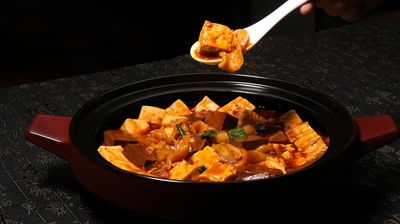
Mapo Tofu
Silken tofu cubes are blanched briefly in salted water (firms slightly and seasons). Pork mince is fried hard in oil; doubanjiang and douchi join, cooking to release oil; garlic, ginger, chilli flakes and ground Sichuan peppercorn are toasted briefly. Stock is poured in; tofu is slipped in; gentle simmer for 5 minutes; cornflour slurry thickens. Spring onions and a final dusting of ground Sichuan peppercorn finish.
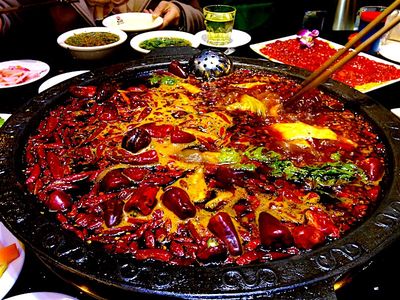
Sichuan Hot Pot
Two pots if you have them: a spicy red broth and a clear chicken broth. The red broth fries doubanjiang and chilli bean paste in beef tallow, adds Sichuan peppercorns, dried chillies, star anise, cassia, bay, ginger and garlic, then stock; simmers for 30 minutes. Diners cook their own ingredients in the simmering pot and dip in a small bowl of sesame oil + chopped garlic + coriander. The mala (numbing-hot) sensation comes from green Sichuan peppercorns + dried chilli together.
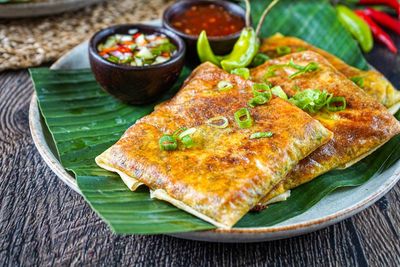
Martabak Telur
A simple flour-water-oil dough rests for 1 hour (gluten relaxes; will roll paper-thin). Filling: beef mince cooks with shallot, garlic, ginger, curry-leaf, ground spices till dry and aromatic; cools; mixes with beaten eggs, spring onion and chopped coriander just before frying. Dough divides; each portion stretches paper-thin like a strudel; filling spoons in the centre; the edges fold over to make a flat square parcel; pan-fries for 3 minutes per side. Cuts in quarters; eats with chilli-pickle sauce.
Cantonese BBQ Chicken
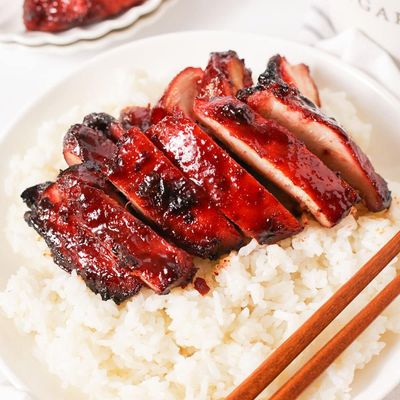
This is summer-BBQ adaptation of the lacquered red roast meats that hang in the windows of Cantonese siu mei shops. The marinade borrows from char siu (hoisin, soy, Shaoxing wine, five-spice, fermented bean curd, garlic, ginger) but pulls back on the sugar slightly because chicken does not need as much sweetness as pork shoulder. Bone-in skin-on thighs are the right cut: they stay juicy on the grill, the skin renders down and crisps, and the bones give the meat shape. A two-stage glaze does the rest. The thighs cook over indirect heat first to render the fat and set the meat, then move directly over the coals for the last few minutes while a honey-maltose mixture is brushed on repeatedly. Every brush of glaze caramelises, blackens slightly at the edges, then gets brushed again. The result is sticky-shiny with a smell that is half five-spice, half woodsmoke. Difficulty is low if you control your heat. A two-zone fire (one side coals piled high, the other side empty) is the only real requirement; on a gas grill, two burners on full and one off does the same job. Serve sliced over plain rice with sliced cucumber and a spoon of chilli oil, or stuffed into bao with hoisin and spring onion.