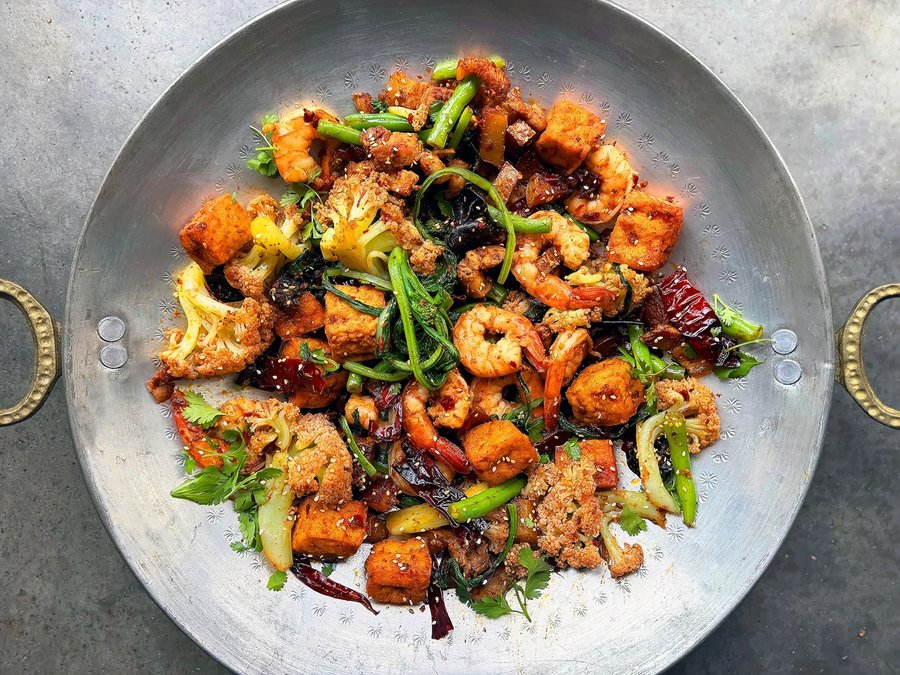
Mala Dry-Pot (Ganguo)
A heaped wok of shrimp, pork belly, fried tofu and vegetables tossed in a glossy red mala sauce, scattered with sesame seeds and toasted whole chillies. The smell is pure Chongqing street kitchen: caraway-warm cumin, citrussy Sichuan pepper, and the sweet smoke of rendered pork fat hitting hot oil.
Overview
Ganguo, literally "dry pot", is the dry sister of hotpot. Where hotpot is a communal soup simmered at the table, dry pot is a wok composition: each ingredient pre-cooked separately, then everything tossed together at the last moment in a fragrant mala sauce based on Pixian doubanjiang, fermented black beans and chilli oil. The result lands somewhere between a stir-fry, a casserole and a giant heap of bar snacks. The dish is usually credited to Chongqing in the 1990s and exploded into nationwide popularity in the 2000s; it now anchors the menu of countless ganguo restaurants where you point at ingredients on a fridge and they appear minutes later in a single-handled wok at your table. Difficulty for a home cook is low if you accept the rhythm: blanch the vegetables, sear the proteins, then build the final dish from already-cooked components. The trick is restraint with the sauce, generous heat under the wok, and the willingness to commit to a long ingredient list. The recipe is endlessly flexible: lotus root, potato, cauliflower, mushrooms, squid, chicken wings, beef, fish balls, tofu skin, whatever you have, in any combination, totalling 1-1 ½ kg.
Ingredients
Proteins
- 300 g shell-on shrimp, tails left on
- 230 g pork belly, thinly sliced
- 1 tsp Shaoxing wine
- 1 tsp light soy sauce
- 170 g fried tofu cubes
Vegetables
- 200 g Chinese cauliflower (or regular cauliflower), in florets
- 150 g baby yu choi
- 150 g green beans, trimmed and cut into 5 cm pieces
- 200 g Yukon gold potato, in 1 cm half-moons
- 2 tbsp dried wood ear mushrooms (soaked 30 minutes in boiling water)
Final stir-fry
- 60 ml roasted rapeseed oil (caiziyou) or neutral oil
- 4-5 garlic cloves, thinly sliced
- 2 cm ginger, slivered
- 4-5 dried er jing tiao chillies, torn (optional)
- ½ tsp Sichuan peppercorns (optional)
- ½ tsp cumin seeds (optional)
- 9 tbsp Sichuan mala dry-pot sauce (about 3 tbsp per 500 g of ingredients)
- 1 tbsp toasted sesame seeds, to garnish
Method
Stage 1 - Prep
- Pat shrimp dry. Toss pork belly slices with Shaoxing wine and light soy sauce; rest while you prep the vegetables.
- Cut and prep all vegetables. Drain the soaked wood ear and tear into bite-sized pieces.
Stage 2 - Blanch vegetables
- Bring a large pot of water to a rolling boil.
- Add green beans and potato; cook 1 minute.
- Add cauliflower and wood ear; cook 1 minute more.
- Add yu choy; cook 30 seconds until everything is about 75% done.
- Drain and plunge into ice water. Drain again and set aside.
Stage 3 - Sear proteins
- Heat a wok over high heat with a film of oil. Add the shrimp in one layer. Sear 30 seconds per side until just pink. Lift out and set aside.
- Wipe the wok. Add the pork belly slices and stir-fry until the fat renders and the edges crisp. Lift out, leaving the rendered fat.
Stage 4 - Build the dry pot
- Wipe the wok if needed. Add the rapeseed oil over medium-low heat.
- Add garlic and ginger; stir 20 seconds until fragrant.
- Add the optional dried chillies, Sichuan peppercorns and cumin seeds. Stir 30 seconds, watching carefully so nothing burns.
- Add the fried tofu and toss to coat.
- Add the mala dry-pot sauce. Stir 30 seconds to bloom the aromatics in the sauce.
- Return all blanched vegetables and seared proteins to the wok. Toss vigorously over high heat for 1-2 minutes until everything is hot and coated.
- Pile into a shallow bowl or serve in the wok. Scatter with sesame seeds.
Notes
- Everything cooks twice: the secret to ganguo is pre-cooking each ingredient on its own. The final toss is for coating, not cooking.
- Sauce ratio: about 3 tbsp of mala dry-pot sauce per 500 g of ingredients. Adjust to your heat tolerance.
- Don't crowd the early sears: the proteins need direct contact with hot metal. The final crowded wok is fine because everything is already cooked.
- Customise freely: lotus root, fish balls, squid, beef, chicken wings, enoki, tofu skin - anything that holds up to a quick toss works.
Storage
- Best eaten immediately; the vegetables wilt on standing.
- Leftovers keep 2 days refrigerated; revive in a hot wok with a splash of oil.
More like this
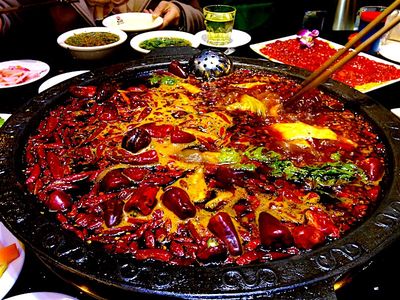
Sichuan Hot Pot
Two pots if you have them: a spicy red broth and a clear chicken broth. The red broth fries doubanjiang and chilli bean paste in beef tallow, adds Sichuan peppercorns, dried chillies, star anise, cassia, bay, ginger and garlic, then stock; simmers for 30 minutes. Diners cook their own ingredients in the simmering pot and dip in a small bowl of sesame oil + chopped garlic + coriander. The mala (numbing-hot) sensation comes from green Sichuan peppercorns + dried chilli together.
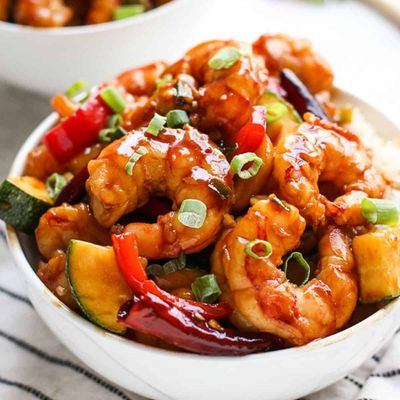
Kung Pao Shrimp
Kung pao (gongbao) shrimp is the seafood cousin of the classic Sichuan gongbao jiding, named for the 19th-century governor-general Ding Baozhen whose title was Gong Bao. Where the chicken version uses diced meat, the shrimp version keeps the prawns whole or halved so they curl into bright pink commas around the chillies and peanuts. The flavour profile is the signature Sichuan "lychee" balance: a touch of sweetness from sugar, sourness from black vinegar, salt and umami from soy, and the warm tingle (ma la) of toasted Sichuan peppercorn paired with the smoky bite of dried er jing tiao chillies. This is a fast dish, fundamentally a wok exercise: every ingredient must be prepped and lined up before the heat goes on, because once the chillies hit the oil you have maybe ninety seconds before everything is overcooked. Difficulty is moderate for a home cook with a working wok and high burner; the trick is keeping the chillies dark red and fragrant without scorching them black, and pulling the shrimp out the moment they curl. Served over plain rice it is one of the most rewarding ten-minute meals in the repertoire.
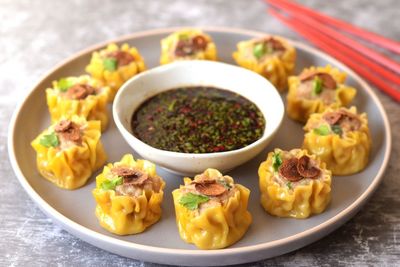
Kanom Jeeb
A filling of minced pork and chopped prawn binds with coriander root (pounded with garlic and white pepper into the traditional Thai "rak pak chee" paste), oyster sauce, soy sauce, sugar, sesame oil, and a beaten egg. The mixture chills for 20 minutes to firm. Square wonton wrappers go around the filling cupcake-style: filling in the centre, edges pulled up and pleated open around the meat, top brushed with a tiny smear of beaten egg and topped with a thin slice of carrot. Steamed in a bamboo basket over boiling water for 8 minutes. Dip is black soy sauce with sliced chilli and rice vinegar.
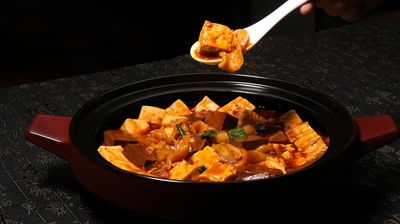
Mapo Tofu
Silken tofu cubes are blanched briefly in salted water (firms slightly and seasons). Pork mince is fried hard in oil; doubanjiang and douchi join, cooking to release oil; garlic, ginger, chilli flakes and ground Sichuan peppercorn are toasted briefly. Stock is poured in; tofu is slipped in; gentle simmer for 5 minutes; cornflour slurry thickens. Spring onions and a final dusting of ground Sichuan peppercorn finish.