In season

May produce

Tap any item to find recipes that use it.

Akara

Akara

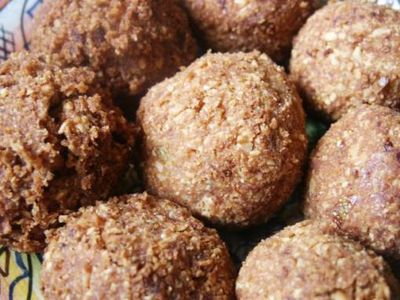
Dried black-eyed beans soak briefly to loosen the skins; the skins rub off (this is the key step, skin-on akara is bitter and grey). The peeled beans go into a blender with onion, Scotch bonnet and just enough water to make a thick batter (not a paste). The batter is whipped by hand or with a wooden spoon for 5 minutes until light and aerated, this is what makes akara fluffy rather than dense. Spoonfuls drop into 175°C oil and fry for 3-4 minutes per side until golden. Drained on paper. Eaten hot.

Snacks 1 hour 10 minutes Serves4
Alur Chop

Alur Chop

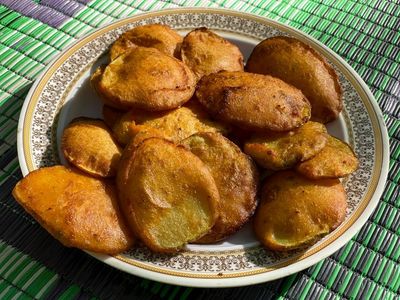
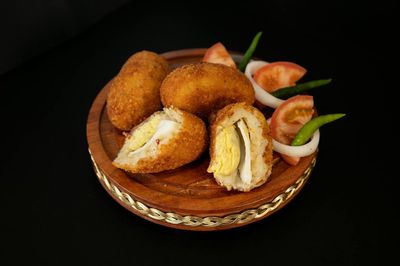
Alur chop (alu meaning potato, chop being a Bengali loan-word for a fried cutlet, inherited from the British "chop") is the workhorse of Bengali street snacks: every tea stall, every train platform, every late-afternoon adda has a stack of these warming under a glass cover. The construction is two layers. The inner mash is heavily seasoned: boiled potato folded through fried onion, ginger, green chilli, roasted cumin and a measured punch of Bengali bhaja moshla (a dry-roasted spice blend of cumin, coriander and dried chilli). Some versions add a few peanuts or roasted chana dal for crunch; in Kolkata the mash often includes a slick of mustard oil for fragrance. The outer shell is a thin chickpea-flour batter, the same family as beguni and piyaju, fried hot so it sets into a thin crisp casing rather than a heavy crust. The trick is contrast: a shell crisp enough to crackle, a centre soft and yielding and a touch wet from the onion. They are sold individually wrapped in newspaper for a few rupees and eaten standing up, often with muri puffed rice and a small dollop of kasundi (Bengali fermented mustard sauce) on the side. A monsoon and winter snack above all, when the cold air makes the hot oil and the inside-warm chop feel particularly right.

Snacks 55 minutes Serves4
Beguni

Beguni

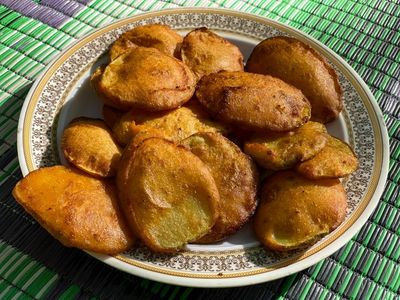
Beguni (from begun, the Bengali word for brinjal/eggplant) is the simplest of the great Bengali pakoras: long thin slices of aubergine, dipped in seasoned chickpea-flour batter and deep-fried. Done well, the contrast is everything, a shatteringly crisp shell with the lightly bitter, custard-soft eggplant inside. It is the defining iftar fritter across Bangladesh, where it appears every evening during Ramadan alongside piyaju (onion fritters) and chickpea ghugni; in West Bengal it is the tea-stall companion of muri and a monsoon-day comfort food. The technique is short on ingredients but particular: the eggplant must be salted first to draw out bitter water and prevent the slice from absorbing oil; the batter must be just thick enough to coat the back of a spoon, with the texture of double cream; and the oil must be hot enough (around 180 C) that the batter sets instantly into a crisp shell. The traditional fat is mustard oil heated until just smoking, then cooled briefly to take the raw edge off; this gives beguni its characteristic mustardy back-note. Nigella seeds (kalonji) in the batter are non-negotiable in Bangladesh, they pop slightly in the hot oil and give the fritter its distinctive aroma. Eat immediately, with a few slivers of raw onion, a green chilli and a wedge of lime.

Snacks 1 hour 5 minutes Serves4
Burmese Samosa

Burmese Samosa

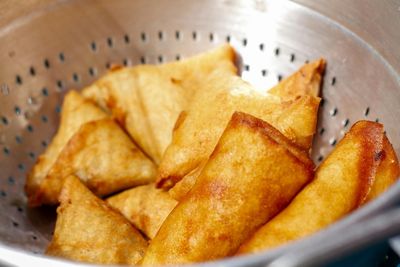
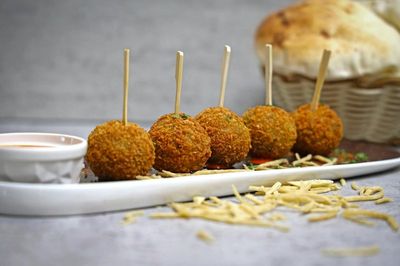
The Burmese take on the South Asian samosa, with a thinner, crisper pastry and a milder filling than its Indian cousin. You make a hot-water dough that rolls out very thin so the fried shell ends up glassy and crisp rather than bready. The filling is mild by Indian standards: turmeric, ginger, fried onion and a whisper of cumin folded into mashed potato and peas, finished with crushed peanuts for the nuttiness that marks the Burmese version. The triangles fry at moderate heat until amber and crackling, the pastry blistering as it goes. Eaten hot dipped in tamarind sauce, or torn into chunks for a samusa-thoke salad later.

Snacks 1 hour 5 minutes Serves4
Chouriço Assado

Chouriço Assado

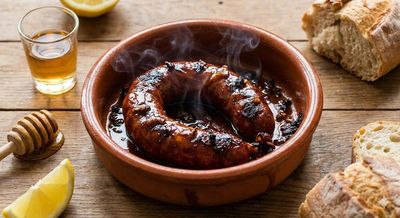
This is the sort of thing you'd order in a Portuguese tavern after the third glass of wine, when the host decides you need a bit of theatre. A whole smoky chouriço sits in a small clay dish (a pig-shaped one if you're being properly Portuguese about it, or any heat-safe dish with high sides), gets drenched in brandy, and is lit with a long match at the table. Blue alcohol flames lick at the sausage for eight or ten minutes, the paprika caramelises into the rendered oil, and the kitchen fills with smoke. Then the flames die, the chouriço gets sliced thick, and you mop up the oil with a basket of bread. You can do this at home in an iron skillet. Light it carefully, mind the your eyebrows, let it burn out on its own, and serve hot with bread, olives, and another glass of whatever you're drinking.

Snacks 15 minutes Serves4
Jhal Muri

Jhal Muri

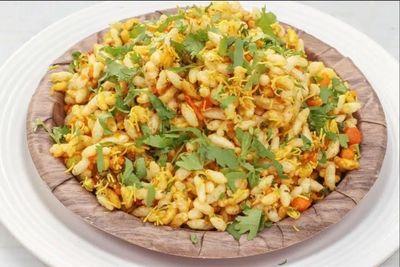
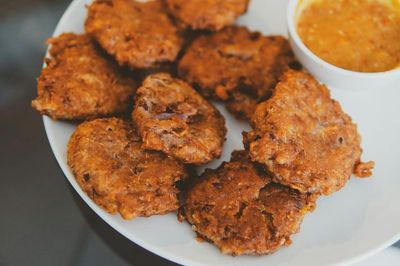
Jhal muri (literally "spicy puffed rice") is the most democratic snack in Bengal: assembled in seconds from a tin trunk by a muriwala, tipped into a rolled-newspaper cone, and eaten standing on a pavement for the price of a few rupees. The base is muri (puffed rice), and everything else is built around the principle of contrast. Raw mustard oil is the soul of the dish, sharp and nasal and slightly bitter; without it you have a salad, not jhal muri. The vegetables stay raw and crunchy, onion, green chilli, cucumber, tomato, chopped into tiny dice so each spoonful gets one of each. Peanuts and chana chur (or sev) add fat and crunch; black salt and chaat masala add the funky-tangy depth that makes Indian street snacks addictive. The lime goes in last so the puffs don't soften. This is a dish where technique matters less than ingredient quality: muri must be crisp (refresh in a dry pan if it's gone soft), mustard oil must be the proper pungent kind, and the lime must be fresh. It is everywhere in Bengal, tea-time at home, train platforms, the Maidan on a winter afternoon, and there is no recipe in any cookbook that quite captures the feel of it being mixed in front of you in a paper cone.
Snacks 10 minutes Serves2
Makdous

Makdous

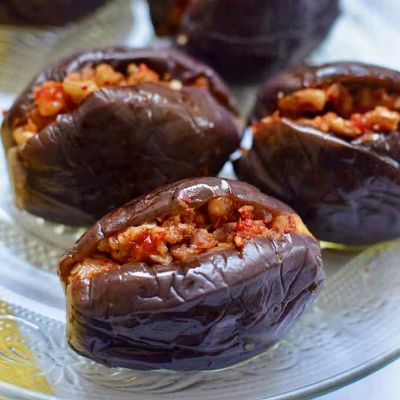
Tiny aubergines (the small Middle-Eastern variety) blanched in salted water 6 minutes until just tender. Drain. Salt and pressed under weight 4-6 hours to drain bitter water. Each aubergine slits lengthwise (don't cut all the way through). A walnut-garlic-red-pepper-paste mixture stuffs into each slit. The stuffed aubergines pack tightly into a sterilised glass jar; covered in olive oil to fully submerge. Sealed and left at room temperature for 7-21 days. The oil takes on the spice; the aubergines mellow.

Snacks 30 minutes Serves8
Pineapple Salsa with Coriander

Pineapple Salsa with Coriander

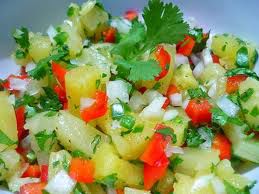
Pineapple salsa bridges sweet tropical fruit with heat and umami. The key technique here is caramelizing the pineapple in its own sugar and brown sugar, which develops deeper flavor and slight bitterness to offset the fruit's natural sweetness. Fresh red chilli provides heat, sambal oelek adds fermented chilli depth and umami, and lime juice brightens the overall composition. Fresh coriander added at the very end preserves its herbaceous aroma, the hallmark of this dish. Crucially, this salsa is served warm; warming brings out pineapple's natural sweetness and spices' aromatic qualities. Chilled pineapple salsa becomes dull and the fruit hard.

Snacks 10 minutes Serves350
Tameya

Tameya

Dried split fava beans (sold as "split foul" or "ful asfar" at Egyptian or Middle Eastern shops) soak overnight (never cooked, that's the key). Once drained, the favas are blitzed with onion, garlic, parsley, coriander, dill, leek and a generous dose of cumin, coriander and chilli into a coarse green paste. Rested for 30 minutes; baking soda mixed in for fluffiness. Patties shape between palms; pressed into sesame seeds + crushed coriander seeds; deep-fried 175°C for 2-3 minutes per side until amber-crisp. Drained and stuffed into pita with tahini, salad and pickles.

Snacks 42 minutes Serves4
Vegetable Pakora

Vegetable Pakora

Gram (chickpea) flour combines with rice flour for extra crispness, with ajwain, chilli, turmeric and a pinch of baking soda for the airy texture. Cold water makes a thick coating batter (not pancake-thin). Mixed vegetables are tossed in the batter and dropped into hot oil in clusters; each one stays loose, with crisp tendrils of onion and the soft give of potato inside. Two batches: the second fry gives the deep-fried lacquered crunch.*

Snacks 40 minutes Serves6