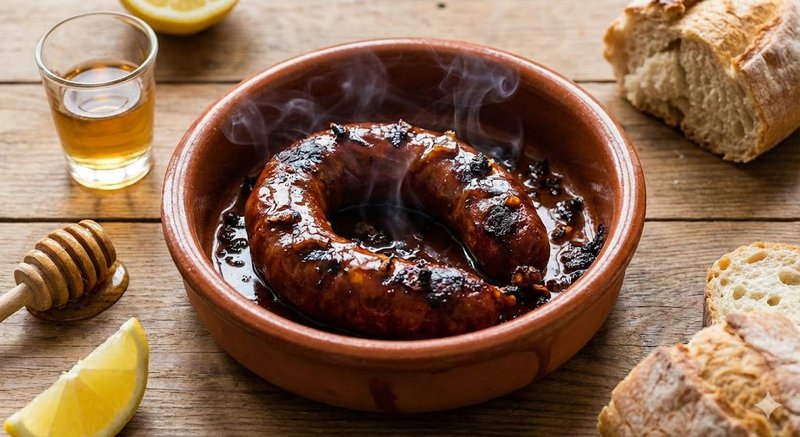
Chouriço Assado
Portugal's flame-grilled chouriço: a whole smoky sausage doused with aguardente and lit at the table. Charred, sliced thick, eaten with bread.
Overview
This is the sort of thing you'd order in a Portuguese tavern after the third glass of wine, when the host decides you need a bit of theatre. A whole smoky chouriço sits in a small clay dish (a pig-shaped one if you're being properly Portuguese about it, or any heat-safe dish with high sides), gets drenched in brandy, and is lit with a long match at the table. Blue alcohol flames lick at the sausage for eight or ten minutes, the paprika caramelises into the rendered oil, and the kitchen fills with smoke. Then the flames die, the chouriço gets sliced thick, and you mop up the oil with a basket of bread. You can do this at home in an iron skillet. Light it carefully, mind the your eyebrows, let it burn out on its own, and serve hot with bread, olives, and another glass of whatever you're drinking.
Ingredients
- 1 whole Portuguese chouriço (A few small slits in the skin)
- 60 ml rum (40% or higher)
Equipment
- 1 heavy iron pan
- A long match or BBQ lighter
To serve
- Crusty bread (slices of rustic country loaf)
- Olives (Portuguese black)
- Pickled chillies
- A dish of olive oil (small)
- A glass of vinho verde (chilled) or a young red
Method
Stage 1 - Score the chouriço
- With a sharp knife, make 4-5 shallow slits along the length of the chouriço (1 cm deep, about 4 cm apart). These let the flames penetrate and the fat render.
Stage 2 - Set up the dish
- Place the chouriço in the assador or heat-safe dish.
- Pour the aguardente / spirit over to a depth of about 1 cm in the dish bottom (the chouriço should sit in a small pool).
Stage 3 - Light (carefully)
- At the table for theatre, with care: turn off any nearby gas; ensure no flammables overhead; have a saucepan lid nearby to smother flames if needed.
- Hold a long match or lighter to the spirit; light it.
- Blue flames will rise - they're hot but controlled because the alcohol level is low and the dish contains them.
Stage 4 - Cook in the flames
- The flames cook the chouriço over 8-10 minutes.
- As the alcohol burns off, the flames die down.
- Use tongs to turn the chouriço halfway through (carefully - flames can flare).
- The skin should char in patches; the fat should render and pool below the sausage.
Stage 5 - When the flames die
- Once the flames extinguish completely (about 8-10 minutes), the chouriço should be hot through, with charred skin and a pool of paprika-orange rendered fat below.
Stage 6 - Slice and serve
- Lift the chouriço onto a board.
- Slice into 1 cm coins.
- Arrange on a plate with bread, olives, pickled chillies.
- Drizzle some of the dish oil over the slices.
- Mop the rendered oil from the dish with bread - that's the best bit.
Stage 7 - Serve immediately
- Eat warm, with the fingers.
- Pair with vinho verde, a young red, or a glass of Madeira.
Notes
- Don't substitute fresh chorizo: Portuguese chouriço is cured (dried, smoked, sliceable raw). Fresh / raw paprika chorizo (the soft cooking kind) doesn't work for this dish - it'll cook unevenly and lose its shape.
- Safety: Lighting alcohol at the table is dramatic but requires care. Don't pour MORE alcohol onto an already-flaming dish (a flame can travel up the stream into the bottle). Use a long match. Have a saucepan lid nearby to smother flames.
- The rendered fat is the best part: Don't waste it. Mop with bread, drizzle over the slices, or pool a small spoonful onto each slice.
Storage
- Eat immediately. Doesn't store.
- An un-flamed chouriço keeps cured for weeks/months wrapped in butcher's paper in the fridge.
More like this
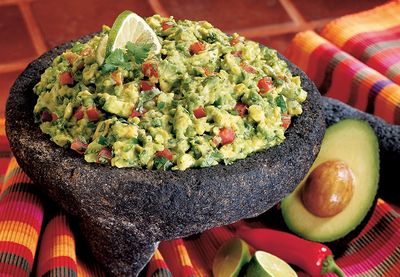
Guacamole
Avocados halve, scoop out, mash chunky (not smooth, texture matters). Onion finely chops, jalapeño deseeds and chops, coriander chops. Lime juice, salt, mix. Eat immediately or press cling film flat onto the surface to slow oxidation.
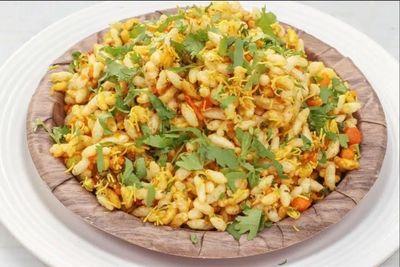
Jhal Muri
Jhal muri (literally "spicy puffed rice") is the most democratic snack in Bengal: assembled in seconds from a tin trunk by a muriwala, tipped into a rolled-newspaper cone, and eaten standing on a pavement for the price of a few rupees. The base is muri (puffed rice), and everything else is built around the principle of contrast. Raw mustard oil is the soul of the dish, sharp and nasal and slightly bitter; without it you have a salad, not jhal muri. The vegetables stay raw and crunchy, onion, green chilli, cucumber, tomato, chopped into tiny dice so each spoonful gets one of each. Peanuts and chana chur (or sev) add fat and crunch; black salt and chaat masala add the funky-tangy depth that makes Indian street snacks addictive. The lime goes in last so the puffs don't soften. This is a dish where technique matters less than ingredient quality: muri must be crisp (refresh in a dry pan if it's gone soft), mustard oil must be the proper pungent kind, and the lime must be fresh. It is everywhere in Bengal, tea-time at home, train platforms, the Maidan on a winter afternoon, and there is no recipe in any cookbook that quite captures the feel of it being mixed in front of you in a paper cone.
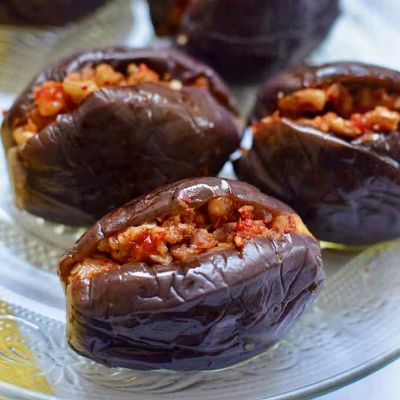
Makdous
Tiny aubergines (the small Middle-Eastern variety) blanched in salted water 6 minutes until just tender. Drain. Salt and pressed under weight 4-6 hours to drain bitter water. Each aubergine slits lengthwise (don't cut all the way through). A walnut-garlic-red-pepper-paste mixture stuffs into each slit. The stuffed aubergines pack tightly into a sterilised glass jar; covered in olive oil to fully submerge. Sealed and left at room temperature for 7-21 days. The oil takes on the spice; the aubergines mellow.
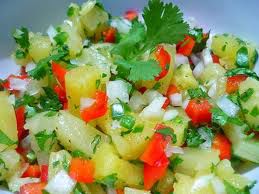
Pineapple Salsa with Coriander
Pineapple salsa bridges sweet tropical fruit with heat and umami. The key technique here is caramelizing the pineapple in its own sugar and brown sugar, which develops deeper flavor and slight bitterness to offset the fruit's natural sweetness. Fresh red chilli provides heat, sambal oelek adds fermented chilli depth and umami, and lime juice brightens the overall composition. Fresh coriander added at the very end preserves its herbaceous aroma, the hallmark of this dish. Crucially, this salsa is served warm; warming brings out pineapple's natural sweetness and spices' aromatic qualities. Chilled pineapple salsa becomes dull and the fruit hard.