Aussie Burger with Beetroot

Aussie Burger with Beetroot

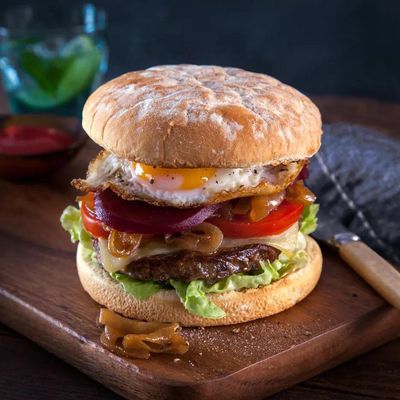
The Aussie burger, sometimes called "the lot", is a milk-bar institution that emerged in Australia in the mid-twentieth century when European immigrants and returning soldiers reshaped the corner takeaway. What distinguishes it from any American or British burger is the insistence on tinned pickled beetroot, a slice of canned pineapple, a fried egg and rashers of streaky bacon, all stacked under a thick beef patty on a toasted bun. The beetroot is non-negotiable: it stains the bread, it stains your fingers, it leaks down your wrist, and it is the entire point. The combination sounds chaotic but works because each layer plays a clear role: sweet pineapple against salty bacon, earthy beetroot against rich egg yolk, sharp tomato chutney cutting through melted cheese. The patty itself is generously sized, hand-shaped, and seasoned simply so the toppings can do the talking. Difficulty is low; the only real skill is timing several pans at once so the egg, bacon and patty all arrive hot together. This is not delicate food. It is built to be eaten leaning forward over a paper wrapper with napkins and a cold drink. Serve it at a backyard barbecue and watch grown adults negotiate the architecture of the bite.

Australian 40 minutes Serves4
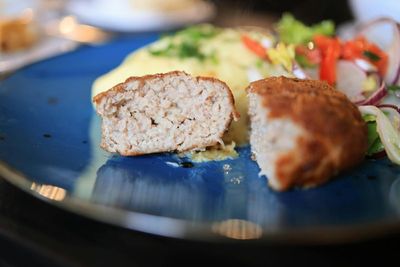
Chapli Kebab

Chapli Kebab

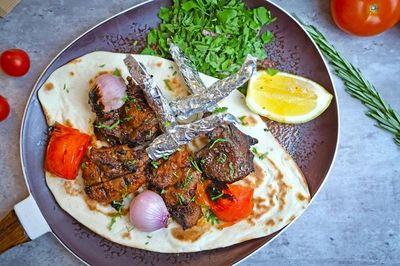
Chapli kebabs are the spiced beef patties sizzling on a wide flat tawa at any roadside grill from Peshawar to Kabul, big enough to wrap a hand around and seasoned with the unusual punch of dried pomegranate seeds and coriander. The mince mixes with grated onion, chopped fresh tomato, ginger, garlic, beaten egg and a little gram flour to bind, plus the signature Afghan spice blend (coriander seed, pomegranate seeds, chilli flakes, cumin and garam masala). A thirty-minute rest lets the gram flour absorb the moisture and the spices marry. Pat thin and wide (the word chapli means "flat" or "slipper-shaped"), then fry hard in oil three or four minutes a side until darkly crusted. Eat hot from the pan, wrapped in fresh naan with sliced raw onion and a green chutney.

Afghanistan 1 hour 10 minutes Serves4
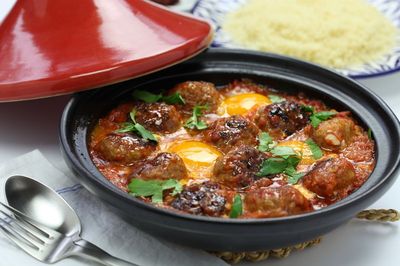
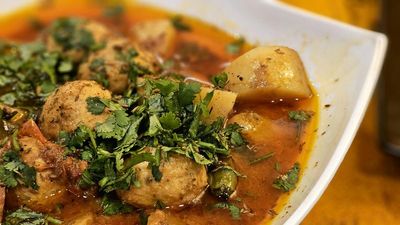
Kefta Tagine

Kefta Tagine

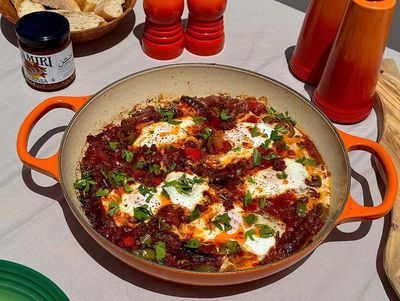
Beef or lamb mince is mixed with grated onion, garlic, fresh parsley and coriander, cumin, paprika, cinnamon, salt and pepper; shaped into small (3 cm) balls. A tomato sauce is built in the tagine: onion sweats in olive oil, garlic, cumin and paprika join, tomato passata and a stock cube simmer for 10 minutes. The meatballs are nestled in; cooked for 12 minutes turning once. Eggs are cracked into wells; lid on; 4 minutes more until the whites are just set. Scattered with parsley and served hot.

North African 45 minutes Serves4
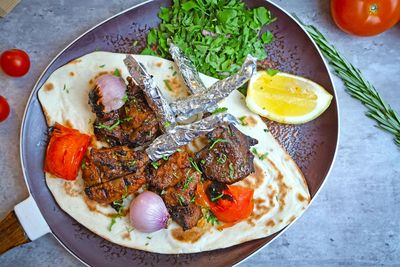
Uyghur Kebab Burger

Uyghur Kebab Burger

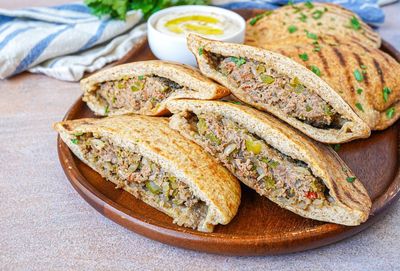
A burger that tastes like a Kashgar street kebab rather than a Western quarter-pounder. Cumin is the dominant note (Uyghur cooking uses it the way the rest of China uses Sichuan pepper); behind it sits sweet chilli powder for warmth without burn, and the lamb fat that catches a deep gold sear on the outside. The patty stays loose and juicy because the mix is bound with a single egg and a spoon of flour rather than pressed dense like a beef burger. Smell-wise: charred fat, cumin, and the sweet onion folded into the meat. Easy enough that you can do it on a weeknight as long as the mix has had its 3-hour rest in the fridge; the resting time is what makes the difference between a flat-tasting patty and one that eats like the real tonur version. The dish is a clear modern adaptation of the classic Uyghur cumin lamb kebab, scaled down for households without access to a clay tandoor, and increasingly common in cafés across Xinjiang and the Uyghur diaspora.

Uyghur 8 hours 40 minutes Serves4