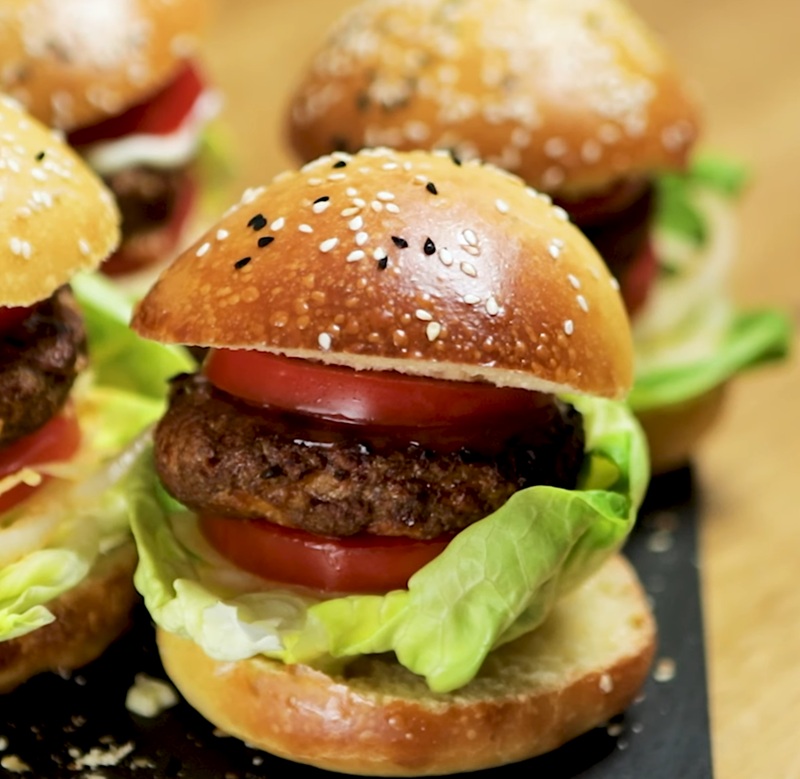
Uyghur Kebab Burger
Uyghur kebab in burger form: minced lamb seasoned with cumin and sweet chilli, grilled into thick rounds and stacked on a toasted bun with onion and tomato.
Overview
A burger that tastes like a Kashgar street kebab rather than a Western quarter-pounder. Cumin is the dominant note (Uyghur cooking uses it the way the rest of China uses Sichuan pepper); behind it sits sweet chilli powder for warmth without burn, and the lamb fat that catches a deep gold sear on the outside. The patty stays loose and juicy because the mix is bound with a single egg and a spoon of flour rather than pressed dense like a beef burger. Smell-wise: charred fat, cumin, and the sweet onion folded into the meat. Easy enough that you can do it on a weeknight as long as the mix has had its 3-hour rest in the fridge; the resting time is what makes the difference between a flat-tasting patty and one that eats like the real tonur version. The dish is a clear modern adaptation of the classic Uyghur cumin lamb kebab, scaled down for households without access to a clay tandoor, and increasingly common in cafés across Xinjiang and the Uyghur diaspora.
Ingredients
Patties
- 200 g minced lamb (ideally ~20% fat)
- 1 white onion (finely chopped)
- 1 egg
- 2 teaspoons plain flour
- 2 teaspoons sunflower oil (or olive oil)
- 1 teaspoon chilli flakes
- 2 teaspoons sweet chilli pepper powder (Aleppo, Kashmiri or Hungarian sweet)
- 2 teaspoons ground cumin
- 1 teaspoon white pepper
- 1 teaspoon salt
To build
- 4 burger buns (sesame or brioche)
- 1 white onion (sliced into thin rings)
- 1-2 ripe tomatoes (sliced)
- ½ head of lettuce (washed and torn)
- Shashlik sauce (or garlic sauce), to taste
Method
Stage 1 - Marinate
- Combine all patty ingredients in a wide bowl.
- Mix thoroughly with clean hands for 1-2 minutes until the meat is sticky and uniform.
- Cover and refrigerate at least 3 hours; overnight is much better. The seasoning needs time to penetrate.
Stage 2 - Shape
- Divide the chilled mix into 4 equal portions.
- Roll each between your palms into a ball, then flatten gently into a 2 cm-thick round patty.
Stage 3 - Cook
- Oven: preheat the grill to its highest setting for 10 minutes. Line a tray with parchment, lay the patties out, and grill on the top shelf 12 minutes per side until the edges are deeply browned (24 minutes total).
- BBQ: grill 4-5 minutes per side over hot charcoal.
- Pan: preheat a heavy pan over high heat 3-4 minutes; cook 4-5 minutes per side. Press gently with a spatula to encourage edge contact; don't press hard or the juices escape.
Stage 4 - Build
- Split the buns, lay cut-side down in a hot pan or under the grill for 1 minute to toast.
- Bottom bun: lettuce, onion rings, tomato slice.
- Patty on top.
- Sauce and another tomato slice.
- Top bun. Serve immediately.
Notes
- Lamb fat is the flavour: lean mince gives a dry burger. 20% fat is the minimum; 25-30% is better.
- Sweet chilli pepper powder: the Uyghur seasoning uses a sweet dried pepper powder, not the same as ground cayenne. Aleppo, Kashmiri or Hungarian sweet paprika are good stand-ins; Spanish sweet pimentón also works.
- Marinate or lose the flavour: the spice mix needs hours in the fridge to bond with the meat. A patty mixed and cooked the same hour tastes flat.
Storage
- Raw seasoned mix keeps 2 days refrigerated; shape and cook from there.
- Cooked patties keep 3 days refrigerated; reheat briefly in a hot pan rather than the microwave.
More like this
Chapli Kebab
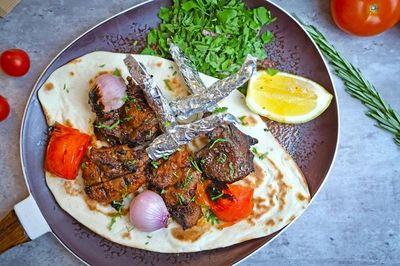
Chapli kebabs are the spiced beef patties sizzling on a wide flat tawa at any roadside grill from Peshawar to Kabul, big enough to wrap a hand around and seasoned with the unusual punch of dried pomegranate seeds and coriander. The mince mixes with grated onion, chopped fresh tomato, ginger, garlic, beaten egg and a little gram flour to bind, plus the signature Afghan spice blend (coriander seed, pomegranate seeds, chilli flakes, cumin and garam masala). A thirty-minute rest lets the gram flour absorb the moisture and the spices marry. Pat thin and wide (the word chapli means "flat" or "slipper-shaped"), then fry hard in oil three or four minutes a side until darkly crusted. Eat hot from the pan, wrapped in fresh naan with sliced raw onion and a green chutney.
Kofta Burger
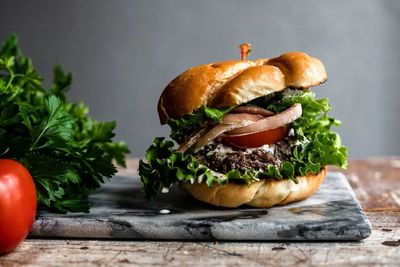
Lebanese kofta, sometimes spelled kafta, is minced lamb (often with a little beef) seasoned with grated onion, parsley and the warm spice blend known variously as baharat, sabaa baharat or seven-spice: allspice, black pepper, cinnamon, cloves, nutmeg, cumin and coriander. Traditionally it is moulded around flat metal skewers and grilled over charcoal at a mangal, where it sears fast and stays juicy. Shaping the same mince into a patty for a flatbread sandwich is a natural extension and one you will find in Beirut bakeries and Levantine takeaways from Sydney to Detroit. What makes this burger taste authentic and not just a "Middle-Eastern-spiced lamb burger" is the grated onion: pulled across a box grater so it dissolves into the mince and seasons every gram from the inside, releasing moisture as it cooks. Squeezing out the excess liquid first keeps the patty from falling apart. The sauce is a loosened tahini-yoghurt, tart with lemon and garlic, and the contrast comes from sumac-dusted onions whose sharp, almost berry-like sourness cuts through the lamb's richness. Wrap it in toasted khobz or a soft brioche, depending on the occasion. Difficulty is low. The only skill is restraint with the mince: knead just enough to bind, no more.
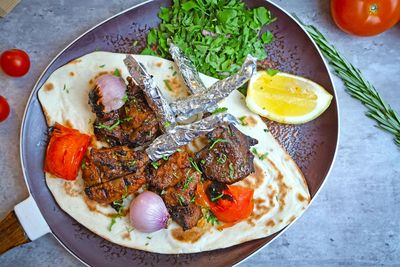
Lahori Chapli Kebab
Minced beef is mixed with crushed coriander seed, anardana (pomegranate seed) for sourness, finely chopped onion, green chilli, ginger and a generous handful of chopped fresh coriander. Egg, gram flour and a small amount of cornflour bind the mixture loosely. The patties are pressed paper-thin (chapli means slipper, after the shape) and shallow-fried hot in beef fat or oil until the edges crisp and the centre stays juicy.
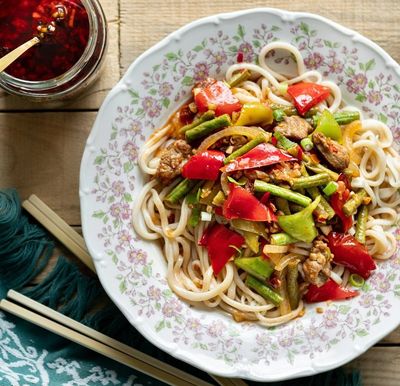
Laghman
Two distinct elements that meet at the bowl: long, springy hand-pulled noodles with the chew of fresh ramen, and a brothy lamb-and-tomato topping that's somewhere between a stir-fry and a stew. The topping reads bright and savoury more than spicy, fresh tomato and sundried tomato together giving sweetness and depth, peppers and yardlong beans for crunch, cumin and white pepper for warmth, with a single fresh chilli for gentle heat. Smell-wise it's lamb fat hitting hot oil, then tomato vines, then cumin. The noodles are the difficulty: pulling a coiled rope of rested dough into long even strands takes practice, and your first few attempts will tear. The reward is a noodle nothing like the dried equivalent, thicker, glossier, with proper pull. A signature dish across the entire Uyghur world, eaten from Kashgar to Almaty to Toronto, with each family making minor variations on the topping; the noodle technique itself is shared with the lamian tradition of Lanzhou further east, which laghman is etymologically related to.