Jhal Muri

Jhal Muri

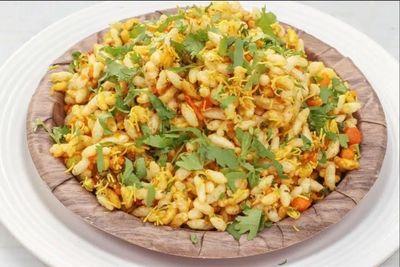
Jhal muri (literally "spicy puffed rice") is the most democratic snack in Bengal: assembled in seconds from a tin trunk by a muriwala, tipped into a rolled-newspaper cone, and eaten standing on a pavement for the price of a few rupees. The base is muri (puffed rice), and everything else is built around the principle of contrast. Raw mustard oil is the soul of the dish, sharp and nasal and slightly bitter; without it you have a salad, not jhal muri. The vegetables stay raw and crunchy, onion, green chilli, cucumber, tomato, chopped into tiny dice so each spoonful gets one of each. Peanuts and chana chur (or sev) add fat and crunch; black salt and chaat masala add the funky-tangy depth that makes Indian street snacks addictive. The lime goes in last so the puffs don't soften. This is a dish where technique matters less than ingredient quality: muri must be crisp (refresh in a dry pan if it's gone soft), mustard oil must be the proper pungent kind, and the lime must be fresh. It is everywhere in Bengal, tea-time at home, train platforms, the Maidan on a winter afternoon, and there is no recipe in any cookbook that quite captures the feel of it being mixed in front of you in a paper cone.
Snacks 10 minutes Serves2
Kabsa

Kabsa

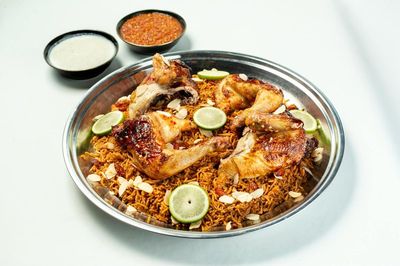
Saudi Arabia's national dish, the one platter you'll meet at almost every gathering from family lunch through wedding banquet. You brown chicken pieces or lamb shoulder hard in a heavy pot, then build a base of onion, garlic and ginger softened in the same fat, with tomato and a spoonful of baharat (or a dedicated kabsa spice mix) blooming until the kitchen fills with cardamom and cinnamon. The protein simmers in tomato and stock until it's tender and pulling away from the bone, then long-grain rice goes in to cook absorption-style in the same liquid, drinking up every layer of flavour the broth carries. You finish with almonds toasted in butter, raisins plumped briefly, and a fresh salsa of tomato, onion, chilli and parsley spooned on the side to cut the richness. Eaten communally from the centre platter, with hands or a long spoon.

Arabian 1 hour 35 minutes Serves6
Poul Ak Nwa

Poul Ak Nwa

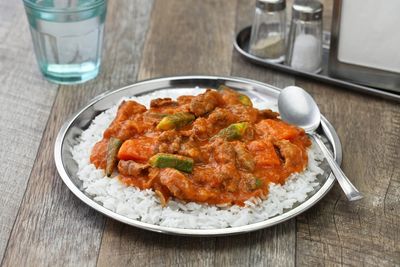
A Sunday dish from Cap-Haïtien on Haiti's north coast where cashews have been a regional cash crop since colonial times. The dish translates as "chicken with cashews" and the nut is everywhere: ground into powder and whisked into the gravy as a thickener (the technique parallels almond-and-walnut gravies in West African and Levantine cookery), and added whole-toasted near the end for texture. The flavour is unexpectedly creamy, like a cashew-cream sauce that happens to be tomato-based; mellow, sweet, faintly nutty, sat over a base of Haitian épis (the green seasoning paste of parsley, scallion, garlic, bell pepper, thyme and lime that's the foundation of most Haitian cookery). A whole habanero in the bouquet garni adds quiet heat. Smell is roasted cashews and tomato paste with thyme drifting through. Not difficult but not quick, 3-4 hours of marinating, then 45 minutes of cooking, and the bouquet garni technique (wrapping herbs in cheesecloth) gives a clean, herb-free finished sauce. Served at Haitian Sunday tables on the north coast over white rice with sliced avocado on the side; the cashew sweetness and the buttery avocado are the pairing that makes it.

Haitian 5 hours 15 minutes Serves4
Samkeh Harra

Samkeh Harra

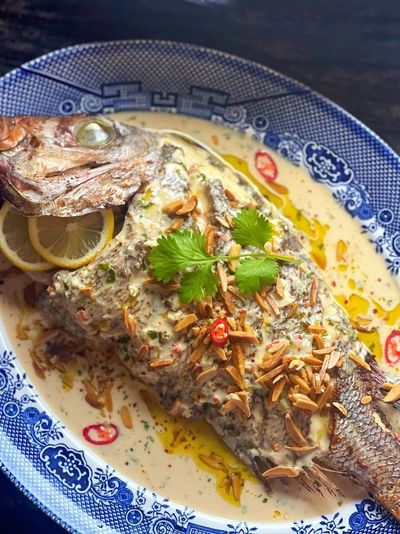
A whole fish is rubbed with salt, lemon, garlic and olive oil inside and out. While it rests, a sauce of tahini, lemon juice, water, garlic and chopped fresh coriander whisks together, adjusted with more water until the texture of pourable double cream. Diced red onion, Aleppo pepper, cumin and a pinch of cayenne fry briefly in olive oil. The tahini sauce stirs in; warms gently to a velvety consistency. The fish nestles on top in an oven dish; the sauce surrounds it; covered with foil; baked for 20 minutes; uncovered another 5-10 minutes. Topped with toasted pine nuts, pomegranate seeds and extra coriander at the table.

Palestinian 50 minutes Serves4