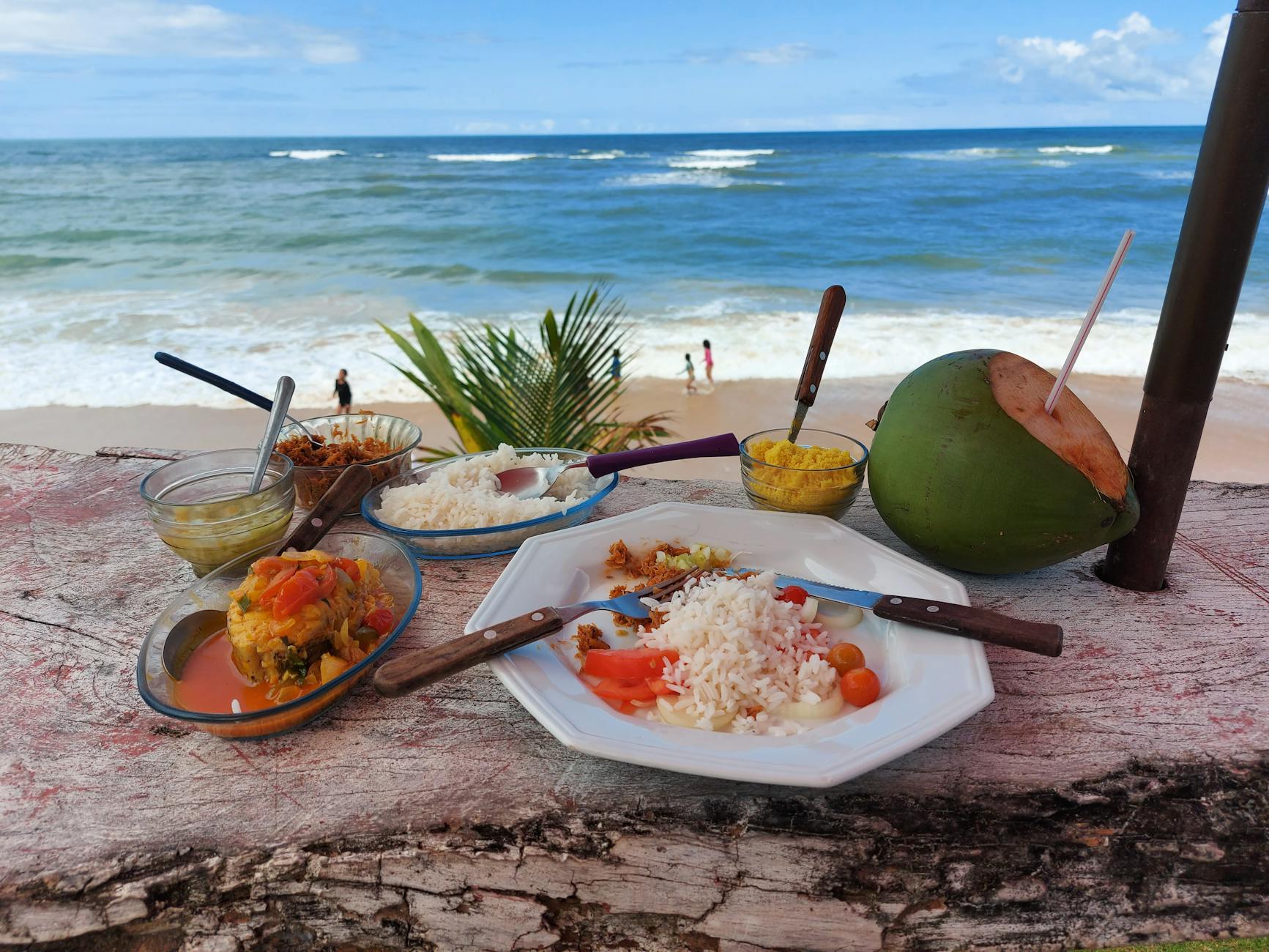
Goan Coconut Rice
Goan-style coconut rice: basmati cooked in coconut milk with bay, cinnamon and a green chilli. Mildly sweet, gently fragrant, the rice that goes alongside any Goan fish curry.
Overview
Aged basmati is rinsed and soaked. A whole-spice tempering of cinnamon, cardamom and cloves is bloomed in coconut oil with sliced onion and a slit green chilli. The drained rice is toasted briefly in the spiced oil, then half-coconut-milk and half-water is poured in for a covered steam. The grains finish white-cream coloured, faintly sweet from the coconut and warm from the whole spices.
Ingredients
- 300 g aged basmati rice (rinsed, soaked for 30 minutes)
- 2 tablespoons coconut oil (or ghee)
- 1 cinnamon stick (small)
- 4 green cardamom pods (lightly crushed)
- 4 cloves
- 1 bay leaf
- 1 onion (small, finely sliced)
- 1 green chilli (slit, optional)
- 2 garlic cloves (finely chopped)
- 300 ml coconut milk (full-fat, well-shaken)
- 300 ml water
- 1 teaspoon salt (to taste)
- A handful of fresh coriander (chopped)
Optional finish
- 30 g cashews (toasted in 1 teaspoon coconut oil)
- 15 fresh curry leaves (fried until crisp in the same oil)
Method
Stage 1 - Bloom the whole spices
- Heat the coconut oil in a saucepan with a tight-fitting lid over medium heat.
- Add the cinnamon, cardamom, cloves and bay; sizzle for 30 seconds.
Stage 2 - Soften the base
- Add the sliced onion and a pinch of salt.
- Cook for 5-6 minutes until soft and lightly golden.
- Stir in the green chilli and chopped garlic; cook for 1 minute.
Stage 3 - Toast the rice
- Drain the soaked rice well.
- Tip into the pan and stir gently for 2 minutes to coat the grains in the spiced oil.
Stage 4 - Steam
- Pour in the coconut milk, water and salt.
- Bring to a gentle boil.
- Reduce to the lowest heat, cover with a tight-fitting lid.
- Cook for 14-16 minutes (don't lift the lid; coconut milk burns at the bottom faster than water, so use a heavy-bottomed pan).
- Pull from the heat and rest, still covered, for 10 minutes.
Stage 5 - Fluff and finish
- Lift the lid and fluff with a fork.
- Discard the bay leaf and the bigger whole spices if you prefer.
- Scatter the coriander.
- Top with the optional toasted cashews and crisped curry leaves.
Notes
- Heavy pan, low heat: Coconut milk has more solids than water and burns quickly at the base. A heavy saucepan and the lowest possible flame prevents a brown bottom layer.
- Half coconut milk, half water: Pure coconut milk gives a heavy, greasy rice. The 50/50 ratio gives the flavour without the slick.
- Don't skip the soak: Soaked basmati gives the long, elongated, separate grains you want for any Goan plate.
Storage
- Refrigerate up to 3 days; reheat covered with a splash of water.
- Freezes for 2 months but the texture softens; best fresh.
Recipes mentioned here
Goan Fish Curry
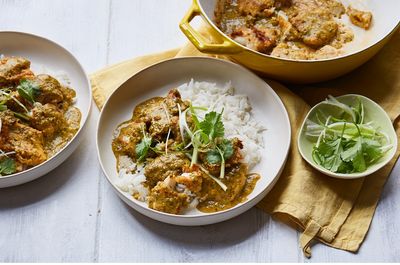
A Goan coconut masala paste is ground from soaked Kashmiri chillies, coriander seeds, cumin, peppercorns, garlic and ginger with fresh coconut and tamarind. Onion is softened in coconut oil with green chilli and curry leaves, the masala is fried until the oil separates, water and salt are added for a brief simmer, and the fish is slid into the gravy for a gentle poach. The dish is sharply acidic, deeply red and just hot enough.
Coconut Rice
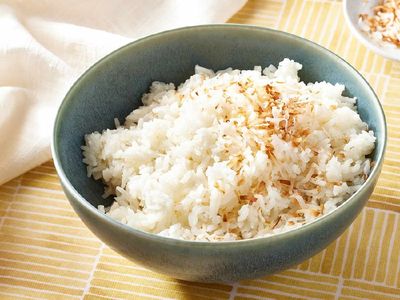
Plain steamed rice (often last night's leftovers) is the base. A hot temper of mustard seeds, urad dal, chana dal, cashews, dried red chilli and curry leaves is bloomed in coconut oil, then fresh grated coconut is folded in and warmed through. The rice is tossed through everything off the heat, so the grains stay separate and pick up flavour rather than soften.
Coconut Rice
Coconut rice represents the intersection of technique and flavor in Indian cooking. The tempering of mustard and cumin seeds in hot oil releases their volatile aromatics, which then permeate the rice as it cooks. Curry leaves contribute herbaceous depth without overwhelming the dish. Coconut cream adds richness and subtle sweetness, creating a rice that's inherently interesting yet supportive of spiced dishes. The final resting period is crucial, steam completes the cooking while the flavors meld. This rice should taste aromatic with individual grains remaining separate.
More like this
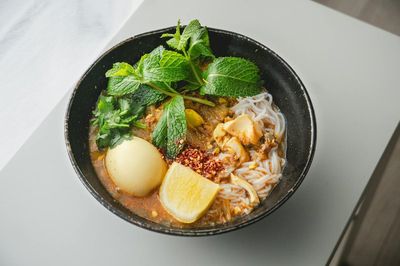
Malaysian Curry Laksa (Laksa Lemak)
A two-part dish: a deeply concentrated prawn-and-chicken stock built from roasted prawn shells, layered with a freshly pounded laksa paste of dried chilli, galangal, lemongrass and candlenuts. The two are joined with coconut cream to create a glossy, fragrant broth that bathes rice vermicelli, tofu puffs and prawns. Finished at the table with sambal, lime, fresh coriander and bean sprouts.
Goan Fish Curry
A Goan coconut masala paste is ground from soaked Kashmiri chillies, coriander seeds, cumin, peppercorns, garlic and ginger with fresh coconut and tamarind. Onion is softened in coconut oil with green chilli and curry leaves, the masala is fried until the oil separates, water and salt are added for a brief simmer, and the fish is slid into the gravy for a gentle poach. The dish is sharply acidic, deeply red and just hot enough.
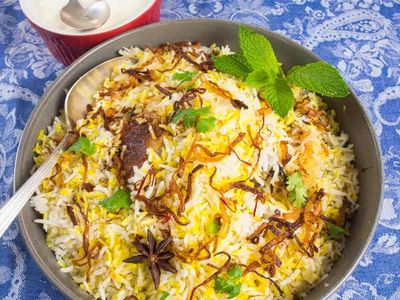
Goan Chicken Biryani
Chicken thighs are marinated overnight in a yogurt-and-vinegar paste with a freshly-ground Goan masala (Kashmiri chillies, peppercorns, cinnamon, cloves, coriander, cumin and fennel) plus a touch of toasted coconut and ginger-garlic paste. Basmati is parboiled in salted water with whole spices. Fried onions are crisped and reserved. The biryani is built in layers: marinated chicken, rice, fried onions, saffron milk, mint, coriander, repeated; sealed under a tight lid and cooked under dum for 45 minutes. Distinctively Goan: palm vinegar in the marinade and a small splash of coconut milk in the layering.
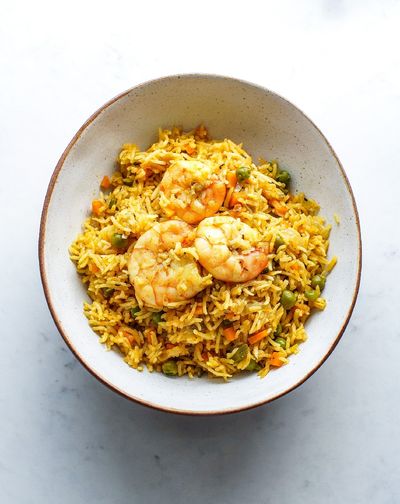
Goan Prawn Pulao
A bright green masala paste of coriander, mint, green chilli, ginger and garlic is ground with a splash of vinegar. Basmati is rinsed, soaked and drained. Whole spices and onion are softened in coconut oil, the prawns briefly seared and lifted out, then the green masala is fried into the onion before the rice is added to toast. Stock goes in for the steam; the prawns return at the end so they don't overcook.