In season

May produce

Tap any item to find recipes that use it.

Asparagus 0Rhubarb 0Peas 0Broad beans 0Radish 0Lettuce 0New potato 0Spring onion 0Watercress 0Sorrel 0
Arancini

Arancini

Cold risotto (saffron Milanese-style is traditional in arancini "alla Milanese"; plain works too) is mixed with grated parmesan and beaten egg to bind. Filling, a stew of beef-and-pork ragù with peas, OR a cube of mozzarella, sits in the centre of each ball. Hands wet with water shape the rice around the filling into a tight orange-sized ball (or cone, for the Catania style). Each ball is rolled first in flour, then in beaten egg, then in fine breadcrumbs (or in the doubled-up "panata" mix of flour + water for the Sicilian original). Deep-fried at 180°C in 4-5 cm of oil for 4-6 minutes per ball until deep gold. Drained on kitchen paper; eaten warm.

Snacks 45 minutes Serves4
Aussie Burger with Beetroot

Aussie Burger with Beetroot

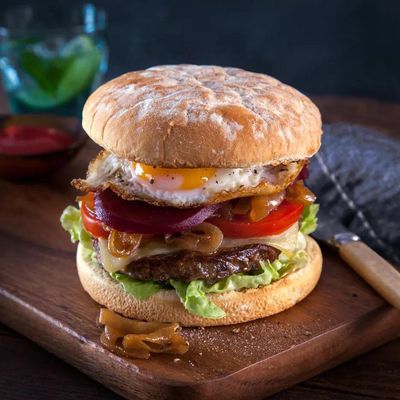
The Aussie burger, sometimes called "the lot", is a milk-bar institution that emerged in Australia in the mid-twentieth century when European immigrants and returning soldiers reshaped the corner takeaway. What distinguishes it from any American or British burger is the insistence on tinned pickled beetroot, a slice of canned pineapple, a fried egg and rashers of streaky bacon, all stacked under a thick beef patty on a toasted bun. The beetroot is non-negotiable: it stains the bread, it stains your fingers, it leaks down your wrist, and it is the entire point. The combination sounds chaotic but works because each layer plays a clear role: sweet pineapple against salty bacon, earthy beetroot against rich egg yolk, sharp tomato chutney cutting through melted cheese. The patty itself is generously sized, hand-shaped, and seasoned simply so the toppings can do the talking. Difficulty is low; the only real skill is timing several pans at once so the egg, bacon and patty all arrive hot together. This is not delicate food. It is built to be eaten leaning forward over a paper wrapper with napkins and a cold drink. Serve it at a backyard barbecue and watch grown adults negotiate the architecture of the bite.

Australian 40 minutes Serves4
Baghali Polo Ba Mahiche

Baghali Polo Ba Mahiche

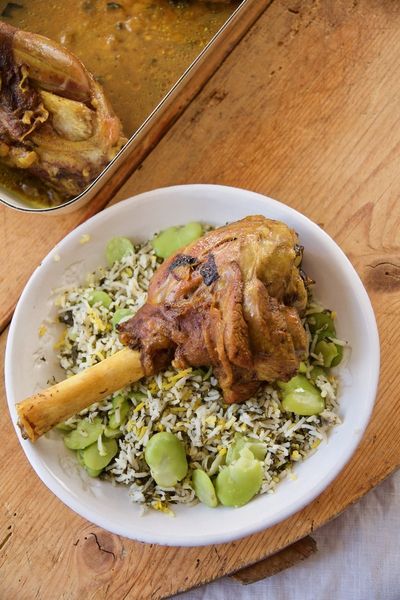
Lamb shanks brown hard; cook for 2 hours 30 minutes with onion, garlic, turmeric, cinnamon and saffron in a covered pot with a small amount of stock until fork-tender. Meanwhile, basmati rinses and soaks for 1 hour. Frozen (or fresh, podded) broad beans simmer briefly until tender; the rice parboils for 6 minutes in heavily salted water; drains. The rice layers in the cooking pot with the broad beans, dill and saffron: bottom oil-and-rice for tahdig; then a mixed layer of rice + beans + dill; another rice-and-bean-and-dill layer; topped with rice and saffron-water; lid-wrapped-in-towel; steam for 40 minutes. Plated with the lamb shanks alongside.

Persian 4 hours 30 minutes Serves4
Bangers and Mash

Bangers and Mash

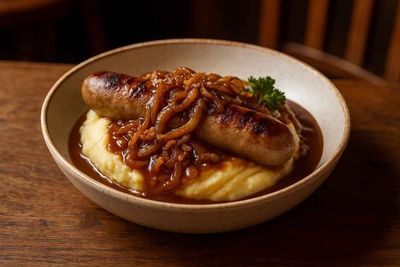
British pub comfort food in its truest form, the dish you order when the weather is grim and you want something to push the day's mood around. You slow-pan-fry good sausages so the skins blister and the fat renders properly, build a soft butter-and-milk mash that tastes of potato rather than dairy, and ladle over a dark onion gravy stiffened with mustard and a few thyme leaves. The onions need long, low cooking until they're collapsed and almost jammy; rushing them is the only way to ruin the dish. Eaten on a winter Tuesday with a pint of bitter or a glass of red, the mash mountain pushed slightly to one side so the gravy can pool around it.

British 45 minutes Serves4
Beef and Guinness Stew

Beef and Guinness Stew

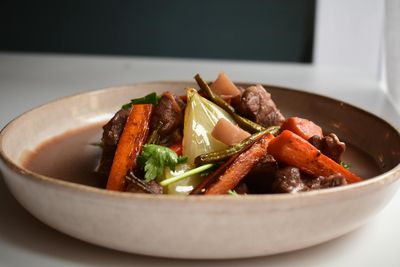
Chuck steak in big chunks, dredged in seasoned flour and browned in batches in a heavy pot until properly dark. Onions cooked low and slow in the same pot to draw out their sugar. The beef returned, a bottle of Guinness poured over with stock and a spoon of treacle, brought to a simmer and tucked into a low oven for two hours. The last half-hour gets carrots, potatoes and a handful of pearl barley to thicken the broth. Finished with parsley and a chunk of soda bread for mopping.

Irish 2 hours 50 minutes Serves6
Beef Meat Pie

Beef Meat Pie

Australia's hand-held lunch and the unofficial national snack: hot beef gravy in a shortcrust base under a flaky puff lid, eaten standing up at the footy with tomato sauce running down your wrist. You build the filling like a thick gravy: minced beef cooked down with onion, beef stock, Worcestershire, tomato and a dark roux until it's sliceable when cool. The cold-filling trick is the one rule a pie shop never breaks: never fill a pie case with hot, loose gravy, because the bottom will go soggy in the oven and your pie will leak the moment you bite it. The chilled filling goes into shortcrust bases, gets a puff pastry lid crimped sharp at the edge, and bakes hot until the top is bronzed and shattering. Eat hot from the bag with a squeezy bottle of tomato sauce, or build a proper plate around it with mushy peas and gravy.

Australian 2 hours 40 minutes Serves6
Beef Wellington

Beef Wellington

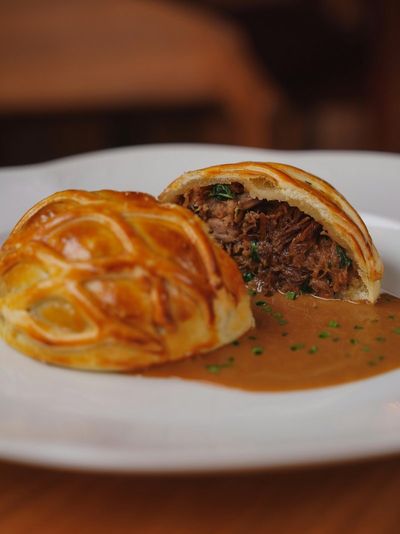
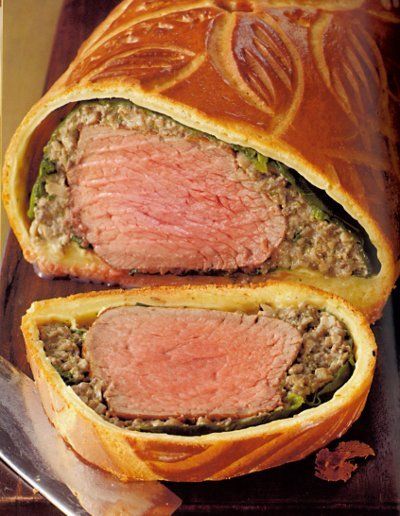
The defining British dinner-party showpiece, somewhere between French haute cuisine and English roast tradition, made famous in the modern era by Gordon Ramsay even if the Iron Duke himself probably never ate it. You sear a centre-cut beef fillet hard for colour, smear it with English mustard, wrap it in a tight blanket of mushroom duxelles and prosciutto, then encase the lot in all-butter puff pastry and roast at high heat. The pastry insulates the beef so it cooks gently to medium-rare while the crust crisps to deep mahogany above. The one technical trick the recipe insists on is drying the duxelles thoroughly so the pastry stays crisp underneath rather than going soggy from leaking mushroom water. Sliced at the table into thick rosy rounds, with a red-wine jus and roasted root vegetables on the side, the kind of plate that makes the evening feel like a special occasion before anyone says it.

British 1 hour 55 minutes Serves6
Bratwurst with Sauerkraut

Bratwurst with Sauerkraut

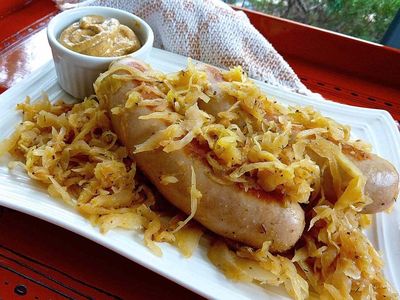
Bratwurst is less a single sausage than a whole family of them, with each German region defending its own version: long thin Nürnberger, plump Thüringer, the white veal Weisswurst of Bavaria, the smoked Frankfurter that became the American hot dog. What unites them is a fine grind of pork (often with veal), gentle seasoning of marjoram, white pepper, mace and a little caraway, and traditional natural casings. Authentic preparation matters: a raw bratwurst should never be slapped onto a screaming grill, because the high fat content scorches the outside before the inside cooks and the casing splits losing all the juice. The German method is a gentle two-stage cook: poach the sausages in barely simmering water or weak beer for 8-10 minutes until the inside is just set, then finish on a medium-hot grill for 3-4 minutes per side to colour the casing and add a touch of smoke. The accompanying sauerkraut is not the cold pickle from the jar but a warm braise: jarred kraut squeezed, then simmered with onion, bacon fat or butter, caraway seed, a bay leaf and a splash of white wine or apple juice for 25 minutes until soft and mellow. Difficulty is low; the only thing to get right is not boiling the sausages (a hard boil makes them swell and burst) and not impaling them on a fork (every puncture is a juice leak). Mustard is non-negotiable: sweet Bavarian süßer Senf for Weisswurst, sharp medium Düsseldorf or Löwensenf for everything else.

German 50 minutes Serves4
Brown Stew Shrimp and Sweet Potato Grits

Brown Stew Shrimp and Sweet Potato Grits

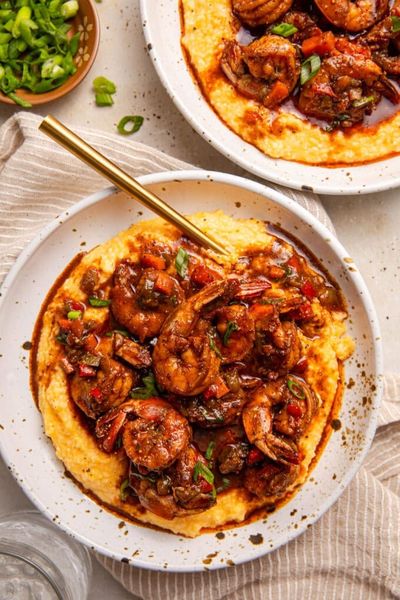
A Caribbean-Southern crossover that works because both traditions cook in a similar register: butter, peppers, alliums, slow heat, savoury depth. The brown stew base on top of the dish is Jamaican, bell peppers, carrot, Scotch bonnet, ginger, browning sauce, that mahogany-coloured gravy with the unmistakable allspice-and-thyme signature, and the bed underneath is from Lowcountry Charleston, where sweet potato grits enriched with butter, half-and-half and gouda are a long-running modern Southern restaurant standard. The shrimp themselves are quick-cooked and sweet, picking up the brown stew sauce. Two textures stacked: silky-rich grits, brothy stew on top with bite from the diced peppers and carrot. Smell is sweet-onion-and-browning-sugar over the corn-sweet base of the grits. Not difficult but it's two pans running at once, so timing matters; the grits hold on a low warm setting while the shrimp cook quickly. A modern fusion rather than a traditional dish, popularised by Black American chefs in the 2010s exploring the points of overlap between Lowcountry and Caribbean cookery.

Jamaican 1 hour Serves4
← Prev Page 1 of 7 Next →