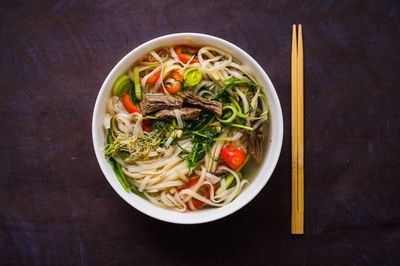
Beef Pho
This dish works best with raw beef that has been sliced paper thin, as it cooks in seconds when placed in the hot broth.
Vietnamese
Tap a chip to add another filter, or use Clear all below.
Tap any item to find recipes that use it.
This dish works best with raw beef that has been sliced paper thin, as it cooks in seconds when placed in the hot broth.
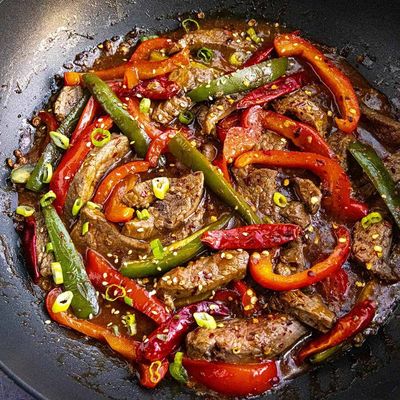
A Burmese curry from the country's Indian-origin community, sitting somewhere between a Madras and a Burmese ohn-no in spice profile. You marinate chunks of beef chuck or shin in turmeric, fish sauce and salt while you fry onions in oil until they're deep brown - that long onion fry is the foundation. The beef browns in the same oil, then ginger-garlic paste, paprika and chilli powder go in, then tomato and water turn it into a stew. Two hours of slow simmer until the meat falls apart at a fork. The signature finish is the see byan, a deep red-orange oil slick that rises to the top of the curry as it reduces, which is what the dish is named for. Eaten with rice or paratha, and a small bowl of pickled vegetable on the side.
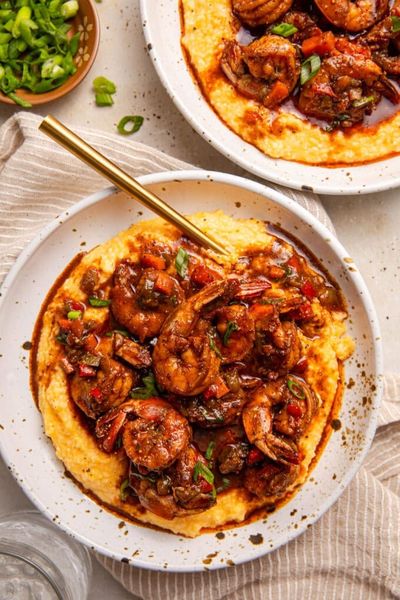
A Caribbean-Southern crossover that works because both traditions cook in a similar register: butter, peppers, alliums, slow heat, savoury depth. The brown stew base on top of the dish is Jamaican, bell peppers, carrot, Scotch bonnet, ginger, browning sauce, that mahogany-coloured gravy with the unmistakable allspice-and-thyme signature, and the bed underneath is from Lowcountry Charleston, where sweet potato grits enriched with butter, half-and-half and gouda are a long-running modern Southern restaurant standard. The shrimp themselves are quick-cooked and sweet, picking up the brown stew sauce. Two textures stacked: silky-rich grits, brothy stew on top with bite from the diced peppers and carrot. Smell is sweet-onion-and-browning-sugar over the corn-sweet base of the grits. Not difficult but it's two pans running at once, so timing matters; the grits hold on a low warm setting while the shrimp cook quickly. A modern fusion rather than a traditional dish, popularised by Black American chefs in the 2010s exploring the points of overlap between Lowcountry and Caribbean cookery.
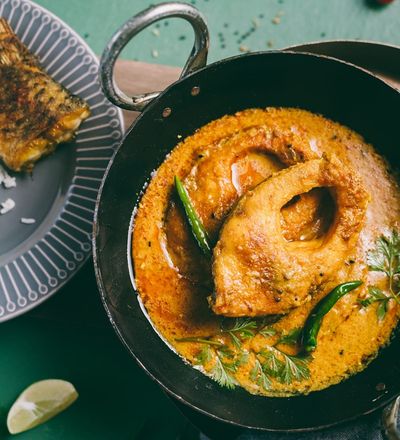
The celebration-day Bengali fish curry, the one you cook for a Saraswati Puja lunch or a weekend when family are visiting. "Doi" means yoghurt, "maach" means fish, and that's the dish in two words: pieces of firm-fleshed freshwater fish (traditionally rohu, katla or sometimes bhetki) first lightly fried in mustard oil until the skin is taut and gold, then poached gently in a thickened yoghurt sauce. The gravy is pale ivory rather than yellow or red, with the warming whole spices (cardamom, cinnamon, bay) doing the work that chilli powder does in northern curries. The critical move is timing: you whisk the yoghurt smooth and add it off the heat so it doesn't split, then the fish goes back in to finish poaching gently in the silky gravy. A touch more refined than a workaday machher jhol, eaten with steamed gobindobhog rice and a small spoon of ghee melted over the top.
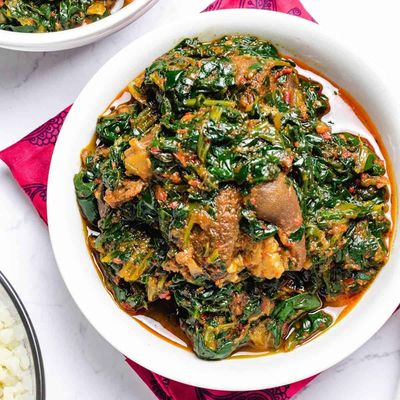
Beef (or goat, or prawns) parboils briefly. Smoked fish soaks. A pepper paste of red bell pepper, Scotch bonnet, onion and tomato blitzes in the blender. Palm oil heats; the pepper paste fries for 10 minutes until reduced and the oil rises. Stock, meat, smoked fish, ground crayfish and iru go in; simmers for 15 minutes. Spinach goes in last, wilts in 5 minutes. Served with rice, eba, fufu or pounded yam.
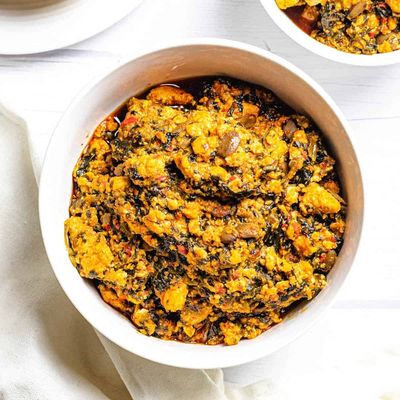
Beef or goat is parboiled with onion, stock cube and salt to make a base stock. Smoked fish hydrates in hot water and is picked clean. Egusi seeds are ground (or already-ground egusi powder is used) into a thick paste with a little water. Onion, garlic, ginger and Scotch bonnet blitz into a hot pepper paste. Palm oil heats until just smoking; the pepper paste fries in it 5 minutes. Egusi paste goes in and "fries" 10 minutes until it forms small clumps. Stock and meat join; everything simmers for 20 minutes. Smoked fish, ground crayfish and locust beans add depth. Chopped spinach (or bitter leaf) goes in for the last 5 minutes. Salt to season.
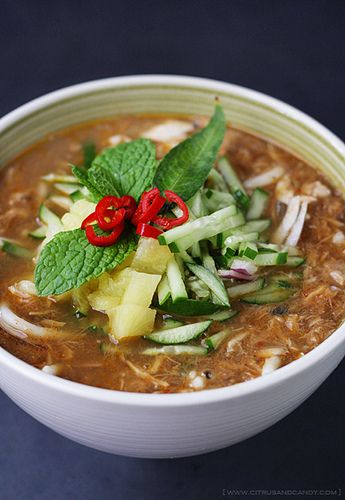
A fragrant Malaysian noodle soup combining shellfish with a spicy coconut curry broth, rice noodles, and fresh herbs. The balance of heat from chillies and creaminess from coconut milk makes it a comforting yet exotic dish.
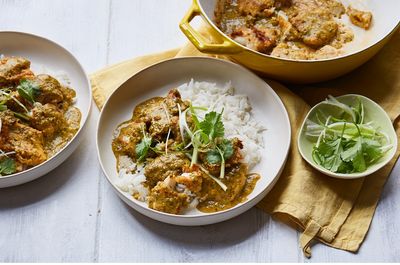
A Goan coconut masala paste is ground from soaked Kashmiri chillies, coriander seeds, cumin, peppercorns, garlic and ginger with fresh coconut and tamarind. Onion is softened in coconut oil with green chilli and curry leaves, the masala is fried until the oil separates, water and salt are added for a brief simmer, and the fish is slid into the gravy for a gentle poach. The dish is sharply acidic, deeply red and just hot enough.
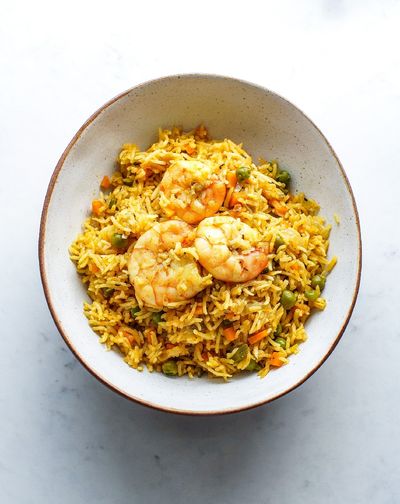
A bright green masala paste of coriander, mint, green chilli, ginger and garlic is ground with a splash of vinegar. Basmati is rinsed, soaked and drained. Whole spices and onion are softened in coconut oil, the prawns briefly seared and lifted out, then the green masala is fried into the onion before the rice is added to toast. Stock goes in for the steam; the prawns return at the end so they don't overcook.
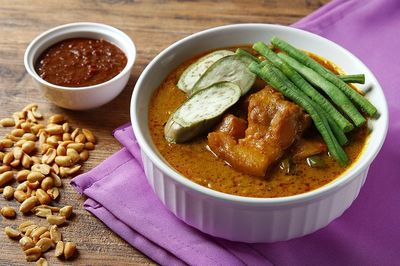
Oxtail simmers slow with aromatics until the meat is falling-tender. The cooking liquid thickens with toasted ground rice and peanut butter, gets coloured with annatto, and becomes a deep golden sauce. Vegetables join briefly at the end so they keep their texture. Bagoong on the side is non-negotiable.
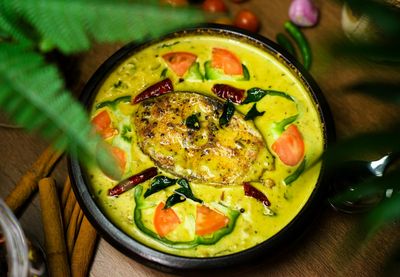
A masala paste of shallot, ginger, garlic and red chilli is bloomed in coconut oil with mustard seeds, fenugreek and curry leaves. Coconut milk is poured in and the curry brought to a simmer, then tamarind water and a tomato are added. The fish goes in last and poaches in the gravy for just long enough to set; over-stirring breaks the pieces.
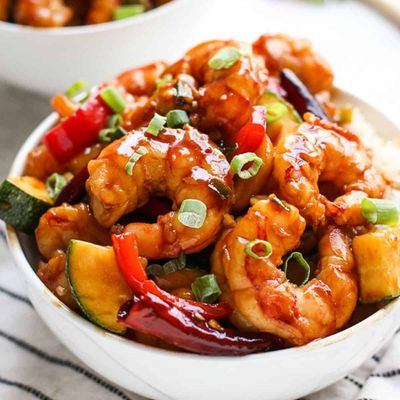
Kung pao (gongbao) shrimp is the seafood cousin of the classic Sichuan gongbao jiding, named for the 19th-century governor-general Ding Baozhen whose title was Gong Bao. Where the chicken version uses diced meat, the shrimp version keeps the prawns whole or halved so they curl into bright pink commas around the chillies and peanuts. The flavour profile is the signature Sichuan "lychee" balance: a touch of sweetness from sugar, sourness from black vinegar, salt and umami from soy, and the warm tingle (ma la) of toasted Sichuan peppercorn paired with the smoky bite of dried er jing tiao chillies. This is a fast dish, fundamentally a wok exercise: every ingredient must be prepped and lined up before the heat goes on, because once the chillies hit the oil you have maybe ninety seconds before everything is overcooked. Difficulty is moderate for a home cook with a working wok and high burner; the trick is keeping the chillies dark red and fragrant without scorching them black, and pulling the shrimp out the moment they curl. Served over plain rice it is one of the most rewarding ten-minute meals in the repertoire.
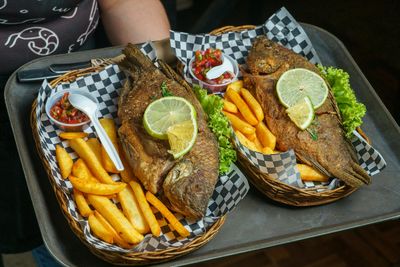
Firm white fish is scored, rubbed with a spice paste of ginger-garlic, Kashmiri chilli, ajwain (carom), turmeric and lemon, and rested for ½ hour. A separate gram-flour batter (besan, rice flour, ajwain and a pinch of bicarb for crispness) is whisked to a thick coating consistency. Each fillet is dipped in the batter and shallow-fried in mustard oil until the crust deep-gold-crackles. Eaten with a heavy dusting of chaat masala and a squeeze of lemon.
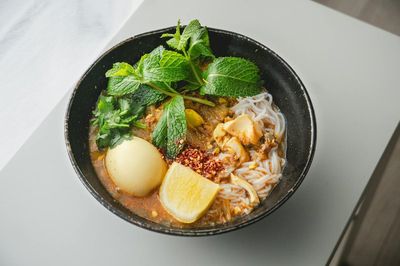
A two-part dish: a deeply concentrated prawn-and-chicken stock built from roasted prawn shells, layered with a freshly pounded laksa paste of dried chilli, galangal, lemongrass and candlenuts. The two are joined with coconut cream to create a glossy, fragrant broth that bathes rice vermicelli, tofu puffs and prawns. Finished at the table with sambal, lime, fresh coriander and bean sprouts.
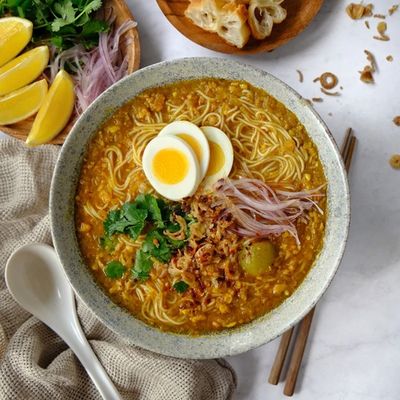
Myanmar's national breakfast, the rice-noodle soup that streetcorner stalls in every city open before dawn for. You cook catfish (or any firm white fish) in spiced water first, then shred the cooked flesh and turn the cooking liquid into the soup base. A spice paste of shallot, garlic, ginger, lemongrass and turmeric fries in oil; a chickpea-flour slurry thickens the broth to a silky consistency; banana-stem (or hearts of palm or cabbage as substitute) softens in. Fish sauce, paprika and lime balance the seasoning. Rice vermicelli portions into bowls, broth ladles over, and a heavy plate of garnishes arrives at the table: crispy split peas, halved boiled eggs, lime wedges, fresh herbs, chilli flakes. Each diner builds the bowl to their own taste. The morning meal of Myanmar.
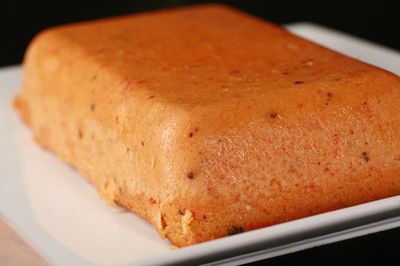
Dried black-eyed beans soak briefly to loosen the skins. The skins rub off; the beans soak more to soften. They blend smooth with red pepper, onion, Scotch bonnet and a little water into a thick batter. Palm oil whisks in. Ground crayfish, a stock cube, salt and ground egusi (or breadcrumbs) bind. The batter portions into oiled ramekins (or banana leaf parcels). A hard-boiled egg half, a piece of smoked fish or a spoon of cooked beef goes into each. They steam in a wide pot 50-60 minutes until firm and set.