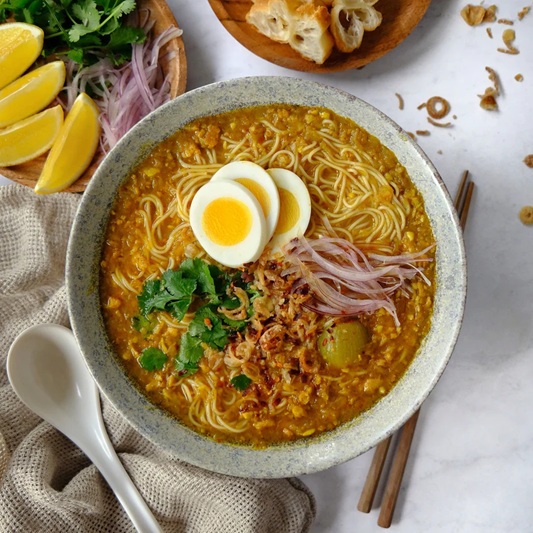
Mohinga
Myanmar's national breakfast: a fish-and-rice-noodle soup scented with lemongrass, ginger and shallot, thickened with toasted chickpea flour.
Overview
Myanmar's national breakfast, the rice-noodle soup that streetcorner stalls in every city open before dawn for. You cook catfish (or any firm white fish) in spiced water first, then shred the cooked flesh and turn the cooking liquid into the soup base. A spice paste of shallot, garlic, ginger, lemongrass and turmeric fries in oil; a chickpea-flour slurry thickens the broth to a silky consistency; banana-stem (or hearts of palm or cabbage as substitute) softens in. Fish sauce, paprika and lime balance the seasoning. Rice vermicelli portions into bowls, broth ladles over, and a heavy plate of garnishes arrives at the table: crispy split peas, halved boiled eggs, lime wedges, fresh herbs, chilli flakes. Each diner builds the bowl to their own taste. The morning meal of Myanmar.
Ingredients
Fish
- 600 g firm white fish (catfish, basa, sea bream; whole or fillets)
- 1 onion (small, quartered)
- 2 cm ginger (sliced)
- 1 stalk lemongrass (bashed)
- 1 teaspoon salt
- 1.8 litres water
Spice paste
- 4 shallots
- 6 garlic cloves
- 4 cm ginger
- 2 stalks lemongrass (white parts)
- 2 cm fresh turmeric (or 1 teaspoon ground)
- 1 long red chilli
Soup
- 4 tablespoons vegetable oil
- 100 g chickpea (gram) flour
- 1 teaspoon ground paprika
- 200 g banana stem (peeled and sliced; or hearts of palm; or shredded white cabbage)
- 4 tablespoons fish sauce
- 1 teaspoon brown sugar
- 1 teaspoon salt (or to taste)
- 1 lime (juice)
Noodles + garnishes
- 500 g dried thin rice vermicelli (or fresh round rice noodles)
- 6 hard-boiled eggs (halved)
- 80 g split yellow peas (deep-fried; sold ready-to-eat at SE Asian grocers, or fry your own)
- A small bunch of coriander (chopped)
- 4 spring onions (sliced)
- 2 limes (cut into wedges)
- 2 long red chillies (sliced)
- Extra fish sauce
- Crispy fried onions
Method
Stage 1 - Cook the fish
- Combine the fish with the small onion, sliced ginger, lemongrass, salt and water in a heavy pot.
- Bring to a simmer; cook 15-20 minutes until the fish is just-cooked through.
- Lift the fish out; cool slightly. Strain the broth through a fine sieve into a clean pot. You should have about 1 ½ litres.
- Pull the fish from any bones; flake into chunks. Set aside.
Stage 2 - Spice paste
- Blend the shallots, garlic, ginger, lemongrass white parts, turmeric and chilli to a smooth paste.
Stage 3 - Fry the paste
- Heat the oil in a large pot over medium heat.
- Add the spice paste; cook 6-8 minutes, stirring, until darkened and the oil separates around the edges.
Stage 4 - Build the soup
- Whisk the chickpea flour with 200 ml of the strained fish broth in a bowl until smooth.
- Pour the rest of the strained broth into the spice-paste pot; bring to a steady simmer.
- Whisk in the chickpea-flour slurry steadily.
- Add the paprika; cook 8-10 minutes, stirring often, until the broth has thickened to a soup with body.
Stage 5 - Banana stem and fish
- Add the sliced banana stem (or substitute); simmer 10 minutes until tender.
- Stir in the flaked fish, fish sauce and brown sugar.
- Cook 3-4 minutes more.
- Off the heat, squeeze in the lime juice. Taste; adjust fish sauce.
Stage 6 - Noodles
- Cook the rice vermicelli per packet (usually 3-4 minutes in boiling water); drain and rinse briefly.
- Divide between 6 bowls.
Stage 7 - Serve
- Ladle the hot broth (with the fish chunks and banana stem) over the noodles.
- Top each bowl with ½ hard-boiled egg, a heap of crispy split peas, coriander, spring onions, sliced chilli and fried onions.
- Pass lime wedges and extra fish sauce at the table.
Notes
- Banana stem: Sold at SE Asian grocers (sometimes pre-sliced in brine). Hearts of palm is the closest sub; shredded white cabbage is fine if you must.
- Crispy split peas: Sold ready-to-eat as pea crackers at SE Asian grocers. To make: deep-fry soaked-then-drained yellow split peas at 170°C for 4-5 minutes until golden and crisp.
- Chickpea-flour body: Mohinga should be thicker than typical broth - almost soupy-stew. Don't skip the slurry.
Storage
- Broth keeps 3 days refrigerated; reheat gently. Cooked noodles don't keep - boil fresh.
- Freezes 2 months.
More like this
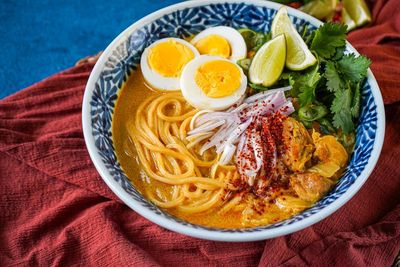
Ohn No Khao Swè
Myanmar's coconut-chicken noodle soup, the dish closest in spirit to a Thai khao soi but with its own Burmese identity. You poach chicken thighs in stock with shallot, garlic, ginger and turmeric for twenty-five minutes, lift them out and shred the meat. The stock cooks down with coconut milk, fish sauce and paprika, thickened with a slurry of chickpea flour and water into a silky soup. Yellow egg noodles cook separately. Everything piles into the bowl at the end: noodles first, soup ladled over, shredded chicken in the middle, then heaping garnishes (sliced shallot, crispy fried shallot, halved boiled egg, lime wedges, cilantro, chilli flakes). The garnishes are half the dish; eat with chopsticks in one hand and a spoon in the other.
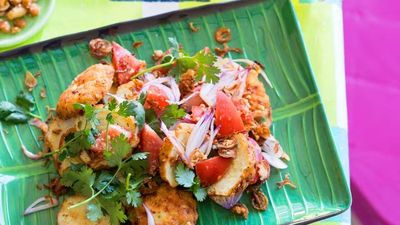
Nga Hpe (Burmese Fish Cakes)
The Burmese fish cakes that arrive at lahpet-thoke salad tables and street snack stalls alike, bright with lime and curry leaf. You cube skinless firm fish fillets and pulse them in a food processor with shallot, garlic, ginger, lime, fish sauce and a small egg into a sticky paste. A spoon of beaten cornflour binds it. Curry leaves, sliced spring onion, chopped cilantro and a fresh chilli go in for fragrance and bite. Patties form by hand (keep your hands slightly damp so the mixture doesn't stick), then shallow-fry in batches at 170°C for two or three minutes per side until they're deep gold and crisp at the edges. Eaten warm with a sour-sweet tamarind dipping sauce.
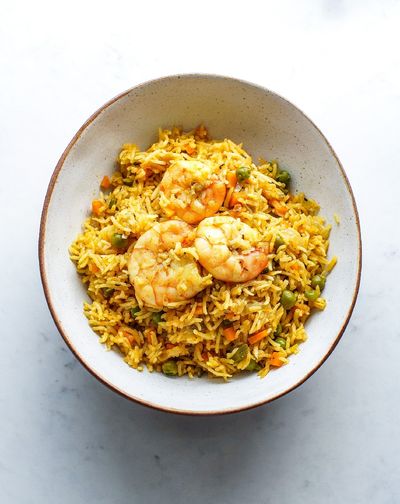
Goan Prawn Pulao
A bright green masala paste of coriander, mint, green chilli, ginger and garlic is ground with a splash of vinegar. Basmati is rinsed, soaked and drained. Whole spices and onion are softened in coconut oil, the prawns briefly seared and lifted out, then the green masala is fried into the onion before the rice is added to toast. Stock goes in for the steam; the prawns return at the end so they don't overcook.
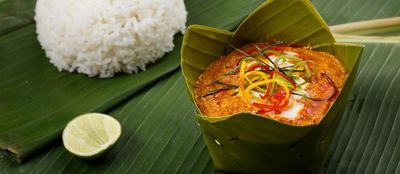
Amok Trey
Cambodia's national dish, the centrepiece of any Khmer feast and the proper-occasion food across the country. You start by pounding kroeung fresh in a mortar (the paste of lemongrass, galangal, turmeric, garlic, shallots, kaffir lime zest and coriander root that defines Khmer cooking, and that no shop-bought paste comes close to matching). The kroeung fries briefly to bloom its aromatics, coconut cream and stock loosen it, and eggs whisk in to set the eventual custard. Chunks of firm white fish fold through with chopped greens (traditionally noni leaves, with spinach or chard standing in), and the whole mix spoons into banana-leaf cups (or small ramekins). Twenty minutes in a steamer turns the custard just-set around the soft fish, and the banana leaves perfume everything. Served from the parcels with steamed rice and a wedge of lime.