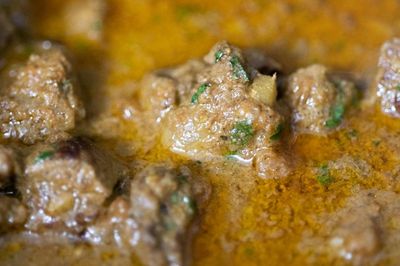
Beef Panang Curry
A thick, sweet Panang curry with peanuts, served over jasmine rice. Similar to red curry but sweeter and thicker; add vegetables for extra nutrition or keep traditional.
Thai
Tap a chip to add another filter, or use Clear all below.
A thick, sweet Panang curry with peanuts, served over jasmine rice. Similar to red curry but sweeter and thicker; add vegetables for extra nutrition or keep traditional.
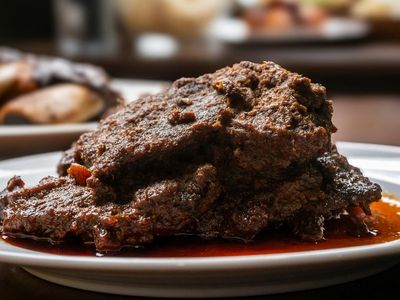
Rendang is a spicy meat dish which originated from the Minangkabau ethnic group of Indonesia, and is now commonly served across the country. One of the characteristic foods of Minangkabau culture, it is served at ceremonial occasions and to honour guests. This rich, aromatic curry features beef slowly simmered in coconut milk and spices until deeply flavoured.
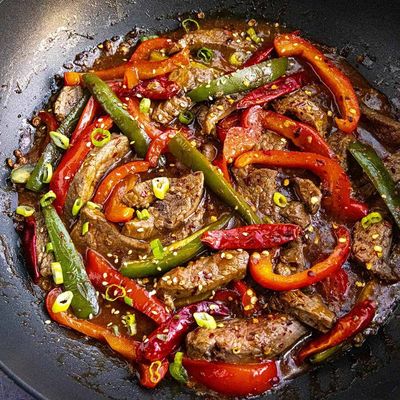
A Burmese curry from the country's Indian-origin community, sitting somewhere between a Madras and a Burmese ohn-no in spice profile. You marinate chunks of beef chuck or shin in turmeric, fish sauce and salt while you fry onions in oil until they're deep brown - that long onion fry is the foundation. The beef browns in the same oil, then ginger-garlic paste, paprika and chilli powder go in, then tomato and water turn it into a stew. Two hours of slow simmer until the meat falls apart at a fork. The signature finish is the see byan, a deep red-orange oil slick that rises to the top of the curry as it reduces, which is what the dish is named for. Eaten with rice or paratha, and a small bowl of pickled vegetable on the side.
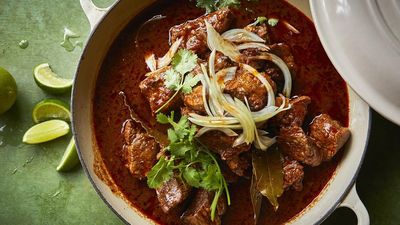
Birria is a Mexican braise of long, patient ambition. Originally a goat or lamb dish from Jalisco, it has long since adopted beef in much of Mexico and almost entirely in the popular taco version. The flavour comes from a layered chile base: guajillo for fruit and colour, ancho for raisin sweetness, pasilla for earthy depth, and a handful of arbol for a sharper heat. These are simmered with onion, garlic, cinnamon and peppercorns, blended smooth with chipotles in adobo and fire-roasted tomato, then poured over seared chuck and short rib for a long oven braise. Three hours later the meat is meltingly tender, sitting in a rust-red consomme that is the whole point: ladled over the shredded beef in a bowl, scattered with raw onion, cilantro and lime, or used to dip crisp taco shells for the now-iconic quesabirria. The recipe takes time but very little technique; almost everything happens unattended in the oven. Plan ahead and make it a day in advance so the flavours settle and the fat lifts cleanly off the top before you reheat.
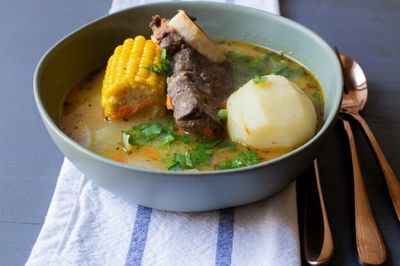
The Chilean Sunday-lunch one-pot, the soup-stew that turns up on every kitchen table from Santiago to Patagonia. You brown bone-in beef shin to colour, then drop it into a simple broth of onion, garlic, oregano and cumin and simmer slowly for ninety minutes until the meat is tender and the broth has built depth. The vegetables go in for the last twenty-five minutes - a thick chunk of pumpkin, a section of corn-on-the-cob, a whole potato, a handful of green beans - each piece kept whole because the cazuela is meant to arrive in the bowl looking like a still life. Rice or vermicelli cooks separately in a ladle of the broth and joins at the very end. Served in deep bowls with chopped coriander and a wedge of lime, the steam rising while you eat. Comfort food at its plainest and deepest.
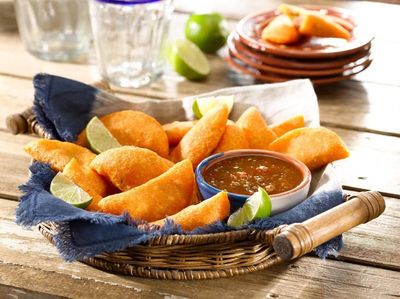
Yellow-corn masarepa hydrates with water, salt and a pinch of paprika for colour. Beef mince cooks with onion, tomato cumin and oregano; cooked potato dices fold in for body. The dough divides; each ball flattens between two pieces of cling film into thin discs; filling goes in the centre; folded into a half-moon, sealed with damp fingers, fried.
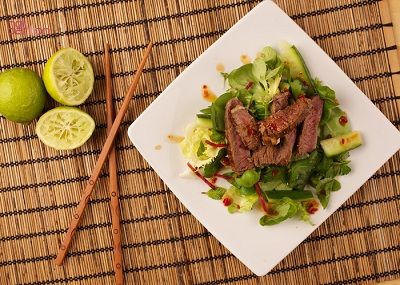
Go Bo Hoi An is a piquant Vietnamese beef salad featuring thinly sliced seared beef tossed with crisp vegetables, fresh herbs, and a bright tamarind-lime dressing. This dish has delicate undertones of lime and garlic which carry through the tamarind flavours perfectly. The combination of tender beef, crunchy vegetables, aromatic herbs, and crispy rice papers creates a textural and flavourful celebration of Vietnamese cuisine. Quick to make but requires advance preparation, ensure the salad, dressing, and toppings are made and ready to use before cooking the beef.
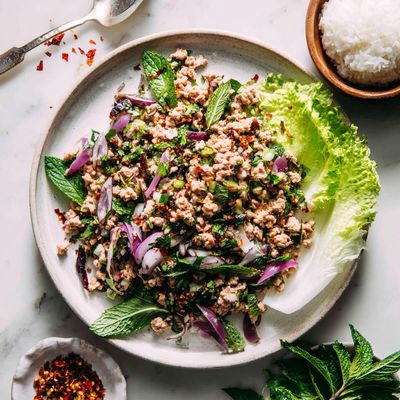
Sticky rice toasts in a dry pan to a deep gold, ground to a coarse powder (khao khua). Mince fries hot with a splash of stock until just cooked. Off heat, fish sauce, lime juice, chilli powder, sliced shallot, spring onion and rice powder toss through. Lots of fresh herbs fold in at the end. Served with sticky rice and raw vegetable plate.
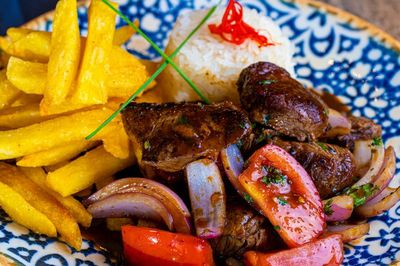
Beef strips are marinated briefly in soy and aji amarillo paste. Fries are cooked separately, pre-fried, set aside. The wok hits high heat; beef is seared in batches; red onion and tomato are added briefly so they keep their bite; soy, vinegar, lime and stock are poured in to sauce. The fries go in last, just before serving, a 30-second toss so they pick up flavour without going soggy.
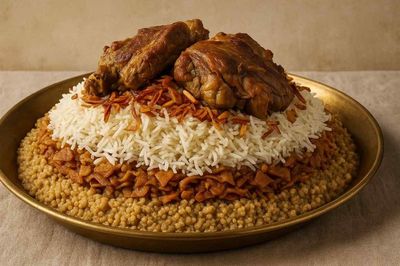
The Saudi gathering platter built for the night when one cut of meat isn't enough. Three proteins share the same pot: lamb shoulder and beef chunks go in first with a kabsa-spiced tomato base for ninety minutes of slow simmer until they're meltingly tender, then chicken pieces drop in for the last thirty-five minutes (their cook time is shorter, so they go in later). The strained meat broth, deeply spiced from everything that has braised in it, becomes the cooking liquid for basmati scented with saffron and dried lime. At the end you arrange all three meats on top of the rice in the same platter and bring the whole thing to the centre of the table. The kind of dish you make for a wedding lunch, an Eid gathering, or the night the extended family arrives unannounced.