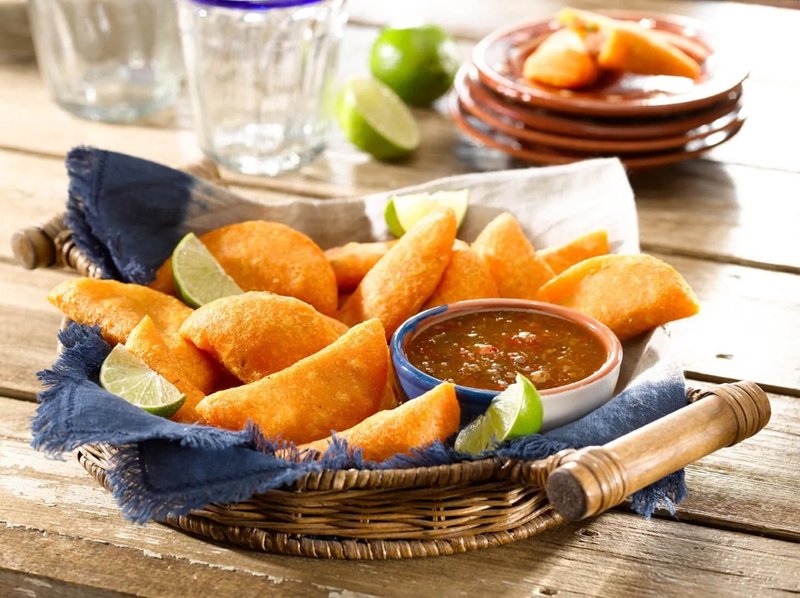
Empanadas Colombianas
Colombia's snack-counter empanadas: deep-fried half-moons of yellow corn dough filled with a spiced beef-and-potato mash. Served with fresh ají.
Overview
Yellow-corn masarepa hydrates with water, salt and a pinch of paprika for colour. Beef mince cooks with onion, tomato cumin and oregano; cooked potato dices fold in for body. The dough divides; each ball flattens between two pieces of cling film into thin discs; filling goes in the centre; folded into a half-moon, sealed with damp fingers, fried.
Ingredients
Filling
- 400 g beef mince
- 300 g floury potato (peeled, diced, boiled tender, drained)
- 2 tablespoons vegetable oil
- 1 onion (medium, very finely chopped)
- 4 garlic cloves (crushed)
- 1 teaspoon ground cumin
- 1 teaspoon dried oregano
- ½ teaspoon paprika
- 1 tomato (grated)
- 1 tbsp tomato puree
- 1 teaspoon salt
- ½ teaspoon ground black pepper
- 2 tablespoons fresh coriander (chopped)
Dough
- 400 g yellow masarepa (Harina P.A.N. amarilla or similar)
- 1 tsp turmeric
- ½ tsp paprika
- 1 teaspoon salt
- 600 ml warm water (approximately - adjust as you go)
- 1 tablespoon vegetable oil
To fry
- 1 litre vegetable oil
Ají sauce (to serve)
- 4 spring onions (finely chopped)
- 1 small bunch coriander (chopped)
- 1-2 red chillies (finely chopped)
- 1 lime (juice)
- 3 tablespoons white vinegar
- ¼ teaspoon salt
Method
Stage 1 - Filling
- Heat oil; brown the mince hard 5-6 minutes; pour off excess fat.
- Add onion; cook 5 minutes.
- Add garlic, cumin, oregano, paprika; cook 30 seconds.
- Stir in tomato and puree; cook 4 minutes.
- Add cooked potato; mash gently with a fork into the meat - keep some chunky.
- Season with salt, pepper, coriander.
- Cool completely.
Stage 2 - Dough
- Whisk masarepa, turmerc, paprika and salt in a wide bowl.
- Drizzle in oil; add warm water gradually, mixing with hands, to a soft pliable dough (similar to playdough - holds shape, doesn't stick).
- Knead briefly. Cover with damp cloth; rest 10 minutes.
Stage 3 - Shape
- Divide dough into 18-20 walnut-sized balls.
- Lay a 20 cm square of cling film on the work surface; place one ball in the centre; cover with another 20 cm cling film.
- Press flat with a heavy book or tortilla press to a 10 cm thin disc (3 mm).
- Peel off the top cling film. Place a tablespoon of cooled filling in the centre.
- Using the bottom cling film, fold the disc into a half-moon over the filling.
- Press the edges firmly to seal through the cling.
- Peel off the cling film carefully.
- Trim the edge with a small knife or pastry wheel for a clean half-moon.
Stage 4 - Fry
- Heat oil to 175°C.
- Fry empanadas in batches of 4-5, 3-4 minutes per side, until deep gold and crisp.
- Drain on kitchen paper.
Stage 5 - Ají sauce
- Combine all ají ingredients in a small bowl.
- Let sit 5 minutes.
Stage 6 - Serve
- Eat empanadas hot with the ají on the side.
Notes
- Cling-film press: Masarepa dough is fragile and tears if rolled with a pin. The cling-film sandwich method is universal in Colombia.
- Turmeric colour: Gives the dough its sunny yellow-orange. Skipping it gives pale, sad empanadas.
- Ají is non-negotiable: The fresh, bright, slightly hot sauce is the empanada's other half. Don't skip.
Storage
- Best fresh. Refrigerate cooked 2 days; re-crisp at 200°C 6 minutes.
- Freeze raw (sealed, on a tray then bagged) up to 2 months. Fry from frozen, adding 2 minutes per side.
More like this
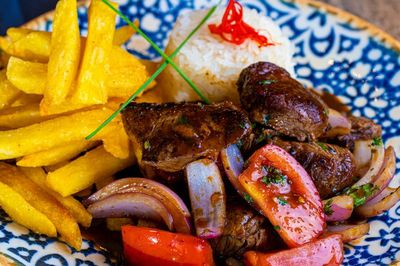
Lomo Saltado
Beef strips are marinated briefly in soy and aji amarillo paste. Fries are cooked separately, pre-fried, set aside. The wok hits high heat; beef is seared in batches; red onion and tomato are added briefly so they keep their bite; soy, vinegar, lime and stock are poured in to sauce. The fries go in last, just before serving, a 30-second toss so they pick up flavour without going soggy.
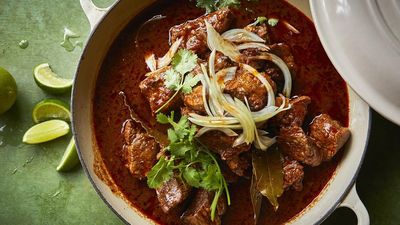
Birria
Birria is a Mexican braise of long, patient ambition. Originally a goat or lamb dish from Jalisco, it has long since adopted beef in much of Mexico and almost entirely in the popular taco version. The flavour comes from a layered chile base: guajillo for fruit and colour, ancho for raisin sweetness, pasilla for earthy depth, and a handful of arbol for a sharper heat. These are simmered with onion, garlic, cinnamon and peppercorns, blended smooth with chipotles in adobo and fire-roasted tomato, then poured over seared chuck and short rib for a long oven braise. Three hours later the meat is meltingly tender, sitting in a rust-red consomme that is the whole point: ladled over the shredded beef in a bowl, scattered with raw onion, cilantro and lime, or used to dip crisp taco shells for the now-iconic quesabirria. The recipe takes time but very little technique; almost everything happens unattended in the oven. Plan ahead and make it a day in advance so the flavours settle and the fat lifts cleanly off the top before you reheat.
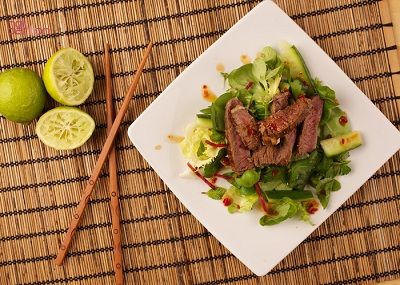
Go Bo Hoi an
Go Bo Hoi An is a piquant Vietnamese beef salad featuring thinly sliced seared beef tossed with crisp vegetables, fresh herbs, and a bright tamarind-lime dressing. This dish has delicate undertones of lime and garlic which carry through the tamarind flavours perfectly. The combination of tender beef, crunchy vegetables, aromatic herbs, and crispy rice papers creates a textural and flavourful celebration of Vietnamese cuisine. Quick to make but requires advance preparation, ensure the salad, dressing, and toppings are made and ready to use before cooking the beef.
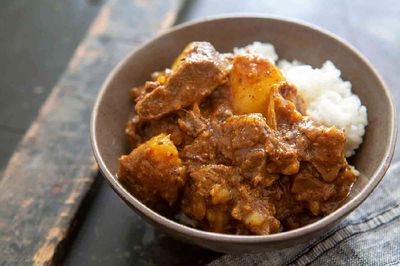
Trinidadian Curry Goat
Trinidadian curry goat sits in a quiet rivalry with Jamaican curry goat, but the two are different dishes. Jamaican curry goat is built on Madras-style curry powder, scotch bonnet and allspice with little coconut and a wetter finish. Trinidadian curry goat is built on a fresh blend of green seasoning (a herb-and-aromatic puree of culantro, thyme, garlic, chives and onion), Caribbean curry powder (which leans heavily on amchar masala and roasted geera), and the bunjay technique of frying the curry paste in oil until it splits before the meat goes in. The result is a darker, herbier, drier curry that hugs the bone rather than pooling around it. Kid goat is the preferred meat; older mutton-goat works but takes longer. UK home cooks can usually find kid goat at Caribbean butchers, Halal butchers and many Asian supermarkets in the chilled or frozen section. Bone-in pieces are essential for flavour and gelatin. Lamb shoulder on the bone makes an honest substitute. Difficulty is low to moderate; the cook is mostly long and passive once the curry is bunjayed. Serve with paratha-style "buss-up-shut" roti, dhalpuri roti, white rice, or coconut rice.