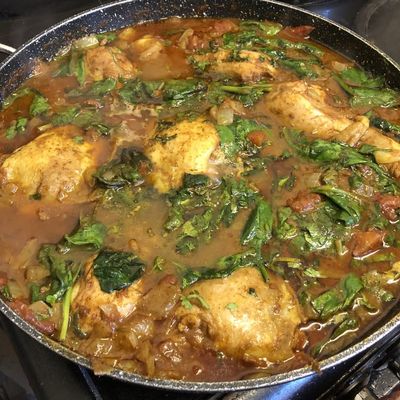
Agra Ginger Chicken
A light, cleansing chicken curry from Agra with fresh ginger, warm spices and bright tomato notes. This vibrant dish is designed to be accessible and fresh, with spinach and lime lifting the finished curry.
Indian
Tap a chip to add another filter, or use Clear all below.
A light, cleansing chicken curry from Agra with fresh ginger, warm spices and bright tomato notes. This vibrant dish is designed to be accessible and fresh, with spinach and lime lifting the finished curry.

Silky scrambled eggs infused with warm spices and fresh aromatics. The turmeric adds a earthy golden color while ginger and chilli provide warmth and complexity. Served with fresh coriander, this makes an excellent quick snack, elegant starter, or gourmet canapé topping.
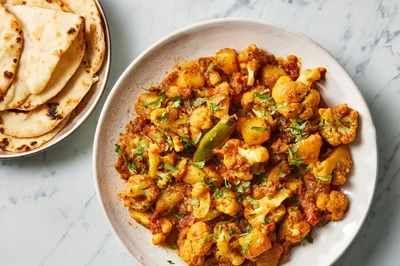
Cumin seeds bloom in hot oil; chopped onion is fried until gold; ginger-garlic paste, turmeric, chilli and coriander toast briefly; tomato softens into a quick sauce. The potatoes go in first (they need longest), the cauliflower follows; both cook covered until tender, stirred occasionally. Garam masala and chopped coriander at the end.
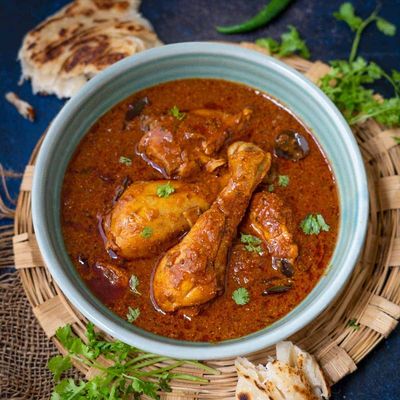
Chicken thighs are marinated briefly with turmeric, ginger-garlic paste, yogurt and a pinch of red chilli. A dry-roast of poppy seeds, sesame seeds, coconut, fennel, coriander and dried red chillies is ground with a splash of water into a coarse paste. The base is built with shallots, curry leaves and tomato; the chicken is browned in stages; and the masala paste is folded in for the long, gentle simmer. Tamarind and a curry-leaf temper finish.
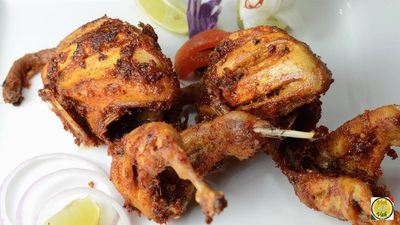
Simple tandoori-style chicken thighs marinated in yogurt and spices for tender, flavorful meat. Thighs or drumsticks work best; use mild paprika for color and flavor, or chilli powder for heat. Yogurt and lemon tenderize the meat, allowing spices to penetrate deeply.
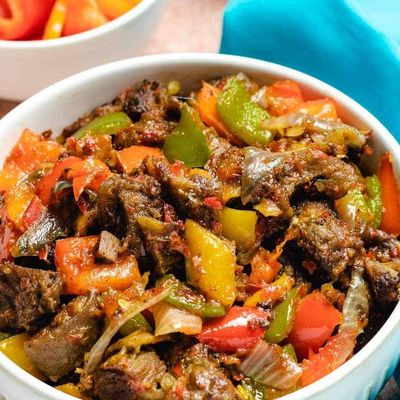
Goat meat (bone-in pieces, ideally) simmers in water with onion, garlic, bay, salt and bouillon till tender (45 min). Lifts out; pats dry; grills over high heat (or under a hot grill / on a griddle pan) till charred (8-10 min). Pepper base: scotch bonnet, red pepper, onion, garlic blitz to paste; sautés in oil with curry powder, thyme, ginger till fragrant. Charred meat tosses in the pepper paste; cooks for 5 minutes more; tops with fresh chopped onion. Eats hot.
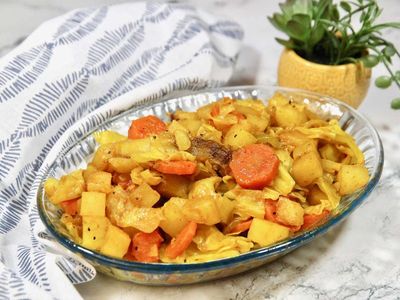
Ethiopia's spiced cabbage stew, the gentle vegetable side that sits between the fiercer berbere-loaded curries on a shared platter and cools whoever's eating against the heat. You soften onions in oil with turmeric until they're pale gold, then bloom garlic, ginger and a small amount of berbere in the same fat - small because this is the mellow dish, not the fierce one. Carrots and potatoes go in first to soften; cabbage joins later. Cover, drop the heat, and let the lot steam-cook for forty minutes until the volume has halved, the vegetables have melted into each other, and the cabbage has almost disappeared into the sauce. Eaten with injera and a few spoonfuls of doro wat or misir wat alongside for contrast.
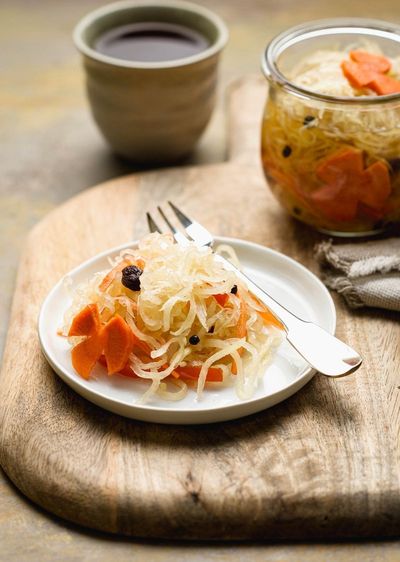
Green papaya is peeled, seeded and shredded on a coarse grater. Carrot, ginger, garlic, red pepper, onion and raisins are all prepared in matching shreds. The vegetables are salted and rested for 1 hour to draw water; rinsed and squeezed dry. A syrup of cane vinegar, sugar and whole peppercorns simmers for 5 minutes. Hot syrup is poured over the vegetables in a sterilised jar. The jar is sealed, cooled and refrigerated overnight before eating. Improves over the following week.
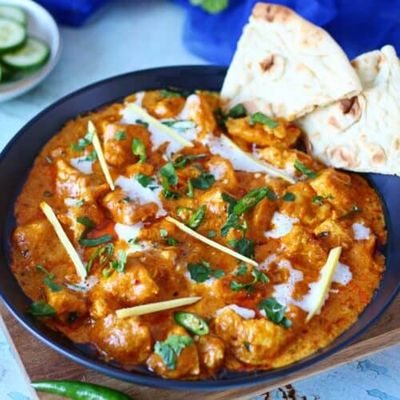
A rich, ghee-laden chicken handi cooked in the traditional style, featuring tender chicken thighs simmered in a spiced tomato-onion base with yoghurt and cream. Named for the handi pot, this dish varies by chef but delivers deep, authentic flavors.
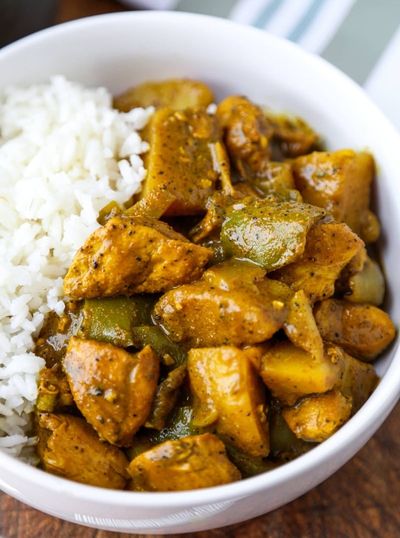
Jamaican curry sits in its own corner of the global curry map: heavier on turmeric and allspice than Indian Madras, lighter on cumin, and built on a technique called "burning the curry" that gives the dish its character. The technique is exactly what it sounds like, dry curry powder hits hot oil and is stirred for 30 seconds until it darkens from yellow to deep gold and smells like toasted spice. That move concentrates the flavours and removes any raw edge. The finished stew is bright yellow stained slightly orange, savoury and aromatic rather than searingly hot, with thyme and a whole pierced Scotch bonnet scenting the gravy without flooring it. Smell: bloomed curry powder, allspice, browned chicken fat. Not difficult, but requires confidence in the 30-second bloom (under-do it and the dish is flat; over-do it and you have to start over). A Sunday-dinner staple across Jamaica and the diaspora, served over white rice with the gravy spooned generously over.
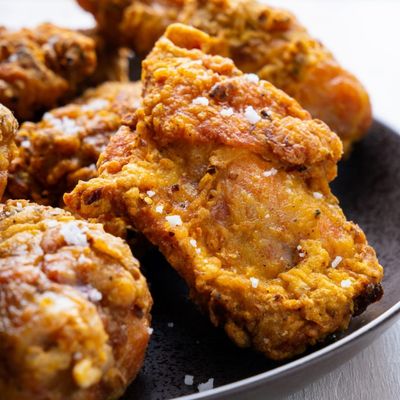
Bone-in chicken pieces are marinated with a freshly pounded spice paste of shallots, garlic, ginger, galangal, lemongrass and turmeric, then dipped in a thin egg and cornflour batter and shallow-fried until golden. The result is a deeply spiced, crackly-crusted fried chicken that picks up colour from the turmeric and depth from the toasted seeds. An overnight marinate is optional but rewards the wait.
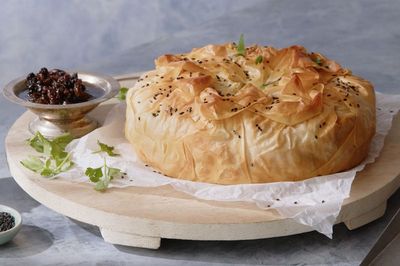
Chicken poaches in a heavily spiced broth (saffron, ginger, cinnamon, lemon). The shredded meat returns to a reduced sauce thickened with beaten eggs to make a soft set. Toasted almonds with sugar and cinnamon form a layer. Everything wraps in butter-brushed filo, baked golden, and dusted with icing sugar and cinnamon.
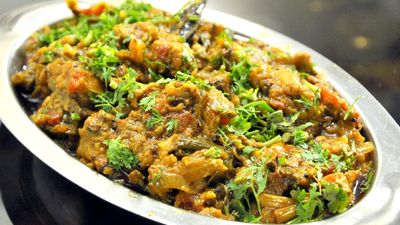
A whole aubergine is charred directly over a gas flame until the skin is blackened and the flesh inside is soft. The charred skin is peeled off and the flesh roughly mashed. A masala of onion, garlic, ginger, green chilli and tomato is cooked down to a thick base, and the smoky aubergine flesh is folded through with a finishing touch of garam masala and coriander. Vegetable-side or vegetarian main; the smoke is what makes it.
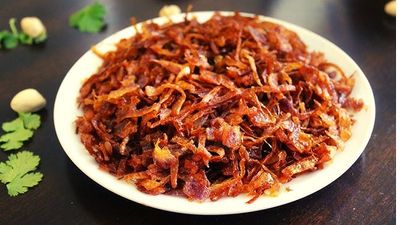
The Burmese dried-shrimp relish that sits in a jar in every Yangon kitchen, the seasoning you reach for to lift a plate of plain rice into something memorable. You pulse-grind dried shrimp to a coarse floss, then fry a pile of sliced garlic and shallot in oil until they're deep golden and crisp. The dried shrimp joins them and toasts to a fragrant rust colour. Chilli powder, fish sauce, tamarind, sugar and a splash of water turn the lot into a sticky red-brown relish. Cook until the oil clears (twelve to fifteen minutes), cool, store in a jar. Eat by the spoonful with rice, or as a side to grilled meat or fish.
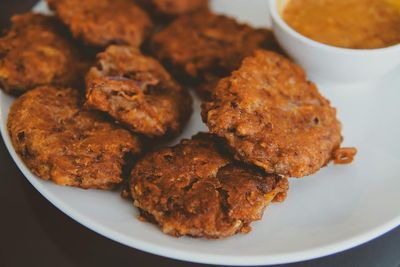
The Burmese yellow split-pea fritter, sold by street vendors in hot oil-spattered cones of newspaper across Yangon's evening markets. You soak yellow split peas overnight until they're softened but not mushy, then blitz to a coarse sandy paste with shallot, garlic, ginger, turmeric and coriander. No flour, no binder; the natural starch in the peas holds the fritters together as they fry. Tablespoonfuls drop into hot oil and fry until they're deep gold and craggy at the edges. Eaten hot from the cone with a sour-sweet tamarind dipping sauce, a wedge of lime, and whatever you can carry while you walk on through the evening crowds.
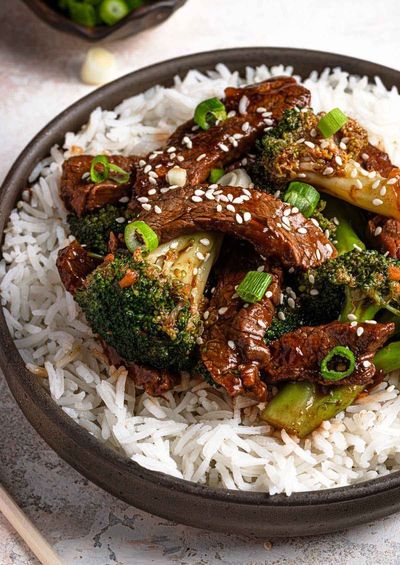
Sliced beef velvets briefly in cornflour and soy, broccoli florets blanch to bright green, and the lot stir-fries hard with garlic and ginger in a soy-oyster-rice-wine sauce. Served over steamed rice.
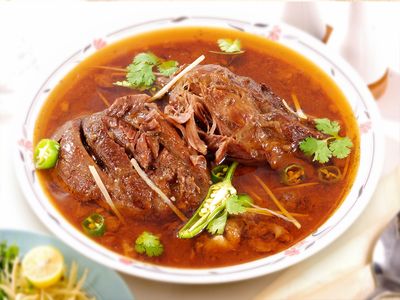
Beef shank with bones browns in ghee; onions cook to deep golden; whole spices bloom. Stock simmers everything for 3-4 hours until the meat is fork-tender. A wheat-flour slurry whisks in to thicken to a glossy, slightly silky gravy. Tarka of fried garlic and Kashmiri chilli pours over hot. Served with naan and a heavy plate of garnishes.
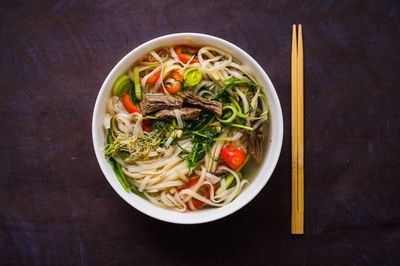
This dish works best with raw beef that has been sliced paper thin, as it cooks in seconds when placed in the hot broth.
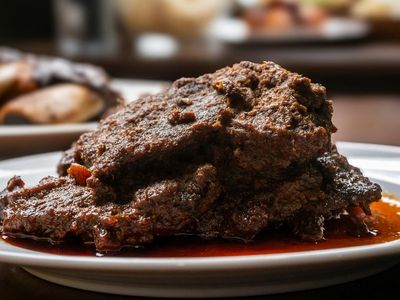
Rendang is a spicy meat dish which originated from the Minangkabau ethnic group of Indonesia, and is now commonly served across the country. One of the characteristic foods of Minangkabau culture, it is served at ceremonial occasions and to honour guests. This rich, aromatic curry features beef slowly simmered in coconut milk and spices until deeply flavoured.
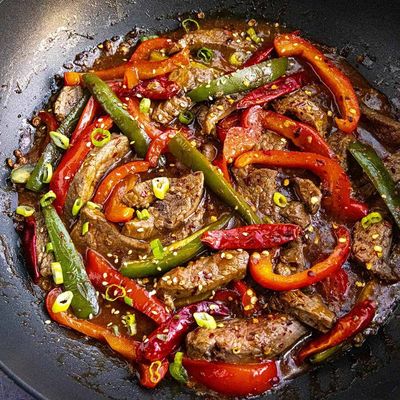
A Burmese curry from the country's Indian-origin community, sitting somewhere between a Madras and a Burmese ohn-no in spice profile. You marinate chunks of beef chuck or shin in turmeric, fish sauce and salt while you fry onions in oil until they're deep brown - that long onion fry is the foundation. The beef browns in the same oil, then ginger-garlic paste, paprika and chilli powder go in, then tomato and water turn it into a stew. Two hours of slow simmer until the meat falls apart at a fork. The signature finish is the see byan, a deep red-orange oil slick that rises to the top of the curry as it reduces, which is what the dish is named for. Eaten with rice or paratha, and a small bowl of pickled vegetable on the side.