In season

May produce

Tap any item to find recipes that use it.

Asparagus 0Rhubarb 0Peas 0Broad beans 0Radish 0Lettuce 0New potato 0Spring onion 0Watercress 0Sorrel 0
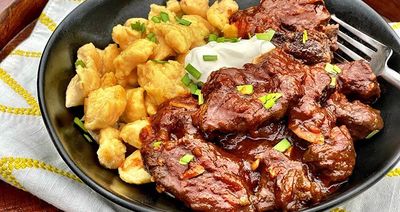
Austrian Goulash

Austrian Goulash

The Viennese answer to its Hungarian cousin: slower, deeper, almost spoonable, the gravy as dark as treacle from hours of careful reduction rather than from any thickener. The defining technique is a one-to-one ratio of onion to beef by weight, which sounds wrong until you taste what it does. The onions cook down to a sweet, brown, almost-marmalade paste before the paprika and meat ever join them, and that paste is the body of the sauce. You use beef shin or chuck and simmer it very slowly in this paprika-onion base with stock, garlic, marjoram, caraway, vinegar and tomato until the gravy clings to every cube. Lard is the right fat. No flour. No quick fixes. Serve with bread dumplings (Semmelknödel), spätzle or thick slices of dark rye, and pickled cucumbers on the side to cut the richness. A bowl that warms you from the centre out on a winter night.
Austrian 2 hours 50 minutes Serves4-6
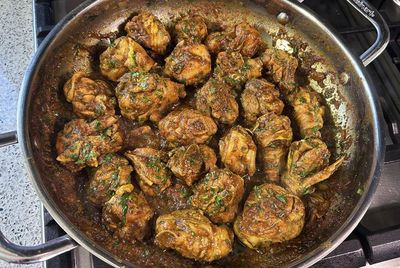
Bunjay-Style Curry Chicken

Bunjay-Style Curry Chicken

A dry curry rather than a saucy one, "bunjay" is Trinidadian patois for "fry-down", the technique of cooking meat in its own juices until the gravy completely disappears and the spices coat the surface of the meat in a sticky, glaze-like crust. The flavour is concentrated rather than diluted; nothing's been thinned with water or coconut milk, so what you taste is bone-in chicken, rendered chicken fat, and toasted spice. The spice mix is the East Indian Trinidadian signature: turmeric for colour and earth, roasted geera (toasted cumin, ground) for nuttiness, anchar masala for tang, regular curry powder for breadth. The pan oil splits and separates around the chicken at the end, which is the visual cue you're looking for. Smell when the curry powder hits hot oil is deeply aromatic, almost incense-like. Not difficult but it requires attention during the cook-down phase; if you walk away the curry burns onto the bottom of the pan. A Trinidadian household staple, eaten across the country with white rice and dhal, and a clean example of how Indian indentured labourers' descendants in the Caribbean evolved a distinct curry tradition over 150 years.

Trinidadian 2 hours 50 minutes Serves6
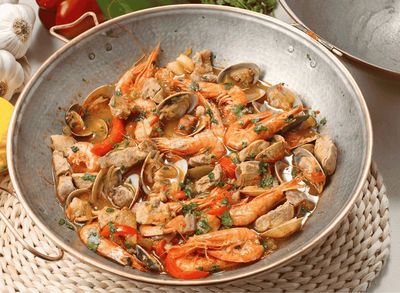
Cataplana de Marisco

Cataplana de Marisco

A cataplana is a hinged copper clamshell pan, and the seafood stew named after it is one of those dishes where the cookware does the work. You build a base of onions, peppers, sliced chouriço, smoked paprika, tomato and white wine in the bottom of the cataplana, then layer clams, mussels, prawns and chunks of firm white fish on top, clamp the lid shut, and steam it all for less than ten minutes. The lid lifts at the table to release a cloud of paprika-and-wine-scented steam, which is the entire point of the dish. If you do not have a cataplana, any wide pan with a tight lid does the same job. Coriander and lemon at the end, crusty bread for the broth, and vinho verde for everything else.

Portuguese 55 minutes Serves4
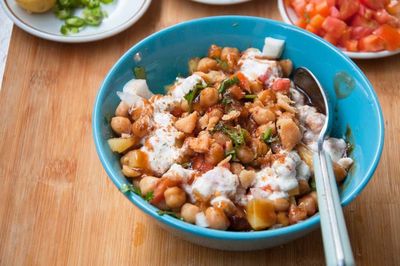
Chana Chaat

Chana Chaat

Cooked chickpeas (tinned for speed, OR overnight-soaked and home-cooked for the best texture) toss with diced red onion, finely chopped tomato, small-diced boiled potato and chopped fresh coriander. The dressing: lemon juice, chaat masala (a salty-sour spice mix sold at Pakistani shops), roasted ground cumin, Kashmiri chilli powder and a pinch of salt. Hot chilli sauce and tamarind chutney drizzle on; the chaat tosses; crushed papri tops; eat immediately.

Sides 20 minutes Serves4
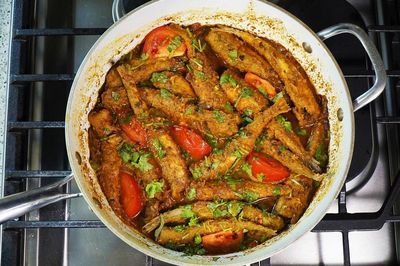
Curry Smelts

Curry Smelts

Trinidadian comfort food that brings together the East Indian and Afro-Caribbean strands of Trini cookery in one pan: small whole fried fish (a West African and Caribbean coastal habit) drowned in a Trinidadian East Indian curry sauce. The fish are smelts, sardines or whitebait, whole, head-on, eaten with a small bite to remove the spine. Once fried they sit crisp; when the curry sauce hits, the outer crust softens slightly and absorbs the gravy while the centre stays meaty. The sauce is the dish's signature: roasted geera (dry-toasted cumin) gives a smoky, nutty depth that pre-ground supermarket cumin can't touch, anchar masala adds a fermented-tangy edge (it's the Trinidadian pickled-mango spice mix), and Caribbean curry powder rounds the warmth. Whole pierced Scotch bonnet scents without flooring. Smell when the spices bloom in hot oil is heavy and pungent in the best possible way. Not difficult but it's a two-pan dance, so timing matters. A daily-cookery dish across Trinidad and Tobago and the Indo-Trinidadian diaspora, eaten with steamed rice or with sada roti torn and used as a scoop.

Trinidadian 50 minutes Serves5
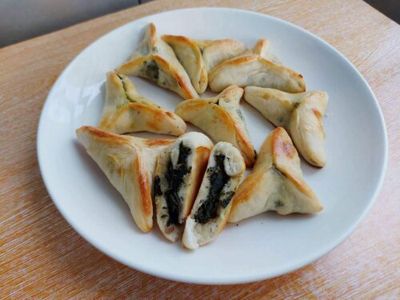
Fatayer Sabanikh

Fatayer Sabanikh

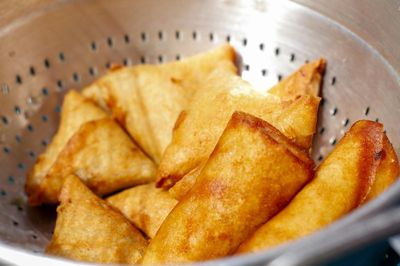
A soft yeasted olive-oil dough rises for 45 minutes. The filling: spinach wilts briefly in salted water and is squeezed bone-dry; chopped onion massages with salt to soften and weep; the two combine with sumac, lemon juice, pomegranate molasses, olive oil and toasted pine nuts. The dough divides into 12 balls; each rolls into a 12 cm disc; a spoon of filling sits in the centre; the disc folds into a tricorn (three corners pinched up to meet at the top). Baked at 220°C 15-18 minutes until deep gold.

Palestinian 1 hour 38 minutes Serves4
Foul Saudi

Foul Saudi

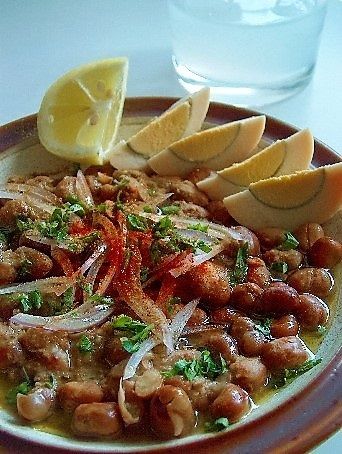
The Saudi take on foul medames, somewhere between the Egyptian original and the Yemeni daal-like versions. You soak dried fava beans overnight, then simmer them with a chickpea or two and a garlic clove for six hours low and slow (or pressure-cook for forty-five minutes if you don't have the day) until they're so soft they fall apart at a glance. Once drained, the beans go back into a hot pan with olive oil and garlic, cumin and a hit of chilli; you crush them roughly with a fork (chunky, not smooth) and finish with lemon and a handful of chopped parsley. Eaten warm for breakfast across the Gulf, scooped with flatbread, with a side of pickles or salata hara, and a glass of mint tea.

Sides 6 hours 55 minutes Serves4
Karaage

Karaage

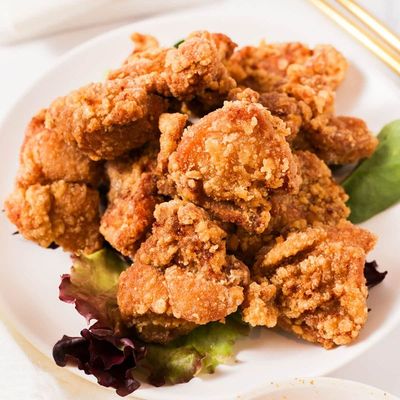
Chicken thighs (boneless, skin-on for the best result) are cut into 4 cm pieces and marinated for 30 minutes in a mixture of soy sauce, sake, grated ginger, garlic, mirin and a touch of sesame oil. The marinated chicken pieces are then thoroughly dredged in potato starch (also called katakuriko in Japanese; cornstarch is a workable substitute but not as good). Oil heats to 160°C for the first fry, chicken pieces fry for 4 minutes until just cooked but not deeply coloured. Removed; rested for 5 minutes. Oil temperature increases to 190°C for the second fry, chicken returns for 60-90 seconds until amber-golden, crisp, and the outside shatters when bitten. Seasoned and served immediately.

Snacks 57 minutes Serves4
Kefta Tagine

Kefta Tagine

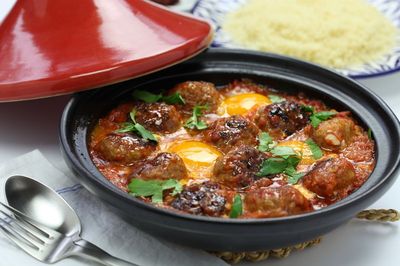
Beef or lamb mince is mixed with grated onion, garlic, fresh parsley and coriander, cumin, paprika, cinnamon, salt and pepper; shaped into small (3 cm) balls. A tomato sauce is built in the tagine: onion sweats in olive oil, garlic, cumin and paprika join, tomato passata and a stock cube simmer for 10 minutes. The meatballs are nestled in; cooked for 12 minutes turning once. Eggs are cracked into wells; lid on; 4 minutes more until the whites are just set. Scattered with parsley and served hot.

North African 45 minutes Serves4
Lablabi

Lablabi

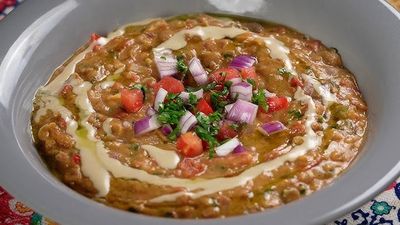
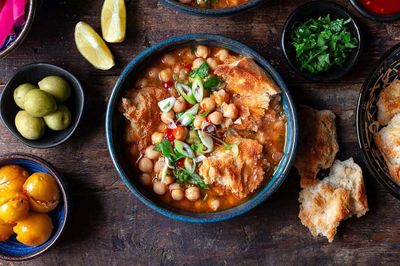
Chickpeas (pre-soaked overnight and slow-cooked, OR tinned for speed) simmer in their cooking water with crushed garlic, cumin, salt and a spoon of harissa for 20 minutes. The broth thickens slightly as a few chickpeas break down. Deep bowls are loaded with torn stale baguette. The hot broth ladles over to soften the bread. Each bowl is topped with a soft-poached or soft-boiled egg, a drizzle of olive oil, lemon juice, a fresh spoon of harissa, a heap of canned tuna, olives, capers and a sprinkle of cumin.

North African 45 minutes Serves4
← Prev Page 1 of 2 Next →