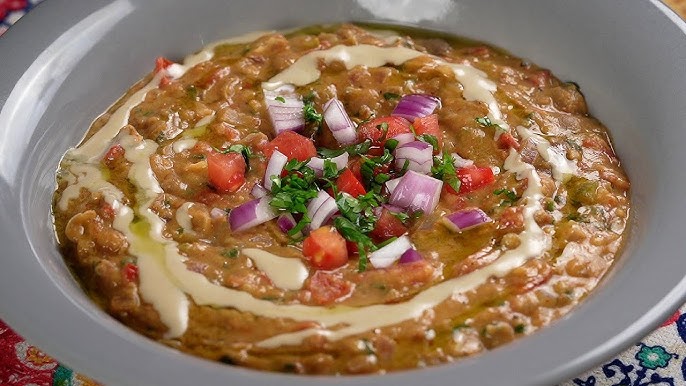
Foul Saudi
Saudi-style fava beans: dried favas slow-cooked till soft, warmed in olive oil with garlic, cumin and lemon, crushed into a chunky paste.
Overview
The Saudi take on foul medames, somewhere between the Egyptian original and the Yemeni daal-like versions. You soak dried fava beans overnight, then simmer them with a chickpea or two and a garlic clove for six hours low and slow (or pressure-cook for forty-five minutes if you don't have the day) until they're so soft they fall apart at a glance. Once drained, the beans go back into a hot pan with olive oil and garlic, cumin and a hit of chilli; you crush them roughly with a fork (chunky, not smooth) and finish with lemon and a handful of chopped parsley. Eaten warm for breakfast across the Gulf, scooped with flatbread, with a side of pickles or salata hara, and a glass of mint tea.
Ingredients
- 300 g dried small brown fava beans (foul mudammas variety)
- 50 g dried chickpeas (optional - the small white addition is traditional)
- 1 garlic clove (whole, for the cook)
- 1 ½ teaspoons salt (added later)
- 1.2 litres water
To finish
- 4 tablespoons olive oil (extra virgin, plus more to drizzle)
- 4 garlic cloves (crushed)
- 1 teaspoon ground cumin
- ½ teaspoon ground chilli (or pinch of dried chilli flakes)
- 1 lemon (juice)
- 3 tablespoons fresh parsley (chopped)
- ½ teaspoon ground black pepper
To serve
- 1 tomato (diced)
- 1 onion (small, diced)
- Lemon wedges
- Khubz tameez (or pita)
Method
Stage 1 - Soak
- Place the fava beans (and chickpeas if using) in a bowl; cover with cold water by 5 cm; soak 12 hours.
Stage 2 - Cook
- Slow: Drain; place in a pot with the 1.2 litres of water and the whole garlic clove. Simmer covered on the lowest heat 5-6 hours until very soft.
- Pressure cooker: 30 minutes high pressure; natural release.
- Stir in 1 teaspoon salt; cook 5 minutes more.
- Drain, reserving 100 ml of the cooking liquor.
Stage 3 - Finish
- Heat the olive oil in a wide pan over medium heat.
- Add the crushed garlic, cumin and chilli; cook 30 seconds until aromatic.
- Add the beans and 80 ml of reserved liquor; warm through, stirring, 3 minutes.
- Crush lightly with a fork - some whole, some mashed.
- Stir in lemon juice, parsley, pepper and the remaining ½ teaspoon salt. Taste.
Stage 4 - Plate
- Tip into a wide warm bowl.
- Top with diced tomato and onion. Drizzle with extra olive oil.
- Serve with khubz tameez or pita, and lemon wedges.
Notes
- Beans need time: Properly soft fava beans take 6 hours on slow simmer. Cutting it short gives mealy texture and chalky bite.
- Crush, don't blend: The Saudi version keeps texture - half whole, half mashed. A food processor purées it into something else.
- Tomato and onion on top: Adds fresh crunch and acidity. Don't skip - the dish needs them.
Storage
- Refrigerate 3 days; reheat with a splash of water and fresh oil.
- The cooked beans (before finishing) freeze well 2 months; finish fresh.
Recipes mentioned here
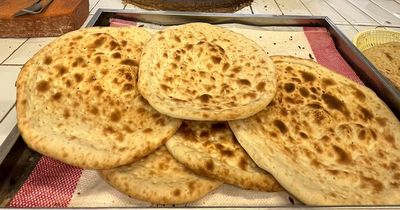
Khubz Tameez
The thick, soft flatbread that turns up on every Saudi table: the bread you tear to scoop foul, sop kabsa juices and wrap around grilled meat. You make a simple yeasted dough with plain flour, fast-action yeast, salt, sugar, olive oil and warm water, knead it briefly, let it rise, divide into balls and shape into thick rounds about the size of a side plate. Onto a screaming-hot baking stone or steel for four or five minutes per side, which is what gives you the puffed centre, the dark blisters across the top, and the soft pliable inside. Traditionally baked against the side of a clay tannur, which is where the name comes from and which gives the bread its deeper char; a stone or steel in a home oven gets you nearly all the way there. Eat warm from the oven, wrapped in a tea towel to keep the moisture in.
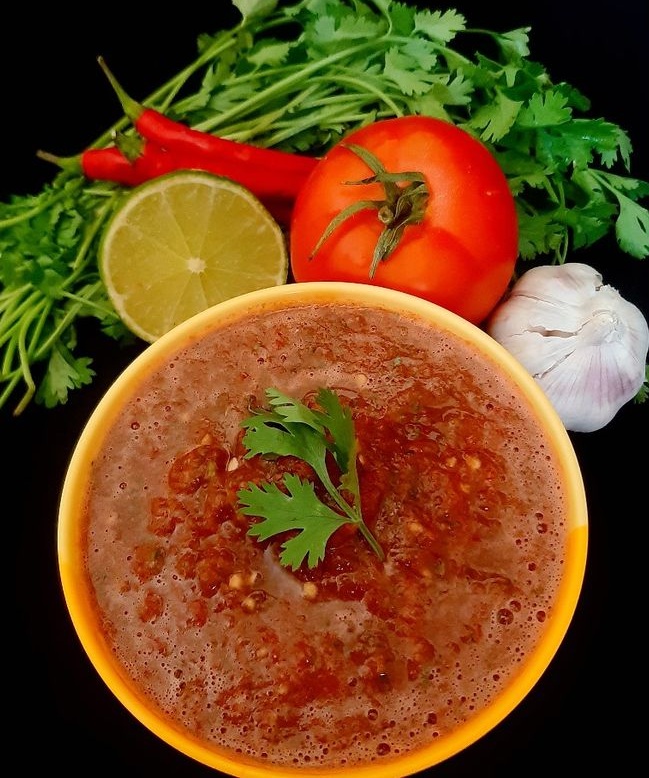
Salata Hara
The chunky chopped salad that sits next to almost everything on a Saudi table: the relish that gives kabsa its bright counter, the cool against grilled meat, the freshness against rich rice. You chop tomato, cucumber and onion fine (the size matters: bigger than a salsa, smaller than a Greek salad), throw in parsley and a green chilli or two, and dress with lemon, olive oil, a pinch of cumin and salt. Five minutes' rest before serving lets the salt draw out a little tomato juice, which becomes the dressing the salad makes for itself. Vivid, crunchy, mildly hot, fast enough to put together while the kabsa rests under its lid. Eaten as a side dish, scooped with bread, or spooned over rice as you go.
More like this
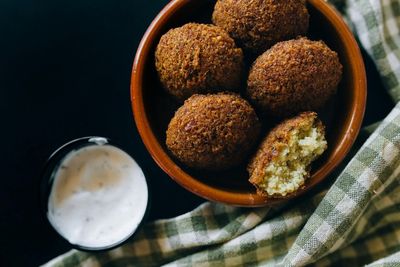
Iraqi Falafel
Dried chickpeas soak in cold water 24 hours, the long soak hydrates them fully without cooking. Once drained, they are ground with onion, garlic, fresh coriander, parsley, dill, green chilli, cumin, coriander seed and ground cardamom to a coarse pale-green crumb. Bicarbonate of soda adds at the last minute for the open, fluffy interior. The mix chills for 30 minutes; small patties form; deep-fry at 175°C for 3 minutes until deep gold outside, fluffy and bright green inside. Eaten in warm samoon with the trimmings.
Murgh Cholay
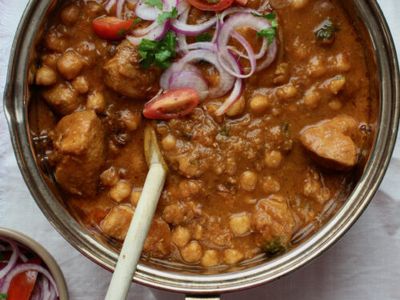
Onion fries in oil until deep gold; ginger-garlic paste joins and is fried for 1 minute. Ground spices (cumin, coriander, turmeric, chilli powder, garam masala) toast in the oil. Chopped tomatoes go in and cook down 8 minutes. Chicken pieces brown briefly. Pre-cooked chickpeas (or tinned, drained) join with water; everything simmers covered 25 minutes. Fresh coriander, green chilli and slivered ginger finish.
Chana Chaat
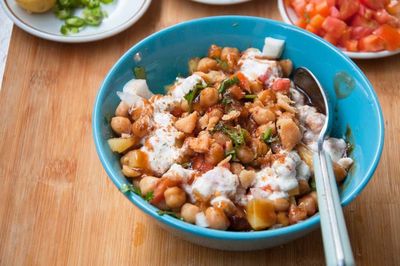
Cooked chickpeas (tinned for speed, OR overnight-soaked and home-cooked for the best texture) toss with diced red onion, finely chopped tomato, small-diced boiled potato and chopped fresh coriander. The dressing: lemon juice, chaat masala (a salty-sour spice mix sold at Pakistani shops), roasted ground cumin, Kashmiri chilli powder and a pinch of salt. Hot chilli sauce and tamarind chutney drizzle on; the chaat tosses; crushed papri tops; eat immediately.
Msabaha
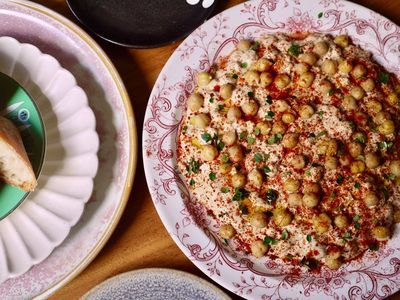
Dried chickpeas soak overnight with a pinch of bicarbonate of soda. The next morning, they simmer in fresh water with garlic, cumin and bay until very soft (about 1 hour, longer if the chickpeas are old). Some chickpeas (about a third) blitz with garlic, lemon juice, tahini and ice water into a smooth purée. The remaining whole chickpeas keep warm in their cooking liquid. To plate: smooth purée on the bottom of the bowl, hot whole chickpeas piled in the centre, more tahini-lemon-garlic sauce poured over, drizzle of olive oil, sprinkle of cumin, scatter of parsley. Eaten with hot bread.