In season

May produce

Tap any item to find recipes that use it.

Bean Akyaw

Bean Akyaw

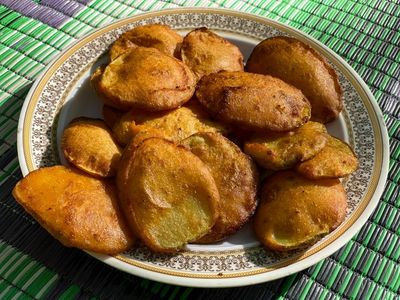
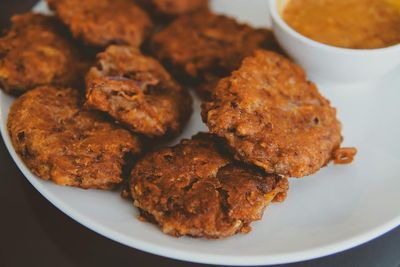
The Burmese yellow split-pea fritter, sold by street vendors in hot oil-spattered cones of newspaper across Yangon's evening markets. You soak yellow split peas overnight until they're softened but not mushy, then blitz to a coarse sandy paste with shallot, garlic, ginger, turmeric and coriander. No flour, no binder; the natural starch in the peas holds the fritters together as they fry. Tablespoonfuls drop into hot oil and fry until they're deep gold and craggy at the edges. Eaten hot from the cone with a sour-sweet tamarind dipping sauce, a wedge of lime, and whatever you can carry while you walk on through the evening crowds.

Snacks 6 hours 35 minutes Serves4
Beef Chili

Beef Chili

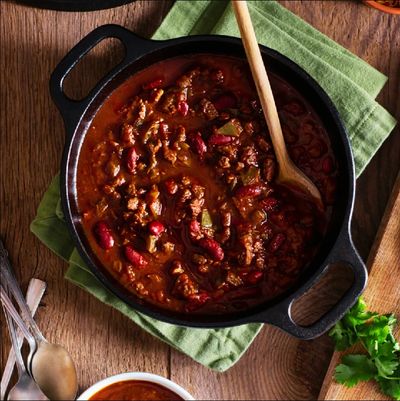
The American household chili, sitting somewhere between Texas-style "no beans" purism and Cincinnati-style "chili over spaghetti" eccentricity, this one has beans, isn't sweetened with cinnamon, and lands solidly in the middle of the bell curve. The flavour is a Tex-Mex spice rack working in concert: chili powder (the broad warmth), cumin (the earthy backbone), smoked paprika (the deep smoke), chipotle powder (the slow-burn heat), brown sugar (a quiet balance), garlic powder (the savoury underline). Fire-roasted tomatoes are the technical detail that lifts this above a generic chili, charring the tomatoes before canning adds a roasted note that ordinary diced tomatoes can't supply. Texture is chunky and brothy rather than thick-and-pasty (this isn't a chili-mac chili), with kidney beans giving substance and pieces of bell pepper still holding their bite. Smell is cumin and smoked paprika on browned beef. Genuinely easy and incredibly forgiving, chili is one of the few dishes that's better the day after it's made, so it tolerates a longer simmer if you have it. American cold-weather bowl food, eaten across every state from Texas to New York, with regional toppings (sour cream, cheese, raw onion, cornbread, oyster crackers) that say more about the cook than the dish.

American 45 minutes Serves8-10
Beef Si Byan

Beef Si Byan

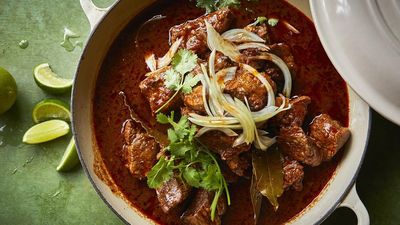
A Burmese curry from the country's Indian-origin community, sitting somewhere between a Madras and a Burmese ohn-no in spice profile. You marinate chunks of beef chuck or shin in turmeric, fish sauce and salt while you fry onions in oil until they're deep brown - that long onion fry is the foundation. The beef browns in the same oil, then ginger-garlic paste, paprika and chilli powder go in, then tomato and water turn it into a stew. Two hours of slow simmer until the meat falls apart at a fork. The signature finish is the see byan, a deep red-orange oil slick that rises to the top of the curry as it reduces, which is what the dish is named for. Eaten with rice or paratha, and a small bowl of pickled vegetable on the side.

Burmese 3 hours 20 minutes Serves4
Beguni

Beguni

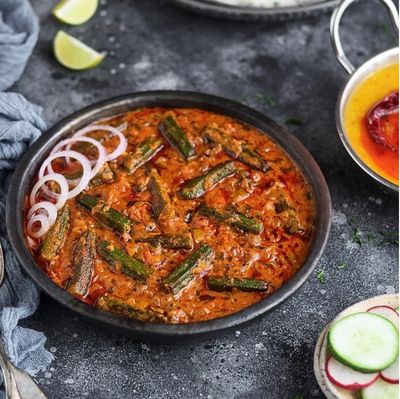
Beguni (from begun, the Bengali word for brinjal/eggplant) is the simplest of the great Bengali pakoras: long thin slices of aubergine, dipped in seasoned chickpea-flour batter and deep-fried. Done well, the contrast is everything, a shatteringly crisp shell with the lightly bitter, custard-soft eggplant inside. It is the defining iftar fritter across Bangladesh, where it appears every evening during Ramadan alongside piyaju (onion fritters) and chickpea ghugni; in West Bengal it is the tea-stall companion of muri and a monsoon-day comfort food. The technique is short on ingredients but particular: the eggplant must be salted first to draw out bitter water and prevent the slice from absorbing oil; the batter must be just thick enough to coat the back of a spoon, with the texture of double cream; and the oil must be hot enough (around 180 C) that the batter sets instantly into a crisp shell. The traditional fat is mustard oil heated until just smoking, then cooled briefly to take the raw edge off; this gives beguni its characteristic mustardy back-note. Nigella seeds (kalonji) in the batter are non-negotiable in Bangladesh, they pop slightly in the hot oil and give the fritter its distinctive aroma. Eat immediately, with a few slivers of raw onion, a green chilli and a wedge of lime.

Snacks 1 hour 5 minutes Serves4
Berbere

Berbere

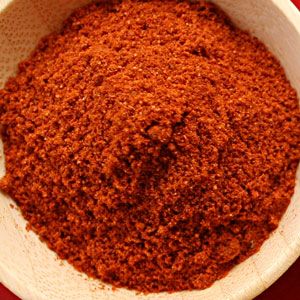
Berbere is the cornerstone of Ethiopian cuisine, a powerfully hot and complex spice blend that's both a condiment and a cooking base. Unlike other chilli-forward blends, Berbere combines dried chillies with cardamom, cloves, and ajowan to create heat with sophistication. The blend is intensely aromatic and demands respect; a little goes a long way. This is a blend for stews and braises that simmer for hours, allowing the spices to develop depth and integrate with other ingredients.

Spices 25 minutes Serves50-60
Big Plate Chicken

Big Plate Chicken

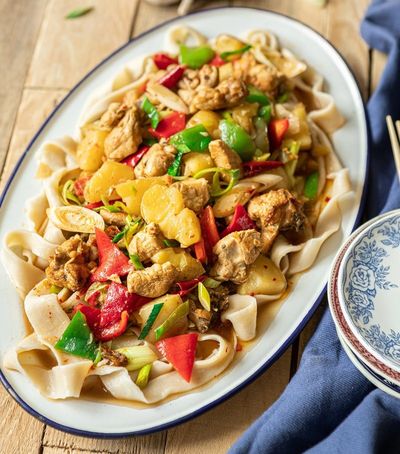
A dish that wears its multi-culture origin on its sleeve: chicken, potato and green pepper in a sweet-savoury soy-based braise (the Han Chinese influence), with star anise, Sichuan pepper, cumin and dried chilli (the Uyghur side), thickened by the starch from chunks of potato, ladled over flat hand-cut belt noodles. The sauce is the centrepiece. Browning sugar in oil before the chicken goes in builds a dark caramel that turns the whole braise a deep brick-red, and the soy underneath gives it weight; the Sichuan peppercorns add a mild numbness rather than dominating. Smell is rich, sweet, slightly spicy, with anise drifting through. Not difficult but not quick, 45 minutes once the prep is done, and the belt noodles are a small project on their own. Born in the 1980s in northern Xinjiang where a generation of Han Chinese migrants opened restaurants alongside the existing Uyghur food economy; the dish is the synthesis of those two traditions and is now the signature dish of Xinjiang cuisine, eaten across China and beyond.

Uyghur 1 hour 10 minutes Serves3-4
Birria

Birria

Birria is a Mexican braise of long, patient ambition. Originally a goat or lamb dish from Jalisco, it has long since adopted beef in much of Mexico and almost entirely in the popular taco version. The flavour comes from a layered chile base: guajillo for fruit and colour, ancho for raisin sweetness, pasilla for earthy depth, and a handful of arbol for a sharper heat. These are simmered with onion, garlic, cinnamon and peppercorns, blended smooth with chipotles in adobo and fire-roasted tomato, then poured over seared chuck and short rib for a long oven braise. Three hours later the meat is meltingly tender, sitting in a rust-red consomme that is the whole point: ladled over the shredded beef in a bowl, scattered with raw onion, cilantro and lime, or used to dip crisp taco shells for the now-iconic quesabirria. The recipe takes time but very little technique; almost everything happens unattended in the oven. Plan ahead and make it a day in advance so the flavours settle and the fat lifts cleanly off the top before you reheat.

Mexican 4 hours Serves8
Boudin Balls

Boudin Balls

Boudin filling combines pork shoulder, pork liver (optional, traditional), cooked rice, onion, celery, garlic, parsley, green onion, cayenne, salt, pepper. Either bought ready-made boudin (casings removed) or made from scratch by simmering then mincing pork shoulder with the aromatics. Filling rolls into walnut-sized balls; chills for 30 min so they hold shape. Dredges in flour, egg, then seasoned breadcrumbs. Deep-fries for 3-4 minutes at 175°C.

Snacks 1 hour 7 minutes Serves16
← Prev Page 2 of 22 Next →