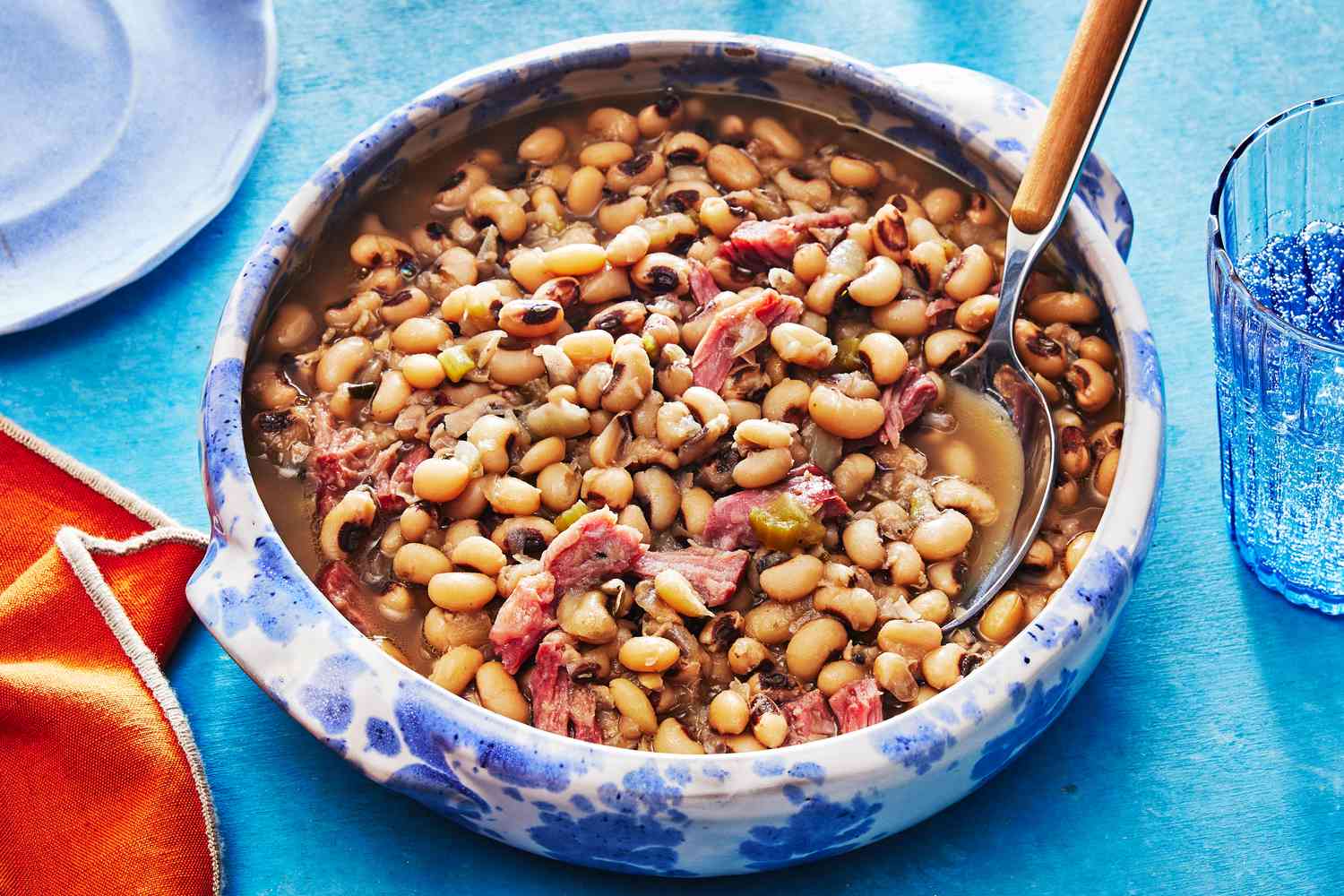
Black-Eyed Peas
The Southern good-luck bean. Slow-simmered with smoked ham hock, onion, garlic and a bay leaf until the broth turns silky and faintly smoky. Eaten on New Year's Day for luck, and on the Kwanzaa table as one of the ancestral African-diaspora dishes.
Overview
Dried black-eyed peas, soaked overnight, simmered low and slow with a smoked ham hock and aromatics. The hock seasons the broth and gives up its meat at the end of the cook. Finished with a splash of cider vinegar to brighten and a pinch of cayenne for warmth. Eaten in shallow bowls with the broth, often spooned over rice.
Ingredients
- 400 g dried black-eyed peas
- 1 smoked ham hock (about 700 g; or 200 g smoked bacon lardons)
- 1 large onion (diced)
- 4 garlic cloves (crushed)
- 1 green pepper (diced)
- 1 celery stick (diced)
- 2 tablespoons olive oil (or 1 tablespoon bacon fat)
- 2 bay leaves
- 1 teaspoon smoked paprika
- ½ teaspoon dried thyme
- ¼ teaspoon cayenne (or to taste)
- 1.5 litres chicken stock (or water, if the hock is well-seasoned)
- 1 tablespoon cider vinegar
- Fine sea salt and black pepper
Method
Stage 1 - Soak
- Tip the peas into a wide bowl, cover with cold water by 5 cm, and leave to soak overnight (or 8 hours). Drain.
Stage 2 - Build the base
- Warm the oil in a heavy pot or Dutch oven over a medium heat. Add the diced onion, green pepper and celery and cook for 6-8 minutes until soft and just starting to colour at the edges.
- Add the garlic, smoked paprika, thyme and cayenne. Stir for 1 minute until the kitchen smells of toasted spice.
Stage 3 - Slow simmer
- Add the drained peas, ham hock, bay leaves and stock to the pot. The hock should be more or less submerged; top up with water if needed.
- Bring to a gentle simmer and skim any grey foam from the surface.
- Cover and cook on a low heat for 1 ½ hours, until the peas are tender and the broth has thickened slightly from the released starch. Check at 1 hour and 1 ¼ hours; pea-to-pea variation in age makes the cook time variable.
Stage 4 - Finish
- Lift the hock out onto a board. When cool enough to handle, pull the meat off the bone in shreds and return to the pot. Discard the bone, skin and any fatty bits you do not want.
- Stir in the cider vinegar. Taste: the broth needs salt (the hock varies wildly in saltiness) and a good grind of black pepper. The cayenne should sit gently in the background; add a pinch more if you want more heat.
Notes
- For a vegetarian version, skip the hock and use vegetable stock; brown a heaping tablespoon of smoked paprika in the oil at the start, add 1 tablespoon of soy sauce and ½ teaspoon of liquid smoke at the simmer, and finish with a knob of butter for richness.
- A small handful of chopped collard greens (or kale) stirred in during the last 15 minutes turns this into a one-pot meal.
- Some Southern cooks add a pinch of sugar to soften the cayenne; experiment with ¼ teaspoon if your peas are tasting sharp.
Serving
In shallow bowls over hot rice (the dish becomes "Hoppin' John" once the rice is included). Hot sauce on the table. A skillet of cornbread for mopping up the broth.
Storage
In the fridge for up to 4 days; in the freezer for up to 3 months. The dish improves overnight as the peas drink up more of the broth.
More like this
Brown Stew Chicken
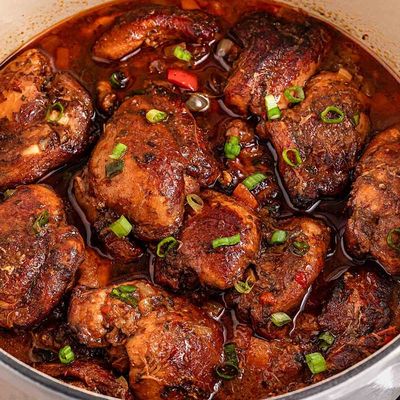
The Sunday-lunch counterpart to goat curry across Jamaica; not curry-driven but built on a deep mahogany gravy that gets its colour from caramelised brown sugar and a few teaspoons of bottled "browning sauce" (Grace is the canonical brand, a concentrated burnt-sugar syrup that's a kitchen staple in every Jamaican household). The chicken is bone-in, marinated overnight in a wet rub of onion, bell pepper, scallions, allspice, ginger and thyme, then browned hard and slow-braised until the meat slips off the bone. Flavour is savoury and slightly sweet with a deep thyme back-note and a whisper of Scotch bonnet heat from the whole pierced fruit in the pot. The gravy is what you actually want; thick, dark, sweet-savoury, glossy with rendered chicken fat, the kind of gravy you'd happily eat over plain rice as its own meal. Smell is browning sugar, thyme, and the unmistakable allspice signature. Patient cooking but easy: marinate the day before, then 30 minutes of active prep and 2 hours of unattended braise. The pairing with [[rice-and-peas]] is non-negotiable across Jamaican households.
Cochinita Pibil
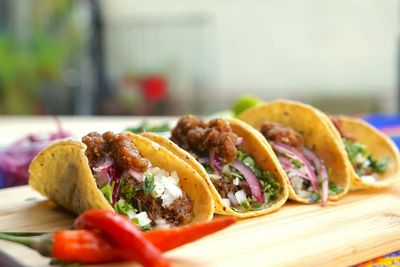
Pork shoulder is rubbed with a paste of achiote, orange and lime juices, garlic, oregano and warming spices, then left to marinate overnight. The pork is wrapped in banana leaves and roasted low and slow until it shreds with two forks. The pibil sits in its own bright red juices; warm corn tortillas and habanero-bright pickled red onions are the only accompaniments needed.
Efo Riro
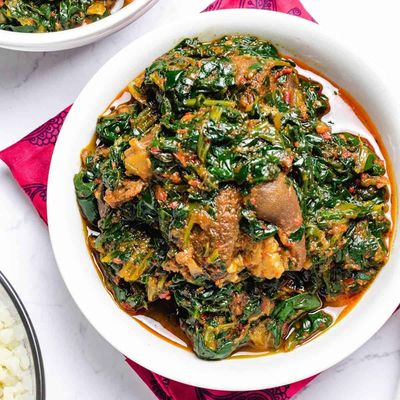
Beef (or goat, or prawns) parboils briefly. Smoked fish soaks. A pepper paste of red bell pepper, Scotch bonnet, onion and tomato blitzes in the blender. Palm oil heats; the pepper paste fries for 10 minutes until reduced and the oil rises. Stock, meat, smoked fish, ground crayfish and iru go in; simmers for 15 minutes. Spinach goes in last, wilts in 5 minutes. Served with rice, eba, fufu or pounded yam.
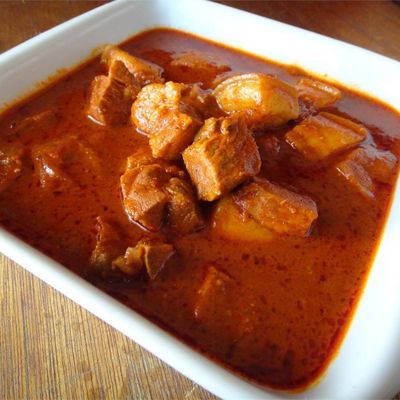
Goan Pork Vindaloo
Whole Kashmiri red chillies soak in white wine vinegar; ground with garlic, ginger, cumin, peppercorns, cinnamon, cloves and mustard into a thick wet paste. Pork shoulder cubes marinate overnight in the paste. Browned in oil; cooked with onions, tomato and reserved marinade until the pork is tender and the gravy is glossy. Salt last. A small spoonful of jaggery balances the vinegar.