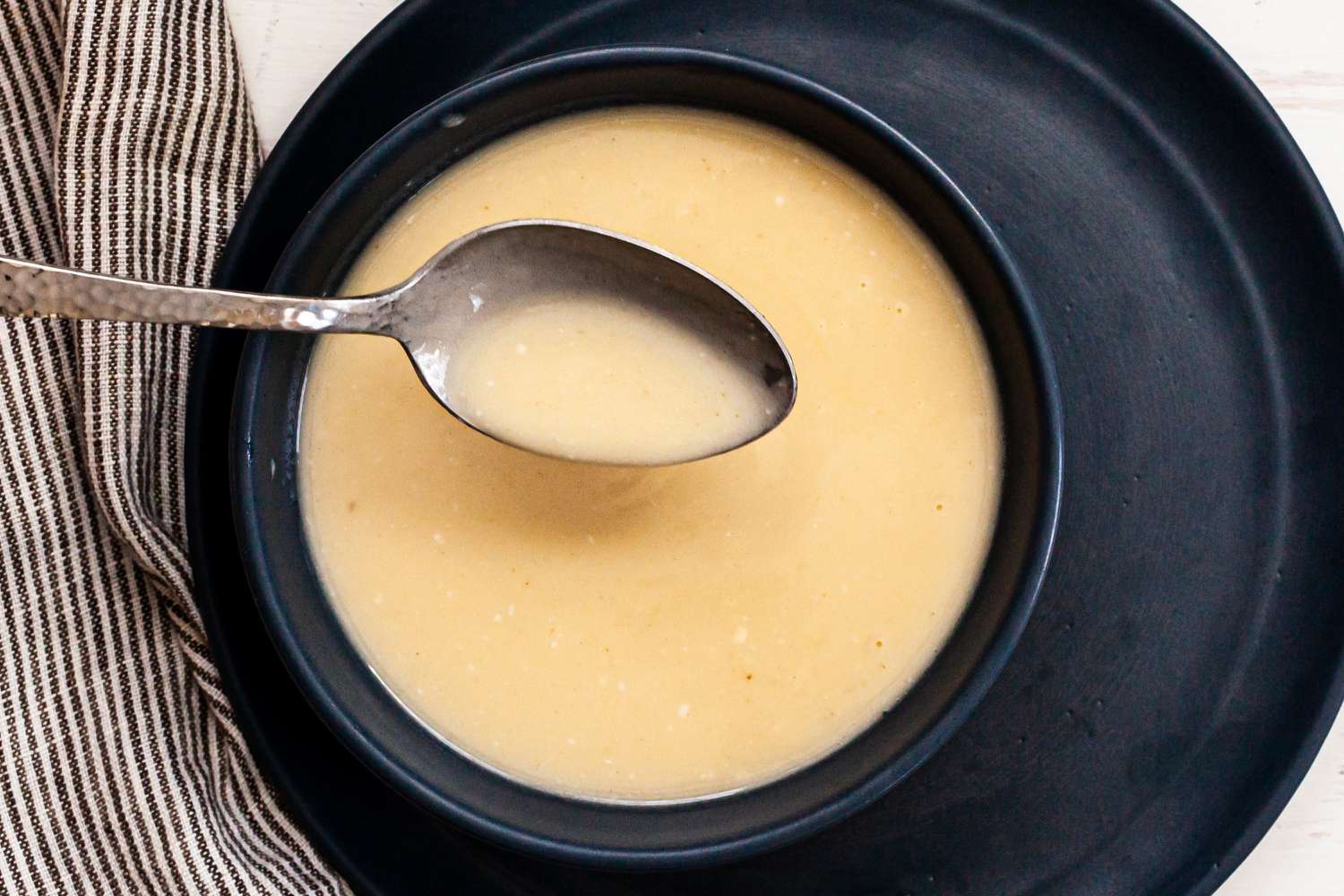
Veloute
Veloute is bechamel's stock-based cousin. Same roux technique, just stock in place of milk. It tastes of whichever protein your stock came from, so chicken veloute goes over poached chicken, fish veloute over fish, and so on. A small change in the liquid makes a noticeable change in the sauce.
Overview
Veloute is bechamel's stock-based twin. The technique is identical: cook a roux, then whisk in warm liquid until thickened. The difference is the liquid: hot stock instead of hot milk. The result is a sauce that tastes of the protein the stock came from, with a smooth velvety mouthfeel.
Three classical versions exist, named for their stock:
- Veloute de volaille (chicken veloute): with chicken stock.
- Veloute de veau (veal veloute): with veal stock.
- Veloute de poisson (fish veloute): with fish stock or fumet.
Each is a base. The finished sauces are derivatives, made by enriching the veloute with one or two additional ingredients.
The Method
For 500 ml of medium-thick veloute:
Ingredients
- 30 g unsalted butter
- 30 g plain flour
- 500 ml hot stock (chicken, veal or fish; the one matching the dish)
- salt and white pepper to taste
Method
- In a heavy-based saucepan, melt the butter over medium heat.
- Whisk in the flour. Cook the roux, whisking constantly, for 2 minutes. Unlike bechamel, you can take it slightly further; a pale gold (blond) roux gives a more savoury, nutty sauce. Stop just before any colour browns.
- Pour in a quarter of the hot stock while whisking hard. The roux clumps; keep whisking until smooth.
- Add the rest of the stock in three additions, whisking each in fully before the next.
- Bring to a slow simmer. Cook 15-20 minutes, whisking occasionally, skimming any film that forms on the surface.
- Season with salt and white pepper. White pepper keeps the sauce visually pale; black pepper leaves dark specks.
The cooking time is longer than bechamel because the stock has its own gelatins and proteins that need to settle into the sauce. The result is glossier, more concentrated, more savoury than bechamel.
Pass through a fine sieve before serving for the smoothest texture (this is standard in restaurant practice).
The Derivatives
Sauce Supreme
The most useful chicken-veloute derivative. To 500 ml chicken veloute add:
- 100 ml double cream
- 1 tablespoon lemon juice (off the heat)
- 30 g cold butter (whisked in off the heat for shine)
Pour over poached chicken breast. The classical chicken-with-supreme is a textbook dish that home cooks should learn before any other.
Sauce Allemande
Chicken or veal veloute thickened further with egg yolks and lemon. To 500 ml veloute:
- 2 egg yolks beaten with 50 ml cream
- Squeeze of lemon Off the heat. Tempers with hot veloute, then heats gently without boiling. Classical with veal blanquette.
Sauce Poulette
Allemande + mushrooms. Sweat 100 g sliced button mushrooms in butter; fold through. Mushroom-and-egg-yolk veloute. Classic French bistro sauce.
Sauce Albufera
Chicken veloute with veal demi-glace (or beef glace) added. 500 ml veloute + 50 ml demi-glace + 50 ml cream + 1 tablespoon pimento butter. Restored colour and savoury depth. Pour over poached chicken breast.
Sauce Vin Blanc (Fish Veloute Derivative)
For poached fish. Make fish veloute, then off heat whisk in 50 ml cream + 30 g cold butter (cubed) + 2 tablespoons lemon juice. Classical with sole.
Sauce Bercy (Fish Veloute Derivative)
Add shallots reduced in white wine, plus parsley and a squeeze of lemon. Classical with shellfish or grilled fish.
Why Stock Quality Matters Most Here
Bechamel makes do with shop-bought milk. Veloute cannot fake the stock. A weak stock makes a weak veloute, regardless of how good the technique is. Make a proper stock ahead of time.
If you must use shop-bought stock: reduce 500 ml of fresh chilled stock by half before using. The reduction concentrates flavour and helps mask the slight tinniness of commercial stock.
Common Mistakes
The veloute is grey or muddy. Stock was made with marrow bones not roasted (for veal) or with gills left on fish heads (for fish). Both turn the sauce grey. Use clean clear stock.
The veloute tastes flat. Under-reduced stock, or the roux was under-cooked. Reduce the stock by a quarter before whisking in, and cook the roux a touch longer for a more nutty veloute.
The sauce has a "tinny" taste. Used commercial stock cube + water. There is no recovery for this batch; make proper stock next time.
The sauce is thin. Either under-cooked, or the stock was very thin (no body). Simmer to reduce; or add 1 teaspoon arrowroot slurried with 1 tablespoon cold water, whisked in over heat.
Skin on the surface. Cover with a buttered paper, butter-side down, on the sauce surface while it rests.
The sauce broke when reheated. A finished sauce containing cream and butter (supreme, vin blanc) can break if boiled. Reheat gently, over very low heat, whisking. If it does break, whisk in 1 tablespoon cold cream off the heat to bring it back.
Where Next
- Bechamel: the milk-based twin.
- Espagnole: the brown stock version.
- Veloute recipe: canonical recipe.
- Stocks-Sauces Course landing: back to the main course.
More like this
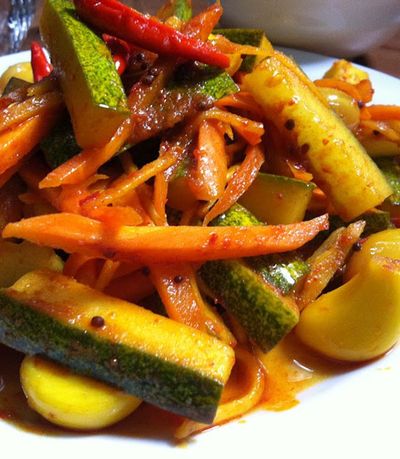
Acar Timun
Cucumber, carrot, shallot, chilli prep into thin slices or matchsticks. Salt rests for 10 minutes to draw moisture, drains. A simple dressing of vinegar, sugar, water and ginger whisks together. Vegetables toss with the dressing; rest for 1 hour at room temperature. Eats cool, never refrigerated cold; the texture suffers.
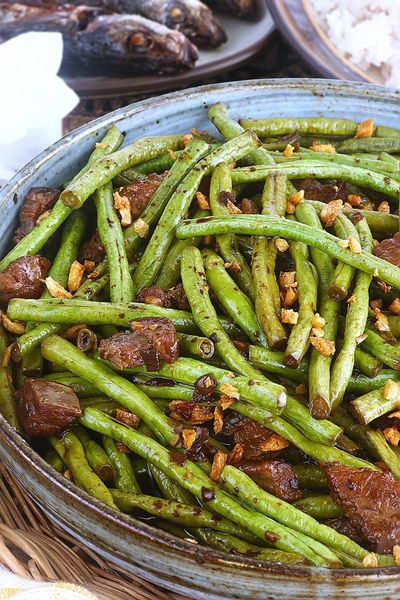
Adobong Sitaw
Garlic browns in oil; long beans toss in to colour briefly. Soy and vinegar pour in with bay and peppercorns; the beans braise covered until tender. Lid off; the liquid reduces to a glaze. Salt at the end, not the start, since soy is salty enough.
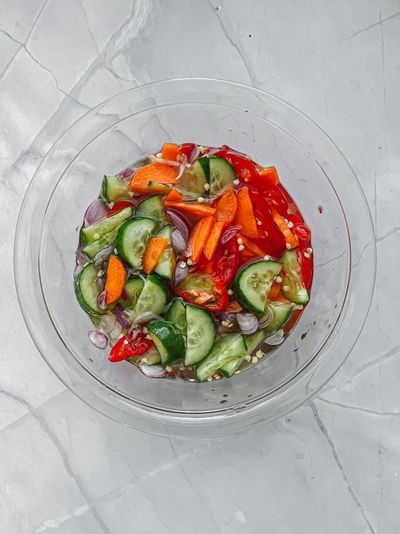
Ajad
A simple syrup of rice vinegar, palm sugar, water and salt is brought to a gentle simmer to dissolve the sugar, then cooled. Cucumber, shallot and chilli are sliced thin and combined in a small bowl. The cooled syrup is poured over. Rested for 10-15 minutes for the vegetables to wilt slightly into the dressing. Served in small individual ramekins as a dip, OR in a larger bowl as a side, with peanuts sprinkled on top.
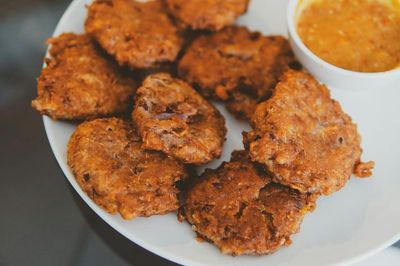
Akara
Dried black-eyed beans soak briefly to loosen the skins; the skins rub off (this is the key step, skin-on akara is bitter and grey). The peeled beans go into a blender with onion, Scotch bonnet and just enough water to make a thick batter (not a paste). The batter is whipped by hand or with a wooden spoon for 5 minutes until light and aerated, this is what makes akara fluffy rather than dense. Spoonfuls drop into 175°C oil and fry for 3-4 minutes per side until golden. Drained on paper. Eaten hot.