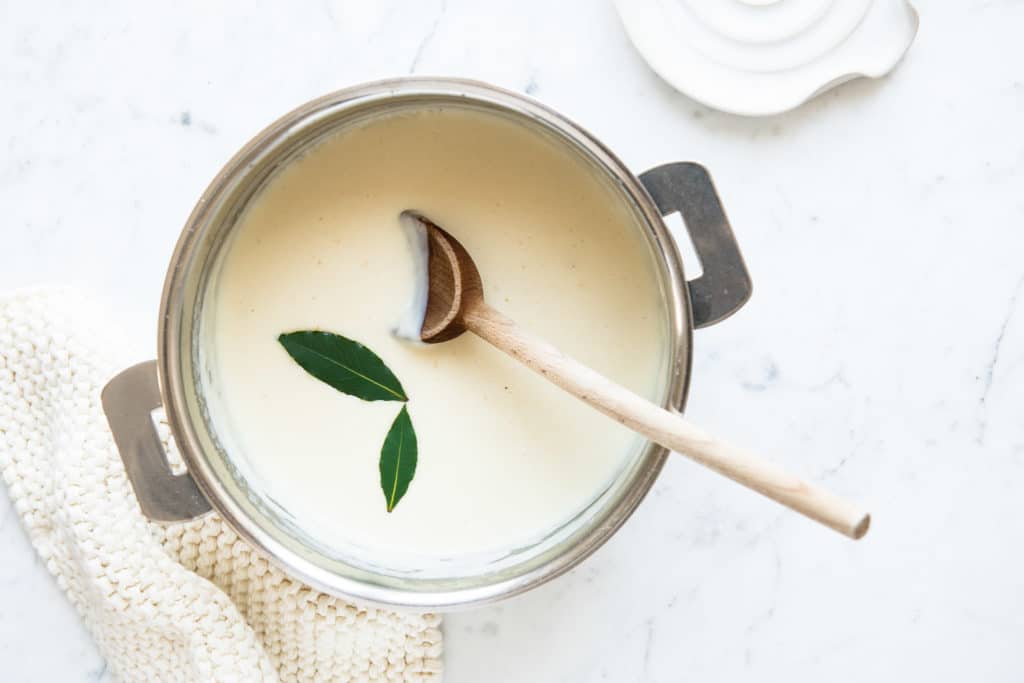
Bechamel
Bechamel is probably the most useful sauce you can know by heart. Equal weights of butter and flour, milk whisked in, five minutes of attention. Once you can make it without thinking, mac and cheese, lasagne, moussaka, gratin dauphinois and a croque monsieur are all yours.
Overview
Bechamel is the simplest of the five mother sauces. The technique is two steps:
- Roux. Equal weights of butter and flour cooked together to form a paste.
- Liquefy. Hot milk whisked in gradually over heat until smooth and thickened.
The science is starch gelatinisation: the flour starch swells in hot liquid, thickening the sauce. The butter coats the flour particles first, preventing lumps. The cooking of the roux removes the raw-flour taste.
A correctly made bechamel is smooth, glossy, pours in a slow ribbon from the spoon, and tastes of milk first, butter second, no flour at all.
The Ratio
For 500 ml of medium-thick bechamel (the everyday consistency):
- 30 g unsalted butter
- 30 g plain flour
- 500 ml whole milk
- 1 pinch fine sea salt
- 1 small grating of nutmeg
The butter-to-flour ratio is 1:1 by weight. The flour-to-liquid ratio is roughly 6%. Higher (8-10%) gives a thicker bechamel for gratin or souffle base; lower (4-5%) gives a pourable sauce.
Method
Stage 1 - Warm the Milk
- Pour 500 ml milk into a small saucepan.
- Heat gently to just below boiling. The surface should shimmer; don't let it boil.
- Set aside.
Warm milk whisks in faster and smoother than cold. Cold milk thickens the roux unpredictably and is more likely to clump.
Optional: infuse the milk before warming with classical aromatics:
- 1 small onion (peeled, halved)
- 2 cloves stuck into the onion
- 1 bay leaf
- 6 black peppercorns
Bring to a simmer, then off the heat for 15 minutes. Strain. The infused milk produces a more savoury sauce; particularly good for lasagne or moussaka.
Stage 2 - Make the Roux
- In a heavy-based saucepan, melt 30 g butter over medium heat until foamy but not browning.
- Add 30 g flour all at once. Whisk immediately to combine.
- Cook the roux, whisking constantly, for 2 minutes. The mixture should bubble gently and smell biscuity. The colour stays pale; do not let it brown (that's a different sauce family).
The 2-minute cook is non-negotiable. Under-cooked roux tastes of raw flour; the finished sauce has a chalky, gluey mouthfeel.
Stage 3 - Whisk in the Milk
- Off the heat (briefly), pour in about a quarter of the warm milk while whisking hard.
- The mixture goes thick and clumpy. Keep whisking until smooth.
- Return to medium heat. Add another quarter of the milk while whisking.
- Continue until all the milk is in.
- Cook over medium heat, whisking frequently, until the sauce thickens to a pourable ribbon (5-8 minutes). It should coat the back of a spoon, and a finger drawn across leaves a clear track.
The slow milk addition is what prevents lumps. Dumping all the milk in at once produces a clumpy, lumpy sauce that has to be sieved.
Stage 4 - Season and Finish
- Reduce heat to low. Cook another 2-3 minutes. This further cooks out the flour taste.
- Season with the pinch of salt and the grating of nutmeg.
- Taste. Adjust salt.
The finished sauce should look glossy, slightly opaque, and pour in a thick ribbon.
The Derivatives (Daughter Sauces)
These are all made by finishing a base bechamel with a single ingredient.
Mornay (Cheese Sauce)
Add 50 g grated gruyere or parmigiano-reggiano (or both) to 500 ml bechamel off the heat. Stir until melted. The classic for cauliflower cheese, macaroni cheese, croque monsieur.
Soubise (Onion Sauce)
Add 200 g sweated onions, pureed smooth, to 500 ml bechamel. Excellent with roasted chicken or lamb.
Nantua (Shellfish Sauce)
Add 100 g shellfish butter (made by pulverising prawn or crab shells with butter then sieving) and a splash of cream to 500 ml bechamel. Classical with quenelles and seafood gratin.
Aurore
Add 4 tablespoons tomato puree to 500 ml bechamel; the colour shifts from white to pink. Pairs with eggs, chicken, vegetable bakes.
Bechamel for Souffle
Make a thicker version (40 g flour, 40 g butter per 500 ml milk) so it can carry beaten egg whites without collapsing.
Common Mistakes
The sauce is lumpy. Milk added too fast, or cold milk on hot roux. Whisk harder; if lumps persist, push the sauce through a fine sieve. Next time warm the milk first and add gradually.
The sauce tastes of flour. Roux not cooked long enough, or the sauce was not simmered after thickening. Always cook the roux 2 minutes; finish the sauce on low heat for 5 minutes after thickening.
The sauce is too thick. Whisk in additional warm milk, a little at a time, until pourable.
The sauce is too thin. Continue cooking over medium-low heat to reduce. Or whisk in a small slurry of cold milk and cornflour (1 teaspoon cornflour in 2 tablespoons cold milk), poured in while whisking; thickens in 1 minute.
The sauce has a skin on top. Sat too long uncovered. Press a piece of buttered baking paper directly onto the surface while it rests; the butter side prevents the skin.
The sauce tastes flat. Under-salted, or no nutmeg. Both make a noticeable difference. Salt: 1/4 to 1/2 teaspoon per 500 ml. Nutmeg: a tiny grating (3-4 swipes of a microplane).
The sauce broke during reheating. Reheated too aggressively. Bechamel separates if boiled hard. Reheat over low-medium heat, whisking; add a splash of milk if it has thickened in the fridge.
Storage
- Fridge: 3 days. Press buttered paper to the surface before chilling.
- Freezer: 2 months. Thaw in the fridge overnight, then reheat gently while whisking; add milk if needed.
Where Next
- Veloute: the same roux technique, but with stock instead of milk.
- Espagnole: the brown roux version, with brown stock.
- Bechamel recipe: canonical recipe with exact quantities.
- Stocks-Sauces Course landing: back to the main course.
Recipes mentioned here
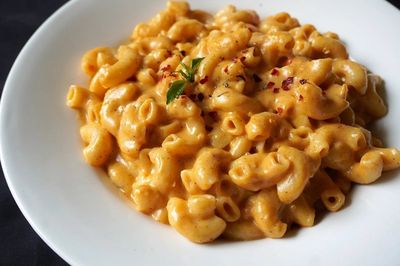
Mac and Cheese
Pasta cooks just past al dente in salted water. A béchamel builds from butter, flour, milk and a pinch of mustard powder, paprika and cayenne. Off the heat, grated cheese melts in. Pasta tosses through the sauce; tipped into a baking dish; topped with buttered breadcrumbs; baked for 25 minutes until deeply golden.
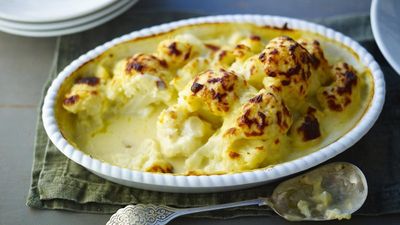
Cauliflower Cheese
Cauliflower florets blanch briefly so they're not raw but not cooked through. A béchamel takes mature cheddar, parmesan and mustard. The cauliflower nestles into the dish, the sauce drowns it, breadcrumbs and more cheese top, the oven does the rest.

Croque Monsieur
A quick béchamel goes onto two slices of bread, ham fills the middle, more béchamel and grated gruyère pile on top. Bakes in a hot oven until the cheese melts into a deep golden crust.
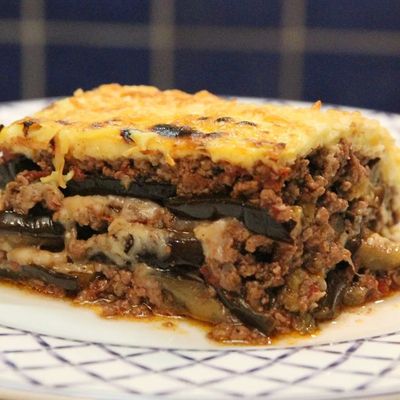
Moussaka
Aubergines and potatoes pan-fry or roast separately. Lamb mince cooks down with onion, garlic, cinnamon and tomato into a rich ragù. The layers go into a deep dish, topped with a cheese-rich béchamel that sets golden in the oven.
More like this
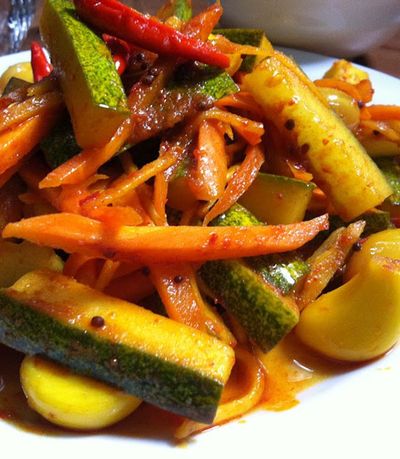
Acar Timun
Cucumber, carrot, shallot, chilli prep into thin slices or matchsticks. Salt rests for 10 minutes to draw moisture, drains. A simple dressing of vinegar, sugar, water and ginger whisks together. Vegetables toss with the dressing; rest for 1 hour at room temperature. Eats cool, never refrigerated cold; the texture suffers.
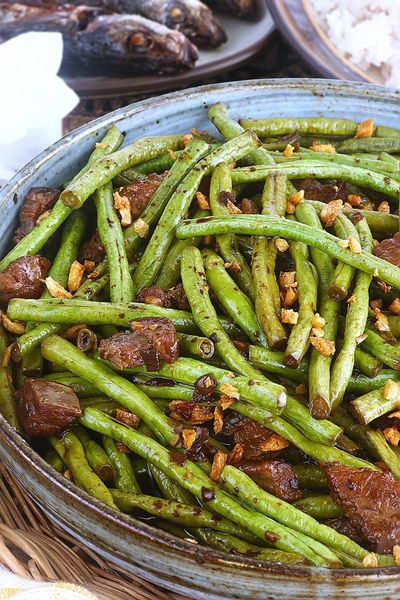
Adobong Sitaw
Garlic browns in oil; long beans toss in to colour briefly. Soy and vinegar pour in with bay and peppercorns; the beans braise covered until tender. Lid off; the liquid reduces to a glaze. Salt at the end, not the start, since soy is salty enough.
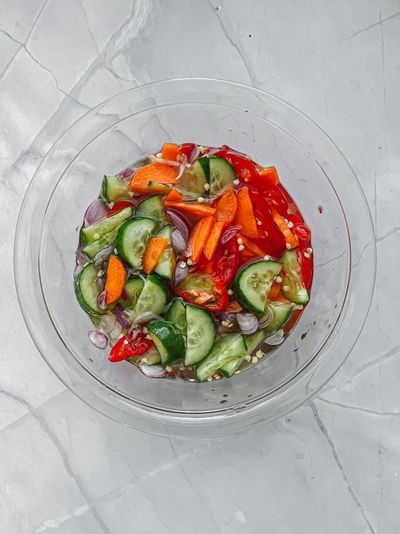
Ajad
A simple syrup of rice vinegar, palm sugar, water and salt is brought to a gentle simmer to dissolve the sugar, then cooled. Cucumber, shallot and chilli are sliced thin and combined in a small bowl. The cooled syrup is poured over. Rested for 10-15 minutes for the vegetables to wilt slightly into the dressing. Served in small individual ramekins as a dip, OR in a larger bowl as a side, with peanuts sprinkled on top.
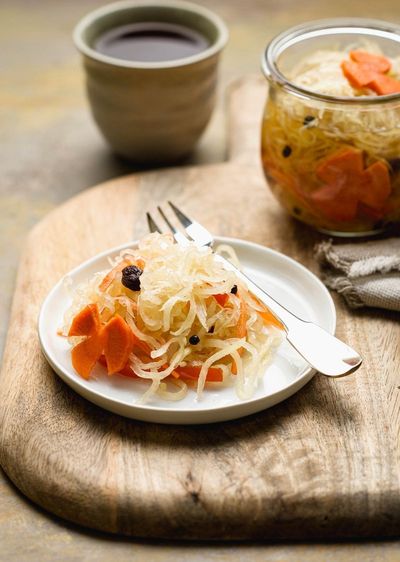
Atchara
Green papaya is peeled, seeded and shredded on a coarse grater. Carrot, ginger, garlic, red pepper, onion and raisins are all prepared in matching shreds. The vegetables are salted and rested for 1 hour to draw water; rinsed and squeezed dry. A syrup of cane vinegar, sugar and whole peppercorns simmers for 5 minutes. Hot syrup is poured over the vegetables in a sterilised jar. The jar is sealed, cooled and refrigerated overnight before eating. Improves over the following week.