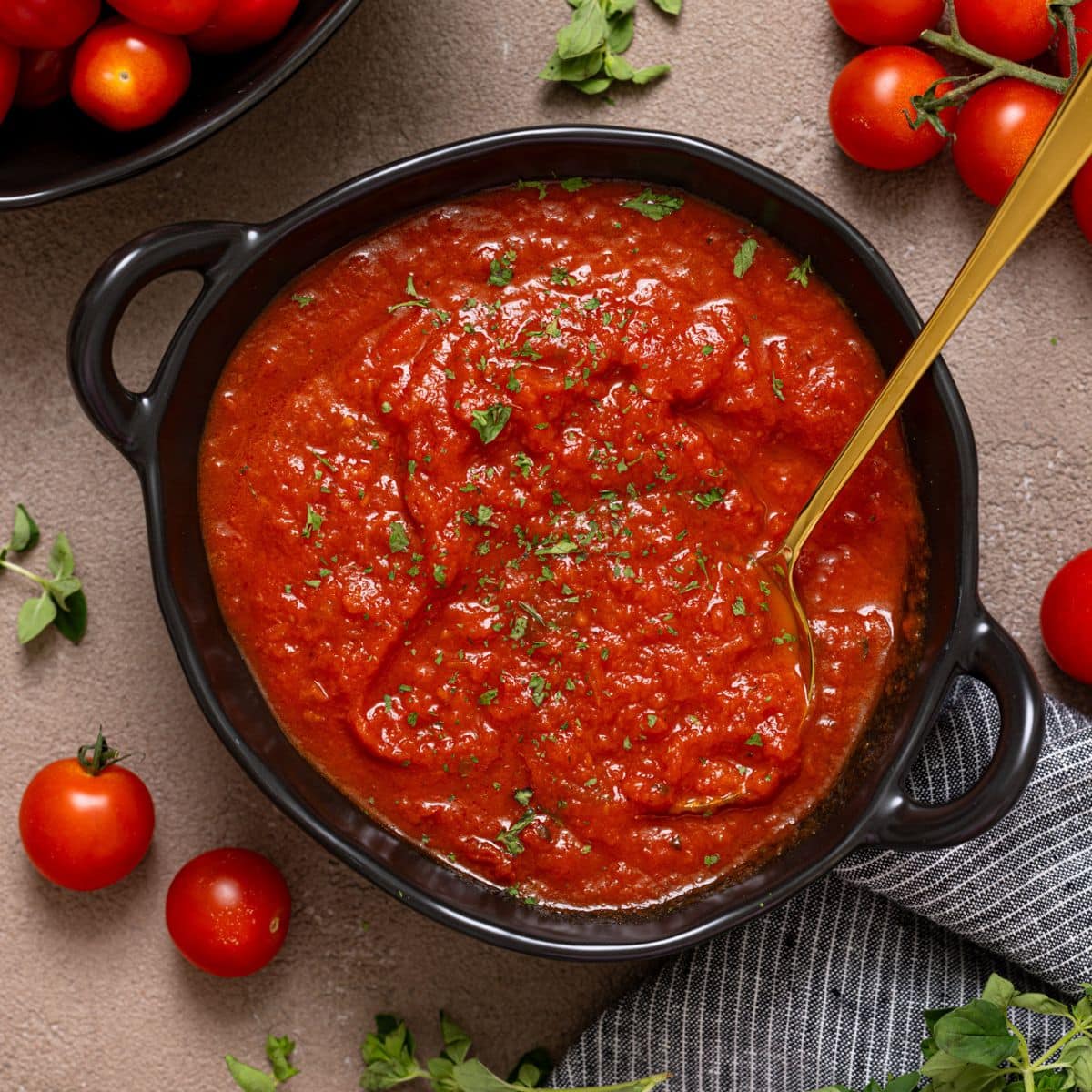
Tomato Sauce
Tomato sauce is the most well-travelled member of the mother sauce family. The Italians, Spanish, Mexicans and Americans all do their own version, but most of it boils down to two starting points: the slow-cooked Italian sugo and the quick raw-passata pizza-style. Get those down and most red sauces are variations on one or the other.
Overview
Tomato sauce occupies a strange place in classical French canon. Escoffier added it to the five mothers in the early 1900s, recognising its ubiquity in Mediterranean and Italian-French cooking. Some French purists still treat it as a daughter sauce; the rest of the world treats it as foundational.
Two foundational styles cover most applications:
- Slow-cooked tomato sauce (sauce tomate, sugo, or arrabbiata's base). Onion, garlic, herbs, tinned plum tomatoes, simmered 30-60 minutes. Pours over pasta, layers into lasagne, finishes meatballs.
- Raw or barely-cooked passata (the Neapolitan pizza-sauce style). Just crushed tomatoes, salt, olive oil, basil. The 90 seconds in the pizza oven is the only cooking.
The two are very different, despite shared ingredients. Slow-cooked is rich, deep, slightly caramelised. Raw is bright, acidic, vivid. You can't get to one from the other; pick the right style for the dish.
The Tomatoes
Quality matters more than recipe.
Best: San Marzano DOP tomatoes from Italy. Look for the DOP seal. Lower water content, sweeter, less acidic, the standard against which others are measured.
Acceptable substitutes: "Italian plum tomatoes" without the DOP label (cheaper, slightly less consistent), good organic brands like Mutti or Cirio.
Avoid: generic supermarket tinned tomatoes. They tend to be watery, with a metallic sour edge. Fresh in-season tomatoes are fine if peak quality and ripe; out-of-season "fresh" tomatoes are worse than a decent tin.
For raw passata (pizza), use whole tinned tomatoes and crush yourself (more texture, more control) rather than buying passata that is already pureed (often smoother than you want).
Slow-Cooked Tomato Sauce (Italian Sugo)
The everyday pasta sauce. For 4 portions:
Ingredients
- 2 tablespoons olive oil
- 1 medium onion (finely chopped)
- 3 garlic cloves (finely chopped or sliced)
- 1 x 400 g tin whole plum tomatoes (San Marzano if possible)
- 1 small handful fresh basil leaves (or 1 teaspoon dried oregano)
- Pinch caster sugar (only if the tomatoes are acidic)
- Salt and pepper
Method
- Heat the oil in a heavy-based pan over medium heat. Add the chopped onion. Cook gently 10 minutes, stirring, until soft and translucent (not browned).
- Add the garlic. Cook 1 minute until fragrant.
- Crush the tomatoes by hand into the pan (or use a fork in the tin first). Add their juice.
- Half-fill the empty tin with water; swill out the residue; tip into the pan.
- Tear in half the basil leaves. Season with salt.
- Simmer uncovered for 25-40 minutes, stirring occasionally. The sauce thickens and deepens in colour.
- Taste. Adjust salt. Add a small pinch of sugar if it tastes too sharp.
- Stir in the remaining fresh basil at the end.
For a smoother sauce, pass through a sieve or food mill (mouli). For a chunkier sauce, leave as is.
Variations
- Arrabbiata: add 1 dried bird's-eye chilli to the oil with the garlic. Finish with chopped parsley.
- Puttanesca: add 4 anchovy fillets and 1 tablespoon of capers with the garlic; finish with 50 g chopped black olives.
- Sugo al pomodoro: the standard above; the pasta sauce of every Italian household.
- Marinara: the same as sugo but cooked with garlic instead of onion, very short (10-15 minutes). Less mellow, more aggressive.
Raw Tomato (Pizza Sauce)
The Neapolitan tradition. No cooking. Just crushed tomatoes, salt, and either basil or oregano.
Ingredients (enough for 2-4 pizzas)
- 1 x 400 g tin whole San Marzano tomatoes
- 1/2 teaspoon fine sea salt
- 4-5 fresh basil leaves (added to the pizza, not the sauce)
Method
- Pour the tomatoes into a wide bowl with their juice.
- Crush each tomato by hand: squeeze it through your fingers into chunks. Stop when the texture is roughly chunky, with some 5 mm pieces and some smaller bits.
- Add the salt. Stir.
- Done.
The 90 seconds in the pizza oven cooks the sauce. Pre-cooking ruins it: the sauce loses its brightness and tastes like pasta sauce on bread, not pizza.
See Pizza Tutorial / Sauce for fuller detail.
Tomato Sauce for Other Cuisines
Bolognese
Tomato + meat. Italian ragu. Starts with a soffritto (onion, carrot, celery), browned ground beef and pork, white wine, then tinned tomatoes, then very long slow cook (2-4 hours). Different sauce than sugo; less tomato-forward, more meat-rich.
Hogao (Colombian Sofrito)
Tomato + onion + garlic + cumin, slowly cooked. The starting sauce of nearly every Colombian savoury dish. Built like sugo but with cumin and sometimes red bell pepper.
Marinara (American Italian)
A thick, herby sauce with oregano, parsley, and red wine. Used as a dipping sauce for fried foods, on Italian-American pasta. Spicier and more aromatic than the Italian original.
Salsa de Tomate (Spanish)
Similar to sugo but often with green pepper. Used on tortilla, fried eggs, and as a starter sauce for many Spanish stews.
Salsa (Mexican)
Different family entirely. Mexican salsas are usually raw or roasted-then-blended, with green chillies, lime, coriander, onion. Sharper, fresher, served as a condiment rather than a cooked sauce.
Common Mistakes
The sauce tastes harsh and acidic. The tomatoes are wrong, or the sauce didn't cook long enough. Try a better brand (San Marzano), or simmer longer (the acidity mellows over time). A pinch of sugar can mask, but it doesn't fix.
The sauce tastes flat. Under-salted. Tomato needs salt to come alive. Add 1/4 teaspoon at a time.
The sauce is watery. Either too much water added, or too little simmering. Continue uncovered until it thickens.
The sauce is bitter. Garlic burnt during the saute. Bitter garlic ruins the whole batch. Use lower heat and shorter sweat times.
The sauce is one-note. No basil/oregano/herb finish. Stir in fresh herbs at the end; they brighten the long-cooked depth.
The pizza sauce is wet, soaks the base. Used a smooth puree, or applied too thickly. Use crushed tomato (chunky), apply thinly.
Where Next
- Pizza tutorial / Sauce: deep-dive on the no-cook style.
- Pizza Sauce recipe: canonical pizza-sauce recipe.
- Bechamel: the white mother sauce.
- Stocks-Sauces Course landing: back to the main course.
Recipes mentioned here
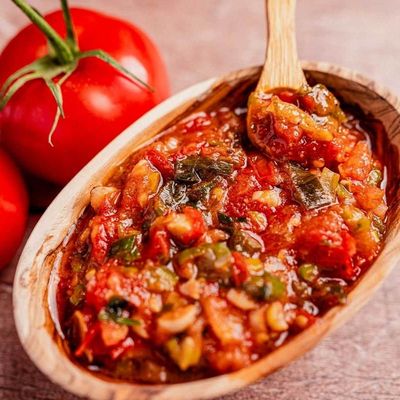
Hogao
Long spring onion (cebolla larga) and white onion are softened in oil; garlic, cumin and annatto come in; grated tomato cooks down 15 minutes until thick and sticky. Seasoned and rested. The texture is somewhere between a sauce and a paste, spoonable but coating.
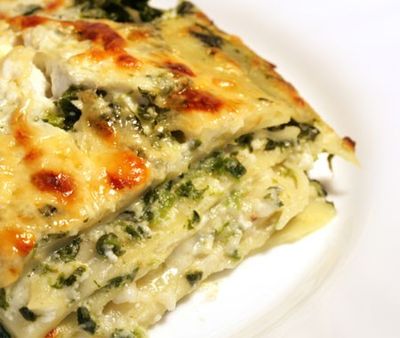
Lasagne
A rich, layered Italian baked pasta combining slow-cooked meat ragù with silky béchamel enriched with basil pesto. Homemade fresh pasta sheets are essential for the melt-in-the-mouth texture that sets this lasagne apart. The pesto adds a distinctive herbaceous note that complements the béchamel beautifully.
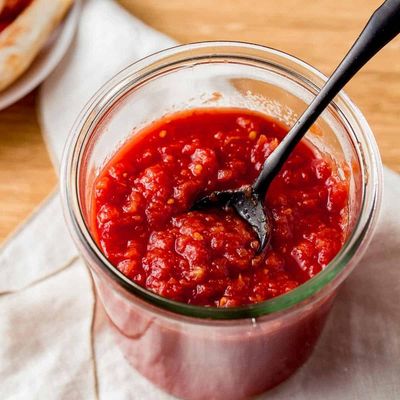
Pizza Sauce
Pizza sauce is deceptively simple yet entirely dependent on quality ingredients and proper technique. San Marzano tomatoes are preferred for their low acidity and sweet flavor. The sauce is briefly cooked, never long-simmered, to preserve the fresh tomato character. Garlic, oregano, and basil are the only seasonings; they should enhance, never dominate. This is the classic sauce of Naples and New York, used for Margherita and simple cheese pizzas.
More like this
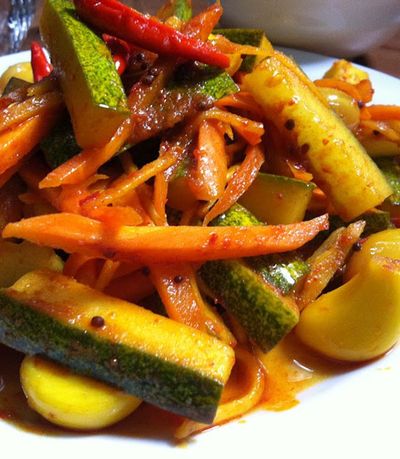
Acar Timun
Cucumber, carrot, shallot, chilli prep into thin slices or matchsticks. Salt rests for 10 minutes to draw moisture, drains. A simple dressing of vinegar, sugar, water and ginger whisks together. Vegetables toss with the dressing; rest for 1 hour at room temperature. Eats cool, never refrigerated cold; the texture suffers.
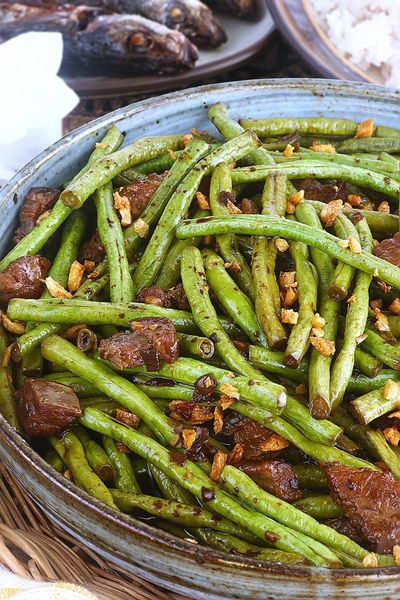
Adobong Sitaw
Garlic browns in oil; long beans toss in to colour briefly. Soy and vinegar pour in with bay and peppercorns; the beans braise covered until tender. Lid off; the liquid reduces to a glaze. Salt at the end, not the start, since soy is salty enough.
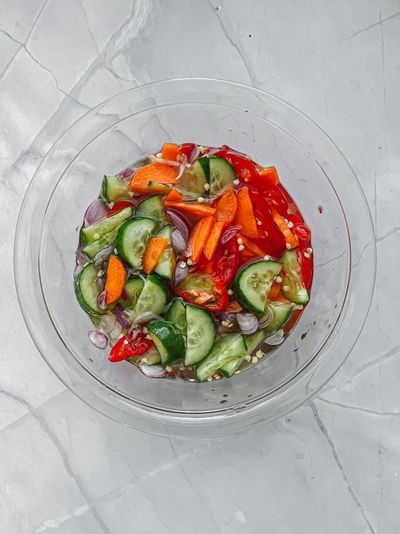
Ajad
A simple syrup of rice vinegar, palm sugar, water and salt is brought to a gentle simmer to dissolve the sugar, then cooled. Cucumber, shallot and chilli are sliced thin and combined in a small bowl. The cooled syrup is poured over. Rested for 10-15 minutes for the vegetables to wilt slightly into the dressing. Served in small individual ramekins as a dip, OR in a larger bowl as a side, with peanuts sprinkled on top.
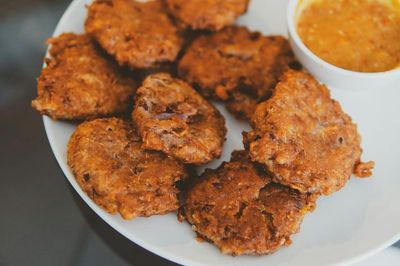
Akara
Dried black-eyed beans soak briefly to loosen the skins; the skins rub off (this is the key step, skin-on akara is bitter and grey). The peeled beans go into a blender with onion, Scotch bonnet and just enough water to make a thick batter (not a paste). The batter is whipped by hand or with a wooden spoon for 5 minutes until light and aerated, this is what makes akara fluffy rather than dense. Spoonfuls drop into 175°C oil and fry for 3-4 minutes per side until golden. Drained on paper. Eaten hot.