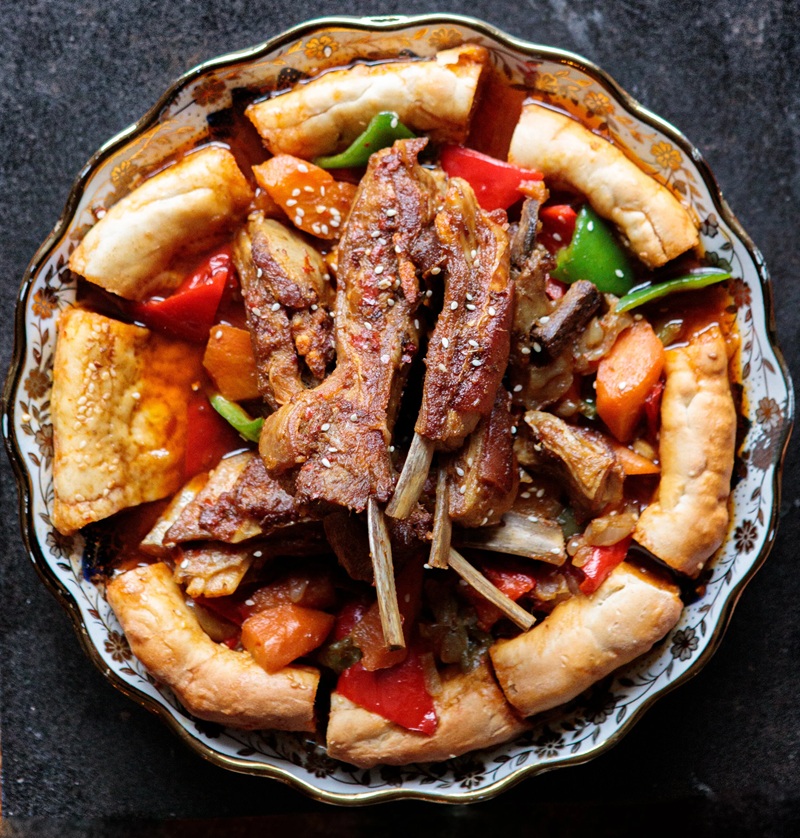
Uyghur Lamb Ribs
Long-braised lamb ribs in a paprika-cumin-cayenne crust, served on torn naan that's been dunked into the braising sauce to soak the juices. A celebratory Uyghur dish - simple ingredient list, long unattended braise. The naan goes from crisp to soft to flavour-loaded as the dish builds.
Overview
Lamb fat rendered slowly into a paprika-and-cumin glaze, with naan acting as both bread and sauce-sponge underneath. The flavour profile is direct and unfussy: sweet paprika for colour and warmth, cumin for the Uyghur signature note, salt to draw out moisture, and the long braise to dissolve the connective tissue in the ribs. No tomato, no soy, no aromatic broth, the dish is meat, spice, onion and fat. The naan is the surprise. Tucked around the edge of the pan in the last few minutes, it goes from crisp to soft to flavour-loaded as it soaks the orange-stained juices, and turns into the most satisfying part of the plate. Easy cooking once the ribs are in the pan, 90 minutes of unattended braise, but you need patience for the rendering at the start; rushing the brown is what produces a flat dish. A celebratory dish in Uyghur households, served on a wide platter for guests, and a clean example of how Xinjiang lamb cooking does so much with so few ingredients.
Ingredients
- 5 pieces lamb ribs (~1 kg total)
- 100 ml olive oil
- 2 teaspoons ground cumin (freshly ground if possible)
- 1 teaspoon sweet paprika
- 1 teaspoon cayenne pepper flakes
- 1 teaspoon salt
- 1 red pointed paprika (cut into triangles)
- 1 green pointed paprika (cut into triangles)
- 1 onion (sliced)
- 200 ml water
- 1 fresh-baked naan (large, Bazaar naan or similar), cut into pizza-like wedges
Method
Stage 1 - Brown
- Cut the ribs into pieces if not already. Rinse to remove bone fragments; pat dry thoroughly.
- Heat the oil in a wide, deep pan over high heat.
- Lay the ribs in meat-side down; cover; reduce to medium-low.
- Brown 3-4 minutes per side, all sides, until deep golden.
Stage 2 - Season
- Apply a thick layer of salt, paprika and half the cumin to the exposed side of the ribs.
- Turn the ribs; repeat with the rest of the cumin, more salt and paprika.
Stage 3 - Braise
- Add the sliced onion and two-thirds of the paprika pieces around the ribs.
- Pour the water down the side of the pan.
- Bring to a boil, then cover and reduce to a low simmer.
- Braise gently 1 hour 30 minutes, checking occasionally. Add a splash of water if it dries.
Stage 4 - Naan and serve
- While the ribs are nearly done, warm or thaw the naan; cut into pizza-like wedges.
- Tuck the naan wedges around the edge of the pan, partially submerged in the sauce. Warm 2-3 minutes.
- Lift the naan and the ribs out; lay the naan onto a serving platter as the base.
- Add the remaining (raw) paprika pieces to the pan; stir.
- Pour the saucy onion-and-pepper mix over the naan.
- Lay the ribs on top.
- Serve hot.
Notes
- Fresh young lamb: older lamb takes longer to soften. If your ribs aren't ready at 1 ½ hours, give them another 15-20.
- Don't let the pan dry: check at the halfway point. Add a splash of water if the sauce has reduced to glaze.
- Bazaar naan absorbs differently: thick Central Asian naan stays firm enough to hold the sauce. Supermarket flatbread will dissolve.
- Mind the steam: lift the lid towards you and step back; an hour of braising under pressure makes a hot release.
Storage
- Keeps 3 days refrigerated; reheat in the pan with a splash of water. The sauce deepens overnight.
- Naan part doesn't reheat well; freshen with new naan if eating again.
More like this
Uyghur Kebab Burger
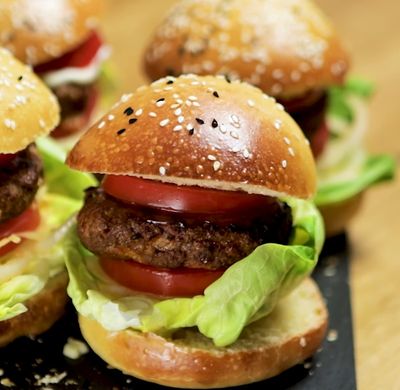
A burger that tastes like a Kashgar street kebab rather than a Western quarter-pounder. Cumin is the dominant note (Uyghur cooking uses it the way the rest of China uses Sichuan pepper); behind it sits sweet chilli powder for warmth without burn, and the lamb fat that catches a deep gold sear on the outside. The patty stays loose and juicy because the mix is bound with a single egg and a spoon of flour rather than pressed dense like a beef burger. Smell-wise: charred fat, cumin, and the sweet onion folded into the meat. Easy enough that you can do it on a weeknight as long as the mix has had its 3-hour rest in the fridge; the resting time is what makes the difference between a flat-tasting patty and one that eats like the real tonur version. The dish is a clear modern adaptation of the classic Uyghur cumin lamb kebab, scaled down for households without access to a clay tandoor, and increasingly common in cafés across Xinjiang and the Uyghur diaspora.
Big Plate Chicken
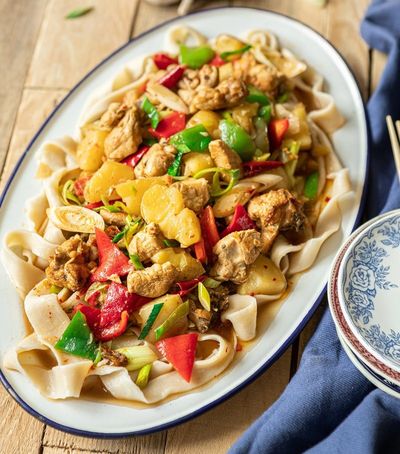
A dish that wears its multi-culture origin on its sleeve: chicken, potato and green pepper in a sweet-savoury soy-based braise (the Han Chinese influence), with star anise, Sichuan pepper, cumin and dried chilli (the Uyghur side), thickened by the starch from chunks of potato, ladled over flat hand-cut belt noodles. The sauce is the centrepiece. Browning sugar in oil before the chicken goes in builds a dark caramel that turns the whole braise a deep brick-red, and the soy underneath gives it weight; the Sichuan peppercorns add a mild numbness rather than dominating. Smell is rich, sweet, slightly spicy, with anise drifting through. Not difficult but not quick, 45 minutes once the prep is done, and the belt noodles are a small project on their own. Born in the 1980s in northern Xinjiang where a generation of Han Chinese migrants opened restaurants alongside the existing Uyghur food economy; the dish is the synthesis of those two traditions and is now the signature dish of Xinjiang cuisine, eaten across China and beyond.
Laghman
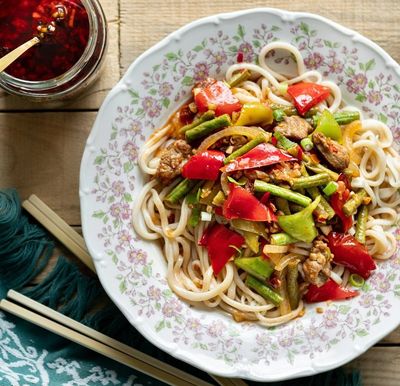
Two distinct elements that meet at the bowl: long, springy hand-pulled noodles with the chew of fresh ramen, and a brothy lamb-and-tomato topping that's somewhere between a stir-fry and a stew. The topping reads bright and savoury more than spicy, fresh tomato and sundried tomato together giving sweetness and depth, peppers and yardlong beans for crunch, cumin and white pepper for warmth, with a single fresh chilli for gentle heat. Smell-wise it's lamb fat hitting hot oil, then tomato vines, then cumin. The noodles are the difficulty: pulling a coiled rope of rested dough into long even strands takes practice, and your first few attempts will tear. The reward is a noodle nothing like the dried equivalent, thicker, glossier, with proper pull. A signature dish across the entire Uyghur world, eaten from Kashgar to Almaty to Toronto, with each family making minor variations on the topping; the noodle technique itself is shared with the lamian tradition of Lanzhou further east, which laghman is etymologically related to.
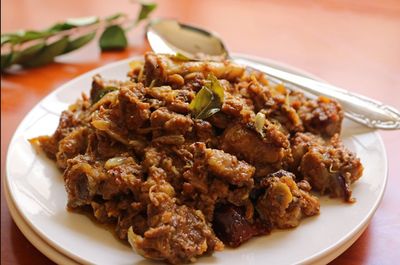
Mutton Sukka
Lamb chunks are braised gently with turmeric, ginger-garlic paste and a small handful of whole spices until tender. A separate pan toasts a Chettinad-style spice blend (black pepper, fennel, coriander, cumin, dried red chillies, fresh grated coconut) and grinds it to a coarse paste. The braised lamb is folded into a base of fried onion and curry leaves, the masala paste added, and the dish cooked uncovered until all the liquid has gone and the spice has caked onto the meat.