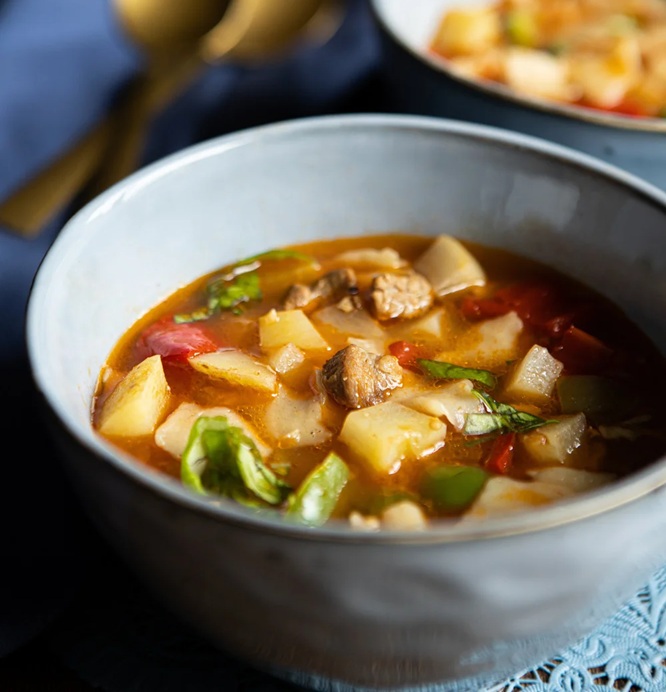
Suykash
The Uyghur hand-torn pasta soup: lamb and vegetables in a tomato-pepper broth, with fresh dough torn into nail-sized pieces directly into the pot.
Overview
A bowl of warm, slightly tangy tomato-and-lamb broth thickened by the starch of just-cooked hand-torn pasta. The shape of the noodles is the soul of the dish: irregular thumbnail-sized squares with thick centres and thin edges that grab the broth differently in every spoonful. Aromatics lean savoury rather than spicy; cumin and white pepper sit in the background, fresh basil hits at the end, and a splash of black rice vinegar lifts everything. Texturally it's chunky and homely, diced turnip, potato, peppers and lamb, all about the same size as the pasta pieces, so it eats with one motion of the spoon. Easy to make solo, but the traditional way is collective: several people tearing pasta directly into the boiling pot at the same time, faster and looser. The dish is everyday food across Uyghur households and a counterpart to the more elaborate hand-pulled laghman; the name suykash translates roughly as "water tear", which captures the technique exactly.
Ingredients
Dough
- 200 g plain flour
- 80 ml water
- 2 pinches salt
Soup
- 155 g lamb (diced small)
- 50 ml olive oil
- 1 turnip (medium, purple-top or green-top, diced)
- 1 potato (medium, ~120 g, diced small)
- 1 red sweet pepper (diced)
- ½ green bell pepper (diced)
- 25 g fresh ginger (finely chopped)
- 6 tomatoes (~220 g, finely chopped)
- 1 onion (diced small)
- 1 bulb garlic (finely chopped)
- 1 teaspoon white pepper
- 1 teaspoon black pepper
- ½ teaspoon ground cumin
- 1 teaspoon salt (to taste)
- 1 ½ litres water
- 10 g fresh basil (roughly chopped, to finish)
- 1 tablespoon black rice vinegar (optional, to finish)
Method
Stage 1 - Dough
- Combine flour, salt and water; mix and knead 5 minutes until smooth.
- Cover with a damp cloth and rest 15 minutes at room temperature.
Stage 2 - Soup base
- Heat the olive oil in a wide saucepan over medium-high heat until lightly smoking.
- Add the lamb; brown 3-4 minutes.
- Add the onion, salt, pepper, cumin, tomato, ginger, garlic and fresh peppers. Stir to combine.
- Pour in the water; bring to the boil.
- Add the turnip and potato. Return to the boil, then reduce to a medium-low simmer.
Stage 3 - Pasta in the pot
- Flatten the rested dough into a rectangle on an oiled surface; cut lengthways into 8 strips about a finger thick.
- Roll each strip thinner with your palm, then flatten with fingertips.
- Hold the strip across your hand and tear it into nail-sized pieces, dropping each directly into the simmering soup as you go.
- Stir after each section so the pieces don't clump.
- Boil 3-5 minutes until the pasta is just cooked and the broth has thickened from released starch.
Stage 4 - Finish
- Taste the broth; adjust salt.
- Off heat, fold in the fresh basil and the black rice vinegar (if using).
- Ladle into deep bowls. Eat with a spoon.
Notes
- Tear, don't roll-and-cut: the irregular hand-torn shapes are the dish. Even pieces eat like generic pasta.
- Communal preparation: traditionally several people tear pasta into the pot at once. Faster, looser, more fun.
- Seasonal flex: the recipe changes with the vegetables available - swap in pumpkin, courgette, beans or whatever's in season.
Storage
- Best fresh; the pasta softens further on standing.
- Leftover broth keeps 3 days refrigerated; the pasta turns soft but flavour deepens.
More like this
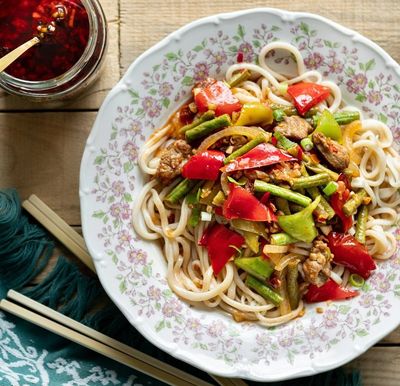
Laghman
Two distinct elements that meet at the bowl: long, springy hand-pulled noodles with the chew of fresh ramen, and a brothy lamb-and-tomato topping that's somewhere between a stir-fry and a stew. The topping reads bright and savoury more than spicy, fresh tomato and sundried tomato together giving sweetness and depth, peppers and yardlong beans for crunch, cumin and white pepper for warmth, with a single fresh chilli for gentle heat. Smell-wise it's lamb fat hitting hot oil, then tomato vines, then cumin. The noodles are the difficulty: pulling a coiled rope of rested dough into long even strands takes practice, and your first few attempts will tear. The reward is a noodle nothing like the dried equivalent, thicker, glossier, with proper pull. A signature dish across the entire Uyghur world, eaten from Kashgar to Almaty to Toronto, with each family making minor variations on the topping; the noodle technique itself is shared with the lamian tradition of Lanzhou further east, which laghman is etymologically related to.
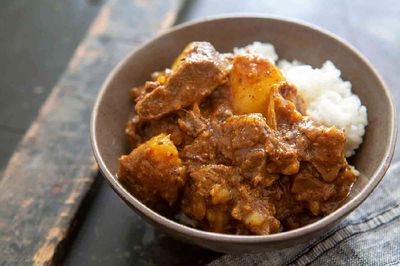
Trinidadian Curry Goat
Trinidadian curry goat sits in a quiet rivalry with Jamaican curry goat, but the two are different dishes. Jamaican curry goat is built on Madras-style curry powder, scotch bonnet and allspice with little coconut and a wetter finish. Trinidadian curry goat is built on a fresh blend of green seasoning (a herb-and-aromatic puree of culantro, thyme, garlic, chives and onion), Caribbean curry powder (which leans heavily on amchar masala and roasted geera), and the bunjay technique of frying the curry paste in oil until it splits before the meat goes in. The result is a darker, herbier, drier curry that hugs the bone rather than pooling around it. Kid goat is the preferred meat; older mutton-goat works but takes longer. UK home cooks can usually find kid goat at Caribbean butchers, Halal butchers and many Asian supermarkets in the chilled or frozen section. Bone-in pieces are essential for flavour and gelatin. Lamb shoulder on the bone makes an honest substitute. Difficulty is low to moderate; the cook is mostly long and passive once the curry is bunjayed. Serve with paratha-style "buss-up-shut" roti, dhalpuri roti, white rice, or coconut rice.
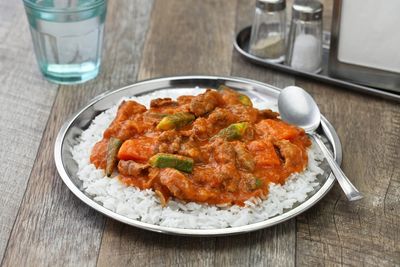
Mafé
Bone-in beef or lamb is browned, then simmered with onions, garlic, tomato and stock. Smooth peanut butter is whisked in halfway and the stew thickens to a velvety coating. Chunks of cassava, sweet potato and cabbage cook in the sauce towards the end. Serve over plain steamed white rice.
Mangshor Jhol
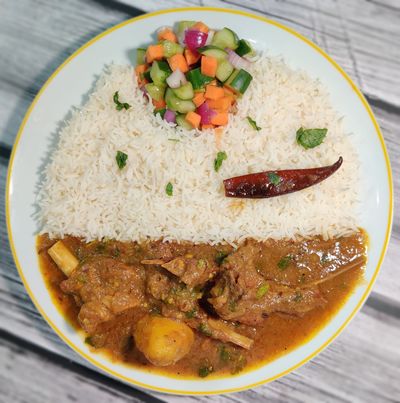
The wet-style mutton counterpart to the drier, slow-bhuna kosha mangsho - and the more everyday of the two. "Jhol" means a thin, soupy gravy and mangshor jhol is exactly that: bone-in goat or mutton cooked low and slow with potatoes in a light, aromatic broth that you ladle generously over rice. You heat mustard oil to smoking to take the raw edge off, temper whole bay and cinnamon in the hot fat, then brown the onions deeply and add a measured hand of turmeric to give the gravy its colour and weight. The bones contribute marrow to the broth as the meat tenderises over an hour or so, and the potatoes go in late enough that they soften without disintegrating. Eaten with a mound of plain steamed rice, a wedge of lime, and a thin slick of mustard oil scattered with raw onion on the side. A Sunday lunch dish for a Bengali household, served from the same pot it was cooked in.