Mango Sticky Rice
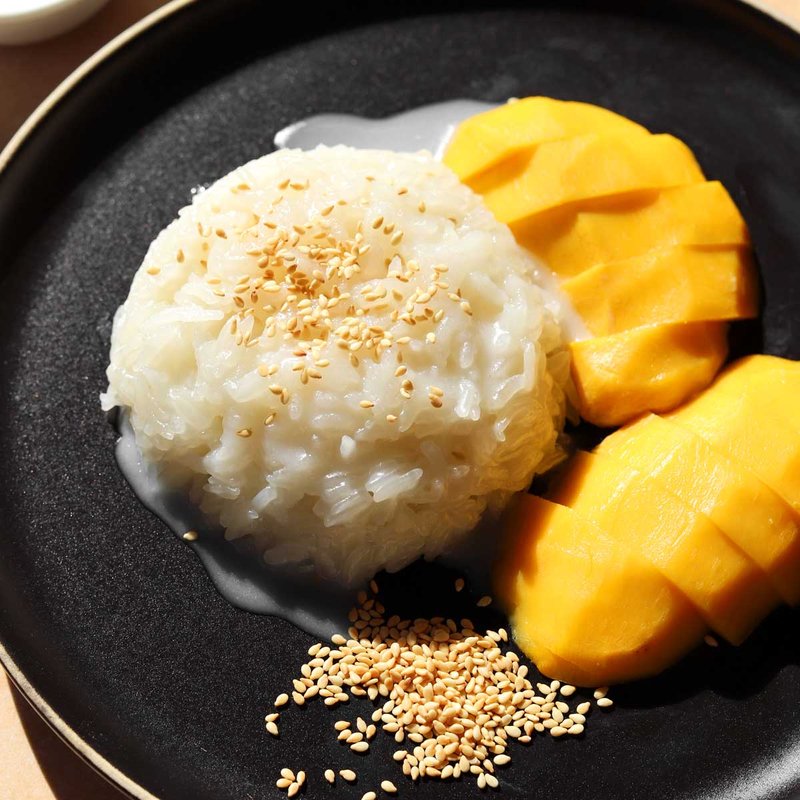
Thailand's mango plate: sticky rice steeped in salted-sweet coconut sauce, served alongside cool slices of ripe honey mango.
Overview
Glutinous (sticky) rice is soaked at least 6 hours, then steamed for 20-25 minutes over boiling water until pearly and chewy. While the rice steams, a coconut sauce is warmed gently, coconut milk, palm sugar, salt, and (optionally) a pandan leaf for fragrance, until just dissolved, never boiled. Most of this sauce is poured over the freshly steamed rice while still hot; the rice absorbs over 15 minutes covered. The remaining sauce, plus a separate pour of plain coconut cream, dresses the plated dish. Ripe mango is sliced; toasted sesame and (optionally) toasted mung beans top.
Ingredients
Rice
- 300 g Thai glutinous (or sticky rice)
- Cold water (for soaking)
Sweet coconut sauce (for soaking the rice)
- 400 ml coconut milk
- 100 g palm sugar (chopped fine; or 80 g caster sugar)
- ¾ teaspoon salt (not optional - the salt-sweet balance is the dish)
- 1 pandan leaf, tied in a knot (optional but traditional; sold frozen at Thai shops)
Plain coconut cream (for drizzling at the end)
- 100 ml coconut cream (the thick layer from the top of a tin of coconut milk)
- ¼ teaspoon salt
- 2 teaspoons rice flour (helps it thicken slightly without sugar)
To finish
- 2 ripe mangoes (large, Nam Dok Mai or any sweet ripe variety - Ataulfo / honey mangoes work well; about 600 g total)
- 2 tablespoons toasted sesame seeds (white, black, or a mix)
- 2 tablespoons toasted mung beans (optional but traditional - crispy / nutty)
Method
Stage 1 - Soak the rice
- Place sticky rice in a deep bowl.
- Cover with cold water by 5 cm.
- Soak overnight (or at least 6 hours). The grains should be crushable between fingers.
Stage 2 - Toast the mung beans (if using)
- Place mung beans in a dry frying pan.
- Toast over medium heat, shaking, for 3-4 minutes until golden brown and fragrant.
- Tip onto a plate to cool.
Stage 3 - Steam the rice
- Drain the soaked rice.
- Line a bamboo steamer or sieve with damp muslin (or banana leaves).
- Mound the rice on the muslin.
- Place over a pan of boiling water (water must not touch the rice).
- Cover; steam over medium heat for 20-25 minutes. At the 15-minute mark, flip the rice (lift it as a single mass via the muslin) so the bottom layer steams from above.
- The rice is done when fully tender, slightly translucent, and chewy.
Stage 4 - Sweet coconut sauce
- In a saucepan, combine coconut milk, palm sugar, salt and pandan leaf.
- Heat over medium-low, stirring, until the sugar dissolves - about 4-5 minutes.
- Don't boil hard; gentle warmth is enough. The sauce should be slightly thinner than double cream.
- Discard the pandan leaf.
Stage 5 - Combine rice and sauce
- Transfer the freshly steamed rice to a wide bowl.
- Pour about three-quarters of the warm sweet sauce over the rice.
- Stir gently with a wooden spoon to coat every grain.
- Cover the bowl; let rest 15 minutes - the rice absorbs the sauce and becomes glossy and pliable.
Stage 6 - Plain coconut cream
- While the rice rests, whisk the 100 ml coconut cream with ¼ teaspoon salt and 2 teaspoons rice flour in a small saucepan.
- Heat over low heat, whisking, for 2-3 minutes until just slightly thickened. Don't boil.
- Reserve.
Stage 7 - Slice the mango
- Stand the mango on its narrow side; with a sharp knife, cut down either side of the flat stone to release the two "cheeks".
- Trim the skin off each cheek.
- Slice each cheek into thin slabs (about 5 mm thick) or large dice.
Stage 8 - Plate
- Spoon a mound of coconut-soaked rice in the centre of each plate (about ½ cup per serving).
- Fan mango slices alongside.
- Drizzle the rice with the plain coconut cream - about 2 tablespoons per plate.
- Drizzle the remaining sweet sauce over (it'll pool slightly around the rice - that's fine).
- Scatter toasted sesame seeds and toasted mung beans.
Stage 9 - Serve
- Eat while the rice is still slightly warm and the mango is cool. The temperature contrast is part of the dish.
Notes
- Salt is the secret: Coconut without salt tastes flat. The salt in both the sweet sauce and the topping cream is what makes mango sticky rice memorable - don't be shy with it.
- Two layers of coconut: The first (sweetened) goes into the rice; the second (salted, unsweetened) drizzles on top. Two layers, two flavours. Skipping the second leaves the dish too sweet.
- Mango ripeness: A ripe mango should yield slightly to gentle pressure, smell fragrant at the stem end. Underripe mango is fibrous and sour; overripe is mushy. If your mangoes aren't ready, leave them at room temperature 1-2 days.
Storage
- Best within 2 hours of plating.
- The rice (with sweet sauce mixed in) refrigerates 24 hours; gently re-steam to soften. The mango should be sliced fresh.
- Don't freeze the assembled dish; freeze components if needed (rice and sauce separately).
More like this
Thai Coconut Ice Cream
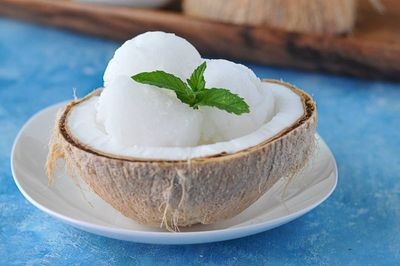
A custard-free, fully coconut ice cream. Coconut milk (full-fat) and coconut cream combine with palm sugar, glucose syrup (or honey, keeps the texture smooth) and salt; warm together gently to dissolve the sugar. Cool fully (4 hours fridge or an ice bath). Churn in an ice-cream machine for 25-30 minutes until thick and creamy. Transfer to a container; freeze 2+ hours to firm. Serve in small bowls or, for the Bangkok cart presentation, in halved fresh coconut shells, topped with any combination of: small banana slices, sticky rice, roasted peanuts, sweet red beans, palm-sugar syrup, toasted coconut.
Khao Niao
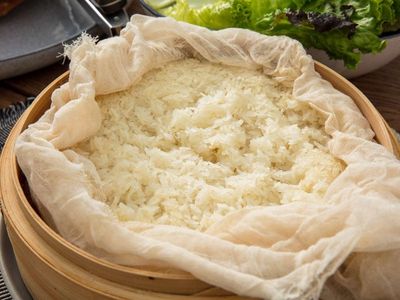
Sticky rice must be the right variety: Thai glutinous rice (also called sweet rice, sticky rice, or kao niao, looks the same as ordinary white rice but opaque white when raw, not translucent). Soak the rice 4-12 hours in cold water until grains can be crushed easily between fingers. Drain. Steam over (not in) boiling water for 20-25 minutes in a traditional bamboo cone, banana leaves, or a steamer lined with muslin. Test by tasting a grain, fully cooked, chewy, slightly translucent. Transfer to a covered bamboo basket or wooden bowl for serving.
Thai Green Curry (Vegetarian)
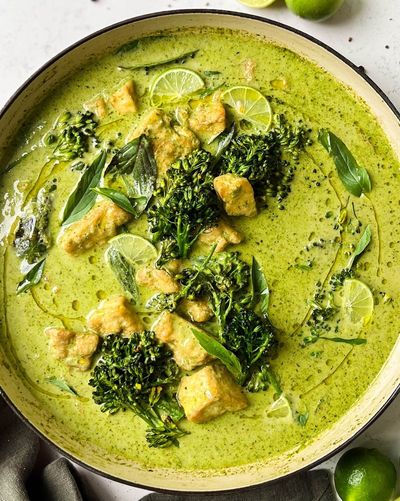
A spice paste of green chillies and aromatics blends fresh (or starts from a good Thai paste with fresh additions). Coconut cream from the top of the can is cracked in the wok until oil splits out; paste fries; coconut milk loosens; vegetables, Thai aubergine, pea aubergine, bamboo shoots, broccoli, baby corn, go in by cook time. Tofu joins; the curry simmers briefly. Soy sauce (instead of fish sauce), palm sugar, lime leaves, Thai basil to finish.
Chuối Nướng
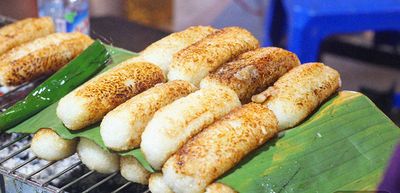
Sticky rice is soaked, steamed and pressed around small Asian bananas (Chuối sứ), wrapped in banana leaves and grilled until the rice forms a chewy crust. A coconut cream sauce thickened with a little cornflour and salt is spooned over the split-open bundles, and toasted peanuts and sesame finish the top. The contrast of crisp-burnt outside, soft hot banana, and cool coconut sauce is the whole point.