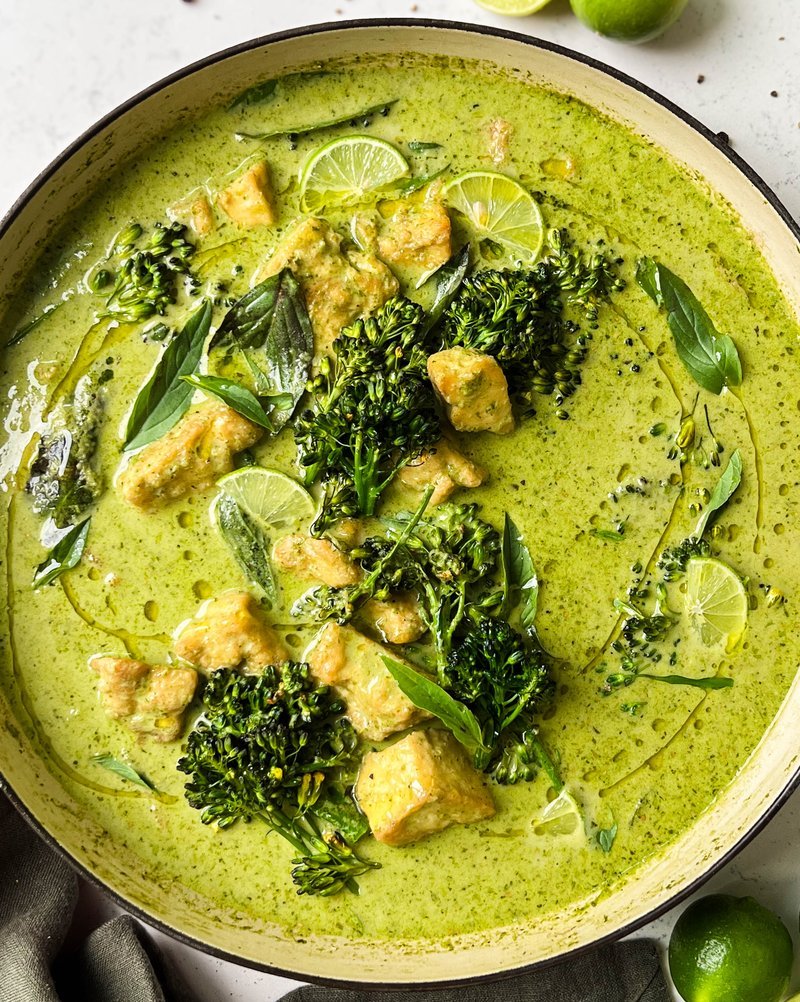
Thai Green Curry (Vegetarian)
A vegetarian Thai green curry: fresh green-chilli paste fried in coconut cream, with tofu and aubergine poached in the thinned coconut sauce.
Overview
A spice paste of green chillies and aromatics blends fresh (or starts from a good Thai paste with fresh additions). Coconut cream from the top of the can is cracked in the wok until oil splits out; paste fries; coconut milk loosens; vegetables, Thai aubergine, pea aubergine, bamboo shoots, broccoli, baby corn, go in by cook time. Tofu joins; the curry simmers briefly. Soy sauce (instead of fish sauce), palm sugar, lime leaves, Thai basil to finish.
Ingredients
Curry paste (or use 5 tablespoons good shop-bought green curry paste)
- 5 long green chillies (deseeded for less heat)
- 4 bird's-eye chillies (optional, for heat)
- 2 stalks lemongrass (white parts, sliced)
- 3 cm galangal
- 3 cm fresh ginger
- 6 garlic cloves
- 4 shallots
- 2 kaffir lime leaves (centre stems removed)
- 1 teaspoon ground white pepper
- 1 teaspoon ground coriander
- 1 teaspoon ground cumin
- A small bunch of coriander (stems and leaves)
- 1 tablespoon vegetable oil
Curry
- 400 ml tin coconut milk (do not shake; cream and milk separate)
- 165 ml tin coconut cream (or use the cream from a second can of coconut milk)
- 300 g firm tofu (cubed)
- 1 Thai aubergine (small, or 1 small regular aubergine, cubed)
- 100 g pea aubergines (optional)
- 200 g broccoli (cut into florets)
- 100 g baby corn (halved)
- 220 g tin bamboo shoots (drained)
- 4 kaffir lime leaves (torn, stems out)
- 3 tablespoons light soy sauce
- 2 tablespoons palm sugar (or brown sugar)
- 200 ml vegetable stock (or water)
- A handful of Thai basil leaves
- 2 long red chillies (sliced)
- ½ lime (juice)
- Cooked jasmine rice (to serve)
Method
Stage 1 - Paste
- Blend all the curry-paste ingredients except the oil to a smooth paste, scraping down. Add 2-3 tablespoons of water if it sticks.
Stage 2 - Crack the coconut cream
- Open the coconut milk tin without shaking; spoon the thick cream from the top into a wok. Add the separate 165 ml coconut cream tin too.
- Heat over medium-high heat 4-5 minutes - it'll boil furiously, then quiet down as the oil splits out around the edges. This is when it's ready.
Stage 3 - Fry the paste
- Add the curry paste; stir-fry 4-5 minutes until aromatic, slightly darkened, and the oil is visible around the edges. Add the tablespoon of oil if it's too dry.
Stage 4 - Build
- Add the remaining coconut milk from the tin and the stock; stir; bring to a simmer.
- Add the lime leaves, soy sauce and palm sugar; stir.
Stage 5 - Vegetables
- Add the aubergine and broccoli; cook 6 minutes.
- Add the baby corn, bamboo shoots and tofu; cook 5 more minutes until everything is just tender.
Stage 6 - Finish
- Off the heat, stir in the Thai basil, sliced red chillies and lime juice.
- Taste; adjust soy and sugar.
- Serve over jasmine rice.
Notes
- Crack the coconut cream: This step is what gives Thai curries their oily, glossy character. Skipping it gives a thin, plain-tasting sauce.
- Vegetarian fish sauce: Some brands (look for "vegetarian fish sauce" or "vegan fish sauce" in Asian groceries) are fermented soybean and seaweed; closer to the traditional flavour than soy alone. Plain soy works fine.
- Thai basil vs sweet basil: Different plants. Thai basil has anise notes; sweet basil tastes sharper and more peppery. Use what you have but they're not interchangeable in flavour.
Storage
- Keeps 3 days refrigerated; flavour improves overnight.
- Freezes 2 months but the aubergine and broccoli textures suffer.
More like this
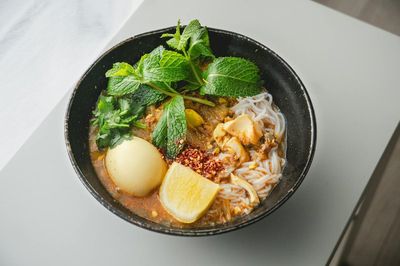
Malaysian Curry Laksa (Laksa Lemak)
A two-part dish: a deeply concentrated prawn-and-chicken stock built from roasted prawn shells, layered with a freshly pounded laksa paste of dried chilli, galangal, lemongrass and candlenuts. The two are joined with coconut cream to create a glossy, fragrant broth that bathes rice vermicelli, tofu puffs and prawns. Finished at the table with sambal, lime, fresh coriander and bean sprouts.
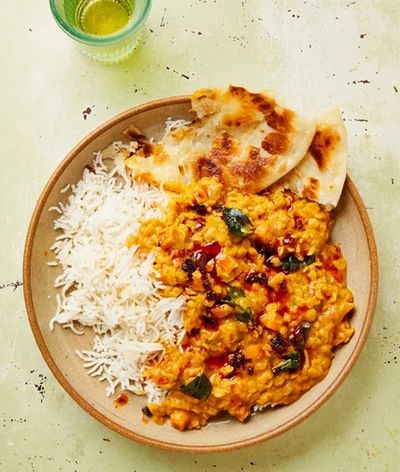
Malaysian Dhal Curry
Yellow split peas (chana dal) simmer with onion, turmeric and tomato until very soft. The lentils break down into a thick soup. Right at the end, a tempering of mustard seeds, curry leaves, dried red chillies, garlic and shallots is poured sizzling-hot over the surface. The aromatic oil seeps through; the dish transforms.
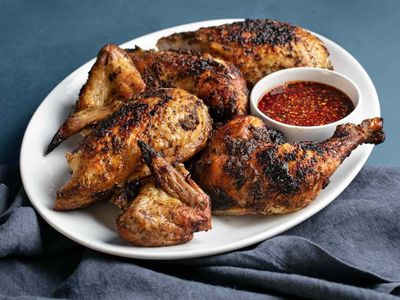
Gai Yang
Gai yang ("grilled chicken") is one of the cornerstones of Isaan cooking, the cuisine of north-eastern Thailand that has spread across the whole country and into Thai restaurants worldwide. The defining flavour is coriander root, an ingredient barely used in Western cooking but central to Thai marinades. Pounded in a granite mortar with garlic, white peppercorns and a pinch of salt, it forms an aromatic paste that's then mixed with fish sauce, oyster sauce and a touch of sugar. The chicken is butterflied (spatchcocked) so it lies flat on the grill, marinated for at least 4 hours, then cooked slowly over moderate charcoal. The proper Isaan technique is patient: 30 minutes or more, turning often, sometimes pressed flat between two bamboo splints, so the skin slowly crisps and the meat takes on smoke without burning. The flavour is savoury-funky from fish sauce, peppery-warm from white pepper, deeply garlic-and-herb from the paste, with no chilli in the marinade itself; heat comes from the dipping sauce. Difficulty is low for the home cook: a good mortar or a small food processor makes the paste in 2 minutes, butterflying a chicken is a single cut down the backbone, and any covered grill or kettle does the cooking. Eaten by hand with balls of sticky rice and dipped into nam jim jaew, the toasted-rice-and-tamarind dipping sauce.
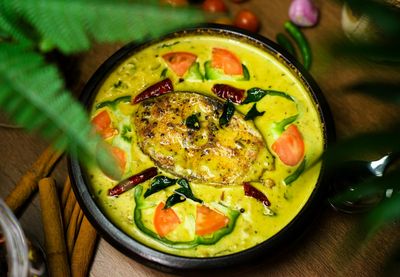
Kerala Fish Curry
A masala paste of shallot, ginger, garlic and red chilli is bloomed in coconut oil with mustard seeds, fenugreek and curry leaves. Coconut milk is poured in and the curry brought to a simmer, then tamarind water and a tomato are added. The fish goes in last and poaches in the gravy for just long enough to set; over-stirring breaks the pieces.