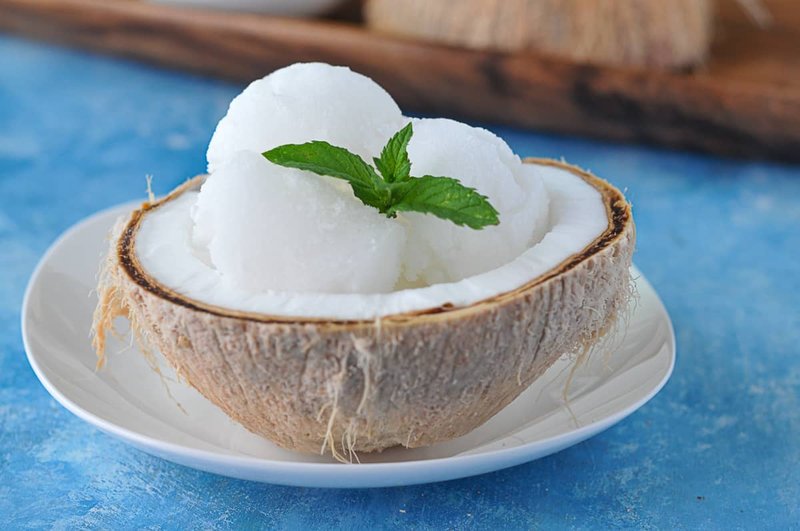
Thai Coconut Ice Cream
Bangkok's coconut ice cream: a churned ice cream of pure coconut milk and palm sugar, served with sticky rice, peanuts and palm-sugar syrup.
Overview
A custard-free, fully coconut ice cream. Coconut milk (full-fat) and coconut cream combine with palm sugar, glucose syrup (or honey, keeps the texture smooth) and salt; warm together gently to dissolve the sugar. Cool fully (4 hours fridge or an ice bath). Churn in an ice-cream machine for 25-30 minutes until thick and creamy. Transfer to a container; freeze 2+ hours to firm. Serve in small bowls or, for the Bangkok cart presentation, in halved fresh coconut shells, topped with any combination of: small banana slices, sticky rice, roasted peanuts, sweet red beans, palm-sugar syrup, toasted coconut.
Ingredients
Ice cream
- 800 ml full-fat coconut milk
- 200 ml coconut cream (the thick top from a tin)
- 150 g palm sugar (chopped fine; or 130 g caster sugar)
- 2 tablespoons glucose syrup (or honey - keeps the texture smooth)
- ¾ teaspoon salt
- 1 pandan leaf, tied in a knot (optional)
- 1 teaspoon vanilla extract (optional)
Topping bar (per serving - set out for everyone to mix)
- 2 bananas (small, sliced)
- 200 g sweet sticky rice (cooked, with coconut sauce - see khao-niao.md)
- 80 g salted roasted peanuts (crushed)
- 200 g sweet red bean paste OR cooked azuki beans in syrup (sold tinned at Asian shops)
- 50 g toasted shredded coconut
- 6 maraschino cherries (optional, the street-cart finish)
Palm-sugar syrup
- 80 g palm sugar
- 80 ml water
- 1 small pinch salt
Method
Stage 1 - Make the base
- In a saucepan, combine coconut milk, coconut cream, palm sugar, glucose syrup, salt and the pandan leaf if using.
- Heat over medium-low, stirring, just until the palm sugar dissolves and the mixture is smooth. Don't boil.
- Off heat; stir in vanilla extract.
- Cool: pour into a bowl over an ice bath, OR refrigerate 4 hours to chill to fridge temperature.
- Discard the pandan leaf.
Stage 2 - Churn
- Pour the cold base into the bowl of an ice-cream maker.
- Churn 25-30 minutes (or per your machine's instructions) until the mixture is thick and creamy - like soft-serve ice cream.
Stage 3 - Firm
- Scrape into a freezer container; press cling film directly onto the surface to prevent ice crystals.
- Cover; freeze 2-4 hours to firm to scoopable texture.
Stage 4 - Palm sugar syrup
- In a small pan, combine palm sugar, water and a pinch of salt.
- Heat over medium, stirring, until the sugar dissolves and the syrup is thinly coats a spoon - about 4 minutes.
- Cool.
Stage 5 - Assemble
- Take the ice cream out of the freezer 5 minutes before serving (so it scoops easily).
- Scoop 2 small scoops per bowl (or per coconut half).
- Set out toppings buffet-style: bananas, sticky rice, peanuts, red beans, toasted coconut, palm syrup, cherries.
- Each diner picks their toppings; you spoon them on or they do.
Stage 6 - Eat
- The Bangkok build: a layer of warm sticky rice in the bottom, ice cream on top, banana to one side, beans to another, peanuts scattered, palm syrup drizzled, cherry on top.
Notes
- Salt the coconut: Thai sweet dishes get a more pronounced salt level than Western desserts. The ¾ teaspoon salt isn't a typo - it makes the coconut taste of coconut rather than of sugar.
- No-churn option: Whip 300 ml double cream to soft peaks; fold into the cooled coconut base; freeze 4 hours, stirring every 30 minutes for the first 2 hours to break up ice crystals. The texture is slightly less smooth than churned but very close.
- Coconut shell presentation: If you can find young coconuts, cracking them in half and serving the ice cream in the shells is the full street-cart experience. Otherwise use small bowls.
Storage
- Freezes 2 months in an airtight container.
- After 1 week the texture firms slightly; let stand at room temperature 10 minutes before scooping.
- Palm syrup keeps refrigerated 1 month.
More like this
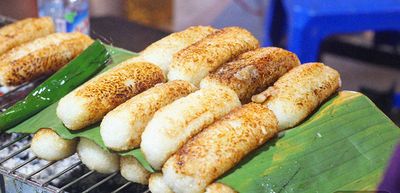
Chuối Nướng
Sticky rice is soaked, steamed and pressed around small Asian bananas (Chuối sứ), wrapped in banana leaves and grilled until the rice forms a chewy crust. A coconut cream sauce thickened with a little cornflour and salt is spooned over the split-open bundles, and toasted peanuts and sesame finish the top. The contrast of crisp-burnt outside, soft hot banana, and cool coconut sauce is the whole point.
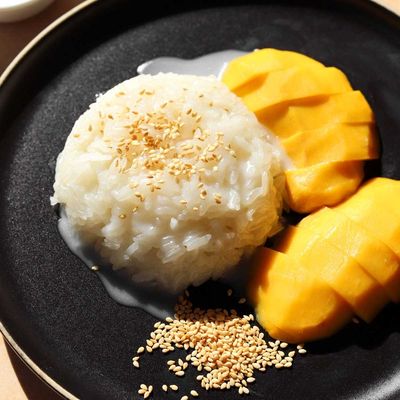
Mango Sticky Rice
Glutinous (sticky) rice is soaked at least 6 hours, then steamed for 20-25 minutes over boiling water until pearly and chewy. While the rice steams, a coconut sauce is warmed gently, coconut milk, palm sugar, salt, and (optionally) a pandan leaf for fragrance, until just dissolved, never boiled. Most of this sauce is poured over the freshly steamed rice while still hot; the rice absorbs over 15 minutes covered. The remaining sauce, plus a separate pour of plain coconut cream, dresses the plated dish. Ripe mango is sliced; toasted sesame and (optionally) toasted mung beans top.
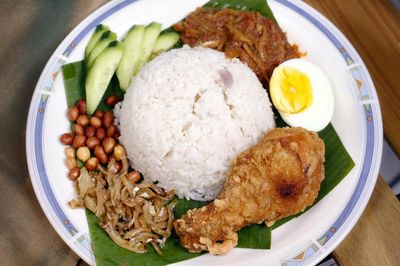
Nasi Lemak
A platter built around fragrant coconut and lemongrass rice, served with a fiery sambal of dried anchovies and rehydrated chillies, then ringed with hard-boiled egg, sliced cucumber and fried peanuts. The sambal does most of the heavy lifting, sweet, sour, smoky and hot. The rice itself is gentle, designed to be a calming counterpoint to everything else on the plate.
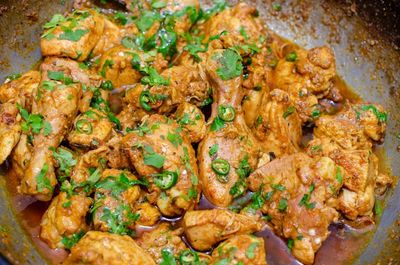
Chicken Ceylon
A bright and spicy Sri Lankan-inspired curry with a curry-house spin, featuring aromatic spices, coconut, and fresh curry leaves. It works beautifully as a banquet dish and can be extra hot with extra bird’s eye chillies and chilli powder. The subtle sweet-tang tuning makes it a favorite with rice and mild dhal.