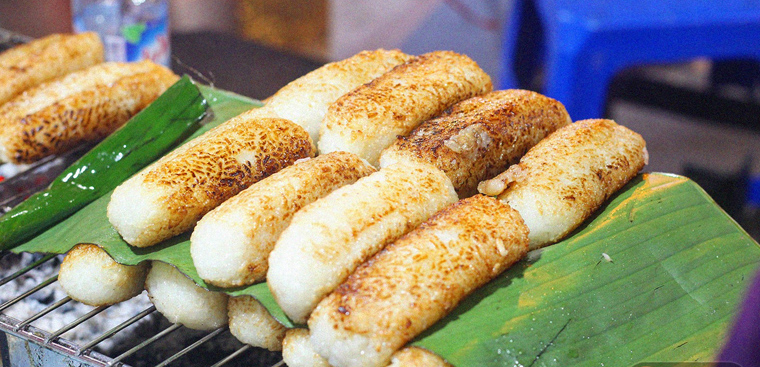
Chuối Nướng
Vietnam's grilled banana dessert: bananas wrapped in sweet sticky rice, charred over coals till the rice crusts, drowned in warm coconut sauce and peanuts.
Overview
Sticky rice is soaked, steamed and pressed around small Asian bananas (Chuối sứ), wrapped in banana leaves and grilled until the rice forms a chewy crust. A coconut cream sauce thickened with a little cornflour and salt is spooned over the split-open bundles, and toasted peanuts and sesame finish the top. The contrast of crisp-burnt outside, soft hot banana, and cool coconut sauce is the whole point.
Ingredients
Rice wrapping
- 200 g glutinous (sticky) rice (soaked 2 hours in cold water)
- 200 ml coconut milk
- 2 tablespoons caster sugar
- ½ teaspoon fine sea salt
Bananas
- 4 Vietnamese bananas (small, chuối sứ) or 2 large under-ripe regular bananas (cut in half lengthways)
- 4 banana leaves (fresh or frozen-thawed; cut into 25 x 25 cm squares)
Coconut sauce
- 250 ml coconut cream
- 1 tablespoon caster sugar
- ½ teaspoon fine sea salt
- 1 teaspoon cornflour mixed with 1 tablespoon water
- 1 pandan leaf (optional, for fragrance)
To finish
- 3 tablespoons roasted peanuts (roughly crushed)
- 1 tablespoon toasted sesame seeds
- A pinch of flaky sea salt
Method
Stage 1 - Cook the sticky rice
- Drain the soaked rice and rinse. Steam in a bamboo or metal steamer lined with muslin for 20 minutes, until the grains are translucent and tender when pinched.
- While the rice steams, gently warm the coconut milk, sugar and salt in a small saucepan until the sugar dissolves. Do not boil.
- Tip the hot rice into a bowl and pour the warm coconut milk over. Stir gently with a spatula to coat every grain. Cover and rest 10 minutes, the rice will absorb the liquid and turn glossy.
Stage 2 - Soften the banana leaves
- If using fresh leaves, pass each square briefly over a low gas flame, both sides, until they turn glossy and pliable, about 5 seconds per side. They'll go from a stiff, brittle leaf to something that bends without cracking.
- If using frozen leaves, thaw and pat dry; they're already pliable.
- If using foil, no prep needed.
Stage 3 - Wrap the bananas
- Lay a banana leaf square on the counter, shiny side down.
- Spread 3 tablespoons of sticky rice in a flat oval roughly 12 x 7 cm in the centre of the leaf, about 1 cm thick.
- Lay a banana (or banana half) along the centre of the rice.
- Using the leaf as a sling, lift the long edges up and press the rice firmly around the banana so it's fully encased. Smooth any gaps with damp fingers.
- Wrap the leaf tightly around the rice-encased banana, folding the ends underneath like a parcel. Secure with a toothpick if the leaf wants to spring open. Repeat for all 4.
Stage 4 - Grill
- Heat a charcoal grill to medium-high, or set a heavy griddle pan or non-stick frying pan over medium-high heat. Charcoal gives the authentic smoky note but a pan works.
- Place the parcels on the grill and cook for 4-5 minutes per side, turning twice, total 16-20 minutes. The banana leaf will char and blacken; this is fine, it's protecting the rice.
- To check doneness, unwrap one parcel slightly: the rice should have a golden brown crust on the outside and the banana inside should be soft and steaming. If the rice is pale and soft, give it another 3 minutes.
Stage 5 - Make the coconut sauce
- While the parcels grill, combine the coconut cream, sugar, salt and pandan leaf (if using) in a small saucepan over low heat.
- Bring to a bare simmer, stirring. Whisk in the cornflour slurry and cook for 1 minute until very lightly thickened, like single cream.
- Remove from the heat. Fish out the pandan leaf if used.
Stage 6 - Serve
- Unwrap each parcel from its leaf and place on a plate, or serve in the leaf like a banana boat.
- Split open lengthways with a knife so the banana shows.
- Spoon over the warm coconut sauce generously, letting it run into the split.
- Scatter with crushed peanuts, sesame seeds and a tiny pinch of flaky salt to lift the sweetness.
- Serve immediately while warm.
Notes
- Banana type matters: Vietnamese chuối sứ are small, slightly tart and hold their shape when cooked. They're available at Asian grocers. If you only have Cavendish (the regular supermarket variety), use ones that are firm and just-yellow with no brown spots; over-ripe bananas turn to mush. Cut in half lengthways so each portion gets a flat banana piece.
- Sticky rice prep: Don't skip the soak. Unsoaked sticky rice steams unevenly and stays chalky in the centre. Two hours is the minimum; overnight is fine.
- Banana leaves: Frozen leaves are sold in big plastic bags at Asian grocers and Caribbean stores. They impart a subtle grassy aroma that foil can't match, but the recipe still works wrapped in foil if you can't find them.
- The grill char: The blackened outer leaf is supposed to look almost burnt. The rice underneath only just catches a golden crust. If the rice itself burns, the heat was too high.
- Salt is essential: The pinch of salt on top at serving is what makes the sweetness sing. Don't skip it.
Variations
Sticky rice without banana (xôi): Skip the banana and just steam the coconut rice into a coil; serve as a sweet rice dish. Pandan rice: Steam the rice with a pandan leaf tucked in, and add a few drops of pandan extract to the coconut milk for a green-tinted, jasmine-scented version. Black sesame finish: Substitute black sesame seeds for white for visual contrast and a deeper nutty flavour.
Serving
Serve with: a small scoop of vanilla or coconut ice cream alongside for a temperature contrast; the cold ice cream against the warm grilled banana is a modern Saigon-café trick. Garnish with: a few extra crushed peanuts and a final pinch of flaky salt.
Storage
- Best eaten warm, straight off the grill
- Wrapped parcels can be assembled raw and refrigerated for 1 day, then grilled to order
- Cooked, leftover parcels keep 1 day refrigerated and reheat in a 180 °C oven for 8 minutes wrapped in foil
- Sauce keeps 3 days in the fridge; reheat gently with a splash of water if it thickens too much
More like this
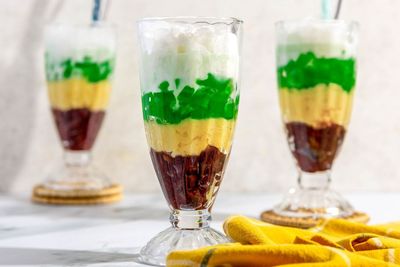
Chè Ba Màu
Three sweet components are prepared separately: red beans simmered until tender then mixed with sugar, split mung beans cooked until just holding shape and lightly sweetened, and pandan-flavoured agar jelly cut into small cubes. Each layer goes into a glass with crushed ice between them and a generous drizzle of sweetened coconut cream over the top.
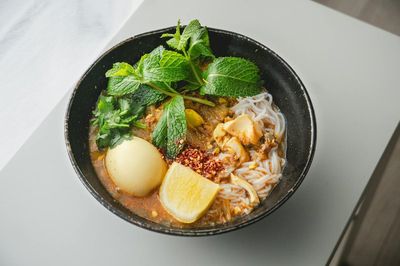
Malaysian Curry Laksa (Laksa Lemak)
A two-part dish: a deeply concentrated prawn-and-chicken stock built from roasted prawn shells, layered with a freshly pounded laksa paste of dried chilli, galangal, lemongrass and candlenuts. The two are joined with coconut cream to create a glossy, fragrant broth that bathes rice vermicelli, tofu puffs and prawns. Finished at the table with sambal, lime, fresh coriander and bean sprouts.
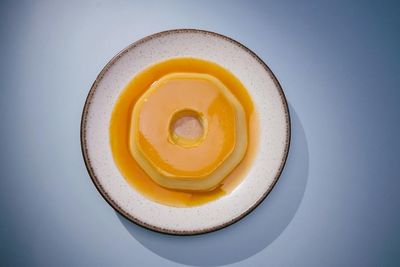
Bánh Flan
A simple custard of whole eggs, condensed milk and evaporated milk is poured over a hard caramel base and baked in a bain-marie at low temperature for a silken set. The caramel melts into a sauce as the flan chills overnight in the fridge. Tipped out onto a plate, the dark caramel runs down the sides and pools at the base.
Thai Coconut Ice Cream
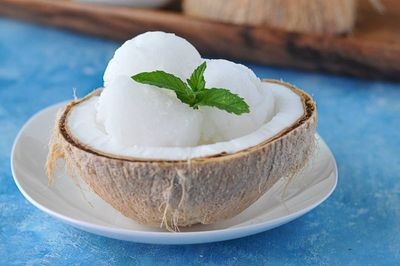
A custard-free, fully coconut ice cream. Coconut milk (full-fat) and coconut cream combine with palm sugar, glucose syrup (or honey, keeps the texture smooth) and salt; warm together gently to dissolve the sugar. Cool fully (4 hours fridge or an ice bath). Churn in an ice-cream machine for 25-30 minutes until thick and creamy. Transfer to a container; freeze 2+ hours to firm. Serve in small bowls or, for the Bangkok cart presentation, in halved fresh coconut shells, topped with any combination of: small banana slices, sticky rice, roasted peanuts, sweet red beans, palm-sugar syrup, toasted coconut.