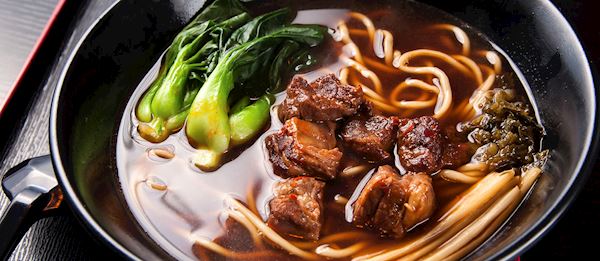
Taiwanese Beef Noodle Soup
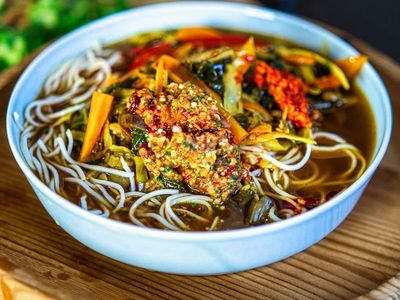
Taiwan's national obsession: slow-braised beef shank in a soy-and-doubanjiang broth, served over hand-pulled noodles with pickled mustard greens.
Overview
Beef shank parboils briefly to remove scum. Aromatics, ginger, garlic, scallion, star anise, cinnamon, dried chilli, Sichuan peppercorn, doubanjiang (fermented chilli broad bean paste), fry in oil until fragrant. Tomato deepens the broth. Beef stock, soy, rice wine, and rock sugar build the body. The shank simmers for 2-3 hours until fork-tender. Noodles cook fresh; broth ladles over; pickled greens and chilli oil top.
Ingredients
Beef
- 1 kg beef shank (with sinew; or beef short ribs)
Aromatics and paste
- 3 tablespoons vegetable oil
- 6 cm fresh ginger (sliced)
- 6 garlic cloves (smashed)
- 4 spring onions (whole, smashed)
- 1 onion (medium, quartered)
- 4 star anise
- 1 cinnamon stick
- 4 dried red chillies
- 2 tablespoons Sichuan peppercorns (lightly crushed)
- 3 tablespoons doubanjiang (Pixian-style)
- 2 tomatoes (medium, quartered)
Liquid and seasoning
- 100 ml Shaoxing rice wine
- 100 ml light soy sauce
- 2 tablespoons dark soy sauce (for colour)
- 30 g rock sugar (or 2 tablespoons brown sugar)
- 2 litres beef stock (or water)
- 1 teaspoon salt (or to taste)
To serve
- 400 g fresh wheat noodles (wide flat are traditional; udon as a substitute)
- 200 g pickled mustard greens (suan cai; sold at Asian grocers)
- 4 spring onions (sliced)
- A small bunch of coriander (chopped)
- Chilli oil (to drizzle)
- Bok choy (or pak choi, blanched briefly, optional)
Method
Stage 1 - Parboil the beef
- Cut the shank into 5 cm chunks.
- Place in a pot; cover with cold water; bring to the boil.
- Boil 3-4 minutes; drain and rinse the beef thoroughly under cold water - this removes the scum and leaves you with a clean broth.
Stage 2 - Aromatics
- Heat the oil in a large heavy pot over medium-high heat.
- Add the ginger, garlic, spring onions and onion; cook 4-5 minutes until fragrant.
- Add the star anise, cinnamon, dried chillies and Sichuan peppercorns; cook 1 minute.
- Stir in the doubanjiang; cook 2 minutes - the oil should turn red.
Stage 3 - Tomato and deglaze
- Add the tomatoes; cook 4-5 minutes, mashing slightly, until they break down.
- Pour in the rice wine; cook 1 minute.
Stage 4 - Build the broth
- Add the parboiled beef.
- Pour in the soy sauces; add the rock sugar.
- Cover with stock or water; bring to the boil.
- Reduce to lowest heat; partly cover.
- Cook 2-3 hours until the beef is fork-tender.
Stage 5 - Strain (optional but cleaner)
- Lift the beef out into a bowl.
- Strain the broth through a fine sieve into a clean pot - discard the spices and aromatics.
- Return the beef to the strained broth.
- Taste and adjust salt.
Stage 6 - Cook the noodles
- Bring a wide pan of water to a vigorous boil.
- Cook the noodles per packet instructions (usually 3-4 minutes).
- Blanch the bok choy (if using) in the same water 60 seconds.
- Drain and divide between 4 bowls.
Stage 7 - Serve
- Ladle hot broth over the noodles, with 3-4 chunks of beef per bowl.
- Top with pickled mustard greens, sliced spring onions, coriander and a drizzle of chilli oil.
- Eat while hot - chopsticks for noodles and beef, spoon for the broth.
Notes
- Parboil first: This is the secret to a clean, clear broth. Skipping gives a cloudy, scummy soup.
- Doubanjiang is the soul: Sichuan-style fermented broad bean and chilli paste. Other chilli pastes don't give the same depth.
- Pickled mustard greens: Suan cai or zha cai, sold in pouches at Asian grocers. Adds the salty-sour crunch that completes the bowl.
Storage
- Broth + beef keep 4 days refrigerated, freezes 3 months. Cook noodles fresh.
More like this
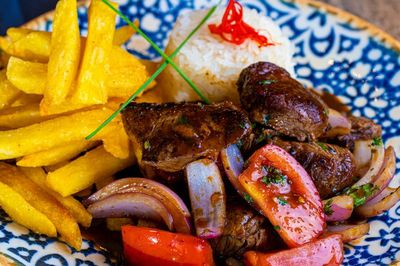
Lomo Saltado
Beef strips are marinated briefly in soy and aji amarillo paste. Fries are cooked separately, pre-fried, set aside. The wok hits high heat; beef is seared in batches; red onion and tomato are added briefly so they keep their bite; soy, vinegar, lime and stock are poured in to sauce. The fries go in last, just before serving, a 30-second toss so they pick up flavour without going soggy.
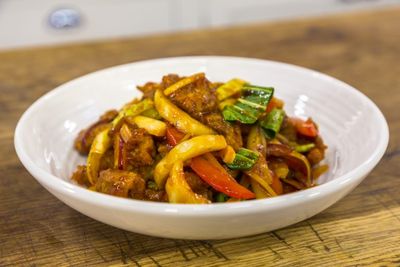
Shapta
Thinly sliced beef marinates briefly in soy, garlic, ginger and a touch of cornflour for tenderness. A hot wok flashes the meat in batches, then onion, capsicum and chillies stir-fry until just beginning to char. Everything tosses back in with a small splash of soy and stock to glaze. Lots of fresh coriander and spring onion to finish.
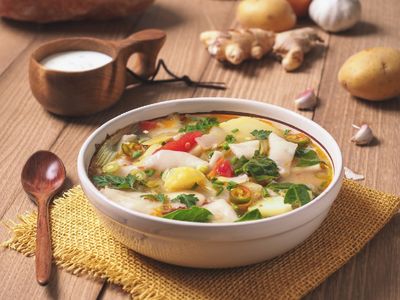
Thenthuk
A firm wheat dough rests while you build a clear, ginger-forward broth with beef, tomato and warming spices. When the broth is ready, the dough is rolled into a thick sheet, brushed with oil and cut into long strips. At the moment of cooking, each strip is held over the simmering broth and pinched into rough 3-4 cm squares that drop in. The noodles cook in 2-3 minutes. Greens and coriander finish.
Thukpa
A simple wheat-flour dough rests while a clear, ginger-and-garlic-forward broth simmers with beef (standing in for yak), Sichuan peppercorn and a tomato. The dough is rolled and cut into thin noodles, or, if you prefer, store-bought egg noodles. Vegetables and greens go in at the end; fresh coriander and chilli on top. Honest, restorative, not fancy.