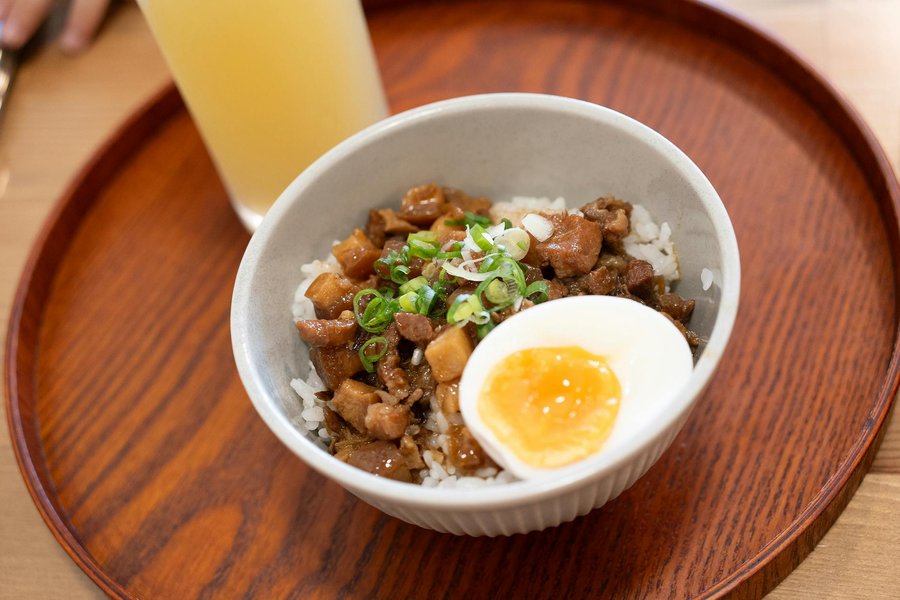
Lu Rou Fan
Taiwan's comfort dish: hand-diced pork belly braised glossy in soy, rice wine and five-spice, ladled over a bowl of hot steamed rice.
Overview
Pork belly is hand-diced into 1 cm cubes (skin on), parboiled, then braised slowly in a fragrant mixture of soy, Shaoxing, rock sugar, five-spice, garlic and fried shallots. The slow simmer renders the fat and softens the skin into a gelatinous, glossy braise that clings to rice. A jammy soy-braised egg and a few pickled greens on the side are traditional.
Ingredients
Pork
- 800 g pork belly, skin on (one piece)
- 2 tablespoons vegetable oil
Aromatics
- 80 g fried shallots (sold in tubs at Asian grocers), plus extra to garnish
- 6 garlic cloves (finely chopped)
- 4 cm fresh ginger (finely chopped)
- 2 star anise
- 1 cinnamon stick (small)
- 1 teaspoon Chinese five-spice powder
- ½ teaspoon white pepper
Braise
- 100 ml Shaoxing rice wine
- 80 ml light soy sauce
- 2 tablespoons dark soy sauce (for colour)
- 40 g rock sugar (or 2 tablespoons soft brown sugar)
- 700 ml water (or unsalted chicken stock)
To serve
- 4 eggs (large, soft-boiled, peeled)
- Steamed jasmine rice
- Pickled mustard greens (or quick-pickled cucumber)
- 1 spring onion (finely sliced)
- Blanched pak choi (optional)
Method
Stage 1 - Prep the pork
- Slice the pork belly into 1 cm thick strips, then into 1 cm cubes. Keep the skin on every piece - this is the texture that defines the dish.
- Bring a saucepan of water to the boil. Add the pork; boil for 3 minutes to remove scum. Drain and rinse under cold water. Pat dry.
Stage 2 - Build the aromatics
- Heat the oil in a heavy-based saucepan or small casserole over medium heat.
- Add the chopped garlic and ginger; cook 1 minute until fragrant.
- Add the fried shallots, star anise, cinnamon stick, five-spice and white pepper. Stir for 30 seconds.
- Tip in the pork and stir to coat in the aromatics. Cook 3-4 minutes until the edges of the pork start to colour and render.
Stage 3 - Braise
- Pour in the Shaoxing rice wine; let it bubble for a minute.
- Add both soy sauces, the rock sugar and enough water or stock to just cover the pork.
- Bring to a simmer. Reduce to the lowest heat, cover with the lid slightly ajar, and braise for 1 ¼ hours, stirring every 20 minutes, until the pork is meltingly tender and the sauce is glossy and reduced to a sticky coating.
Stage 4 - The eggs
- Bring a small pan of water to a rolling boil. Lower in the eggs and cook 6 ½ minutes for jammy yolks. Plunge into iced water; peel.
- Add the peeled eggs to the braise in the last 20 minutes so they take on colour.
Stage 5 - Serve
- Spoon a generous mound of jasmine rice into each bowl.
- Ladle pork belly and sauce over the top.
- Halve a soy-braised egg and rest it on the side.
- Scatter spring onion and extra fried shallots; serve pickled greens or pak choi on the side.
Notes
- Hand-dice the pork: Don't be tempted to mince. The texture comes from cubes that hold their shape and let you taste skin, fat and meat distinctly.
- Fried shallots are not optional: They carry most of the savoury depth. Tubs of crispy fried shallots from Asian grocers (a Thai or Vietnamese brand is fine) save the trouble of frying your own.
- Rock sugar gives gloss: Rock sugar (binglang) caramelises into the signature lacquered sheen. Brown sugar works but the finish is duller.
- Skin on: Hard rule. The collagen from the skin thickens the braise and gives mouthfeel.
Variations
Mushroom-enriched: Soak 4 dried shiitake in warm water for 30 minutes; chop and add with the aromatics. The soaking liquid replaces some of the stock. Lu rou fan with bamboo shoots: Stir 150 g sliced bamboo shoots into the braise for the last 30 minutes.
Serving
Serve with: steamed jasmine rice, blanched pak choi or Chinese broccoli, pickled mustard greens, soy-braised egg.
Storage
- Keeps 4 days refrigerated and improves overnight; the gelatine sets so reheat gently with a splash of water.
- Freezes well for 2 months.
More like this
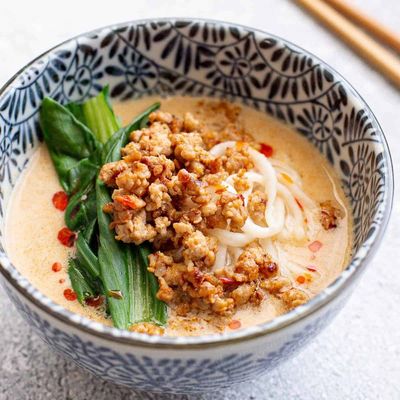
Tantanmen
Three components assemble at service. (1) Niku miso: ground pork stir-fries with garlic, ginger, doubanjiang and miso, then sweetened with sugar and finished with sesame oil. (2) Tare (concentrated seasoning paste): white sesame paste (tahini), soy sauce, rice vinegar, chilli oil, miso paste, garlic, whisked together. (3) Hot soup: chicken stock with a touch more sesame paste and chilli oil swirled in. Ramen noodles cook separately. Bowls layered: tare in the bottom, hot soup ladled over, cooked noodles, mound of niku miso, blanched bok choy, soft-boiled marinated egg, scallions, extra chilli oil.
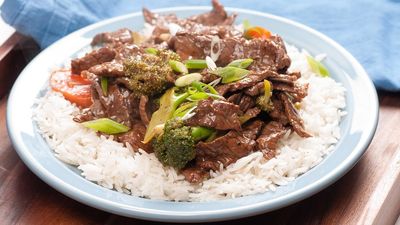
Ginger Beef and Onion Rice Bowls
The kind of weeknight rice bowl that punches well above its ingredient list and the time it asks of you. You slice sirloin into thin strips and marinate them for an hour or two with garlic, fresh ginger, soy, rice vinegar, sliced onions and a touch of brown sugar; the marinade does double duty as braising liquid later, so don't skip the rest. The technique is the small surprise: instead of a flash stir-fry, the whole lot goes into a Dutch oven on gentle medium-low heat for ten to fifteen minutes, which lets the marinade reduce slowly around the beef without burning the sugar. What you get back is tender beef in a glossy soy-ginger glaze, with onions collapsed into ribbons of sweetness running through it. The flavour is direct, clean and very gingery, with a whisper of sesame at the end. Pile over white rice, ramen or steamed broccoli; the dish holds its texture through a Sunday meal-prep batch, which is its real superpower.
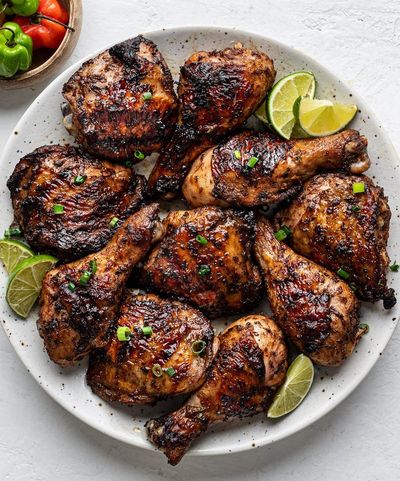
Jerk Chicken
A wet jerk paste: scotch bonnet chillies, garlic, ginger, spring onions, thyme, allspice (whole or ground), brown sugar, soy sauce, lime, oil, salt and pepper, pureed in a blender. The chicken (bone-in skin-on thighs and drumsticks, or spatchcocked whole bird) marinates for 12 hours minimum. Slow-grilled over indirect heat with a pile of pimento wood chips or allspice berries on the coals for the signature smoke; alternatively, an oven-bake at 180°C with a final blast under the grill, supplemented with allspice in the marinade.
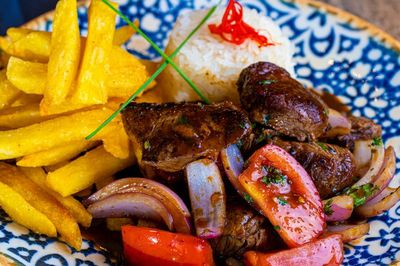
Lomo Saltado
Beef strips are marinated briefly in soy and aji amarillo paste. Fries are cooked separately, pre-fried, set aside. The wok hits high heat; beef is seared in batches; red onion and tomato are added briefly so they keep their bite; soy, vinegar, lime and stock are poured in to sauce. The fries go in last, just before serving, a 30-second toss so they pick up flavour without going soggy.