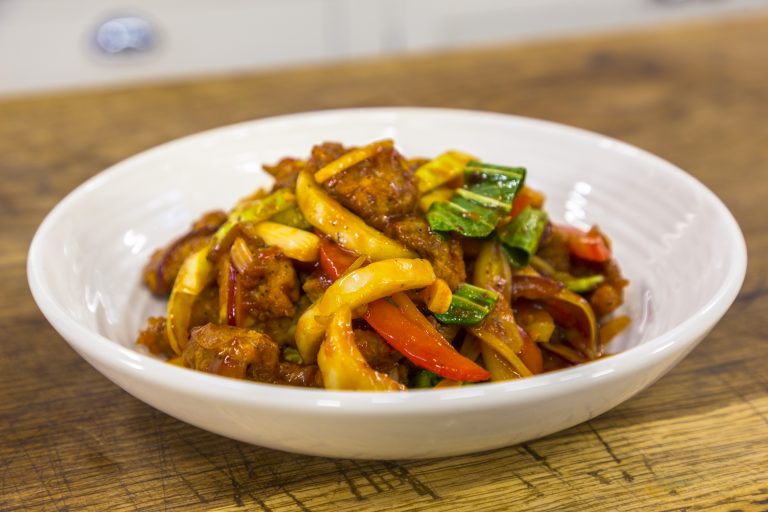
Shapta
The Tibetan stir-fry: thinly sliced beef flashed in a hot wok with onion, capsicum, soy and chilli. Served with rice or tucked into tingmo buns.
Overview
Thinly sliced beef marinates briefly in soy, garlic, ginger and a touch of cornflour for tenderness. A hot wok flashes the meat in batches, then onion, capsicum and chillies stir-fry until just beginning to char. Everything tosses back in with a small splash of soy and stock to glaze. Lots of fresh coriander and spring onion to finish.
Ingredients
Beef
- 600 g lean beef (sirloin, rump or flank), sliced very thinly across the grain
- 1 tablespoon light soy sauce
- 1 tablespoon Shaoxing rice wine (or dry sherry)
- 2 teaspoons cornflour
- 1 teaspoon toasted sesame oil
- ½ teaspoon ground black pepper
Stir-fry
- 3 tablespoons vegetable oil (split)
- 1 onion (large, sliced into thick wedges)
- 2 capsicums (one red, one green; sliced)
- 4 garlic cloves (chopped)
- 4 cm fresh ginger (julienned)
- 2 fresh green chillies (slit lengthways)
- 1 tomato (cut into wedges)
Sauce
- 2 tablespoons light soy sauce
- 1 tablespoon dark soy sauce
- 1 teaspoon soft brown sugar
- 100 ml beef stock (or water)
- 1 teaspoon cornflour mixed with 1 tablespoon cold water
To serve
- 3 spring onions (sliced on the diagonal)
- A small bunch of coriander (chopped)
- Steamed Rice (or tingmo, Tibetan steamed buns)
Method
Stage 1 - Marinate the beef
- Place the beef strips in a bowl with the soy, Shaoxing, cornflour, sesame oil and black pepper. Toss to coat.
- Leave to marinate 15 minutes at room temperature while you prep the vegetables.
Stage 2 - Prep the sauce and vegetables
- Stir the sauce ingredients (light and dark soy, sugar and stock) together in a small bowl.
- Have the chopped vegetables, garlic, ginger and chillies ready by the stove; once you start cooking it moves fast.
Stage 3 - Sear the beef
- Heat a wok or large heavy frying pan over high heat until it smokes lightly.
- Add 2 tablespoons of the vegetable oil; swirl to coat.
- Add half the beef in a single layer; sear 60 seconds without moving, then toss for 30 seconds. The meat should be browned but still slightly pink. Tip onto a plate.
- Repeat with a touch more oil and the remaining beef. Set aside.
Stage 4 - Stir-fry the vegetables
- Add the last tablespoon of oil to the wok.
- Tip in the onion wedges; stir-fry 1 minute until they start to char at the edges.
- Add the capsicums; stir-fry 2 minutes until just softened but still vivid.
- Add the garlic, ginger and chillies; toss 30 seconds.
- Add the tomato wedges; toss 1 minute, just to warm through.
Stage 5 - Bring it together
- Return the beef and any resting juices to the wok.
- Pour in the sauce mixture; toss to coat for 30 seconds.
- Stir the cornflour slurry and pour in; toss 30 seconds until the sauce thickens to a light glaze that coats everything.
- Taste; adjust salt or pepper.
Stage 6 - Serve
- Tip onto a warm serving platter.
- Scatter spring onions and coriander generously over the top.
- Serve immediately with steamed rice or tingmo.
Notes
- Slice thin, slice across: Beef sliced thinly across the grain cooks in seconds and stays tender. Thick slices or with-the-grain cuts go chewy. A partial freeze of 30 minutes makes thin slicing easier.
- Yak in Tibet, beef elsewhere: Yak is the traditional meat and unavailable in UK or Western shops. Lean beef sirloin or rump is the closest practical substitute; mutton (lamb leg) works for a stronger-flavoured version.
- Hot wok is non-negotiable: Stir-fries fail when the pan isn't hot enough; the meat stews instead of searing. Get the wok smoking before adding oil.
- Don't crowd the meat: Sear in 2 batches. Piled-in meat releases liquid and steams.
Variations
Mutton shapta: Use 600 g boneless lamb leg sliced thinly; otherwise identical. Vegetarian shapta: Replace the beef with 400 g firm tofu (pressed and cubed, fried in batches) plus 200 g mushrooms. Lighter, but the chilli and capsicum carry it.
Serving
Serve with: steamed jasmine rice, tingmo (Tibetan steamed buns) or warm flatbread, and a small dish of sepen chilli sauce on the side. Garnish with: extra coriander leaves.
Storage
- Best eaten fresh; the vegetables go soft on standing.
- Leftovers keep 2 days refrigerated; reheat in a hot wok briefly rather than the microwave.
More like this
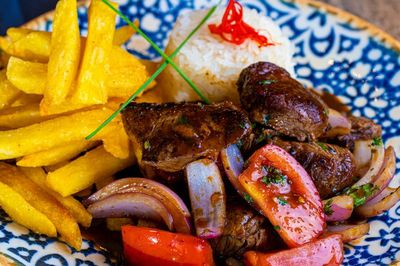
Lomo Saltado
Beef strips are marinated briefly in soy and aji amarillo paste. Fries are cooked separately, pre-fried, set aside. The wok hits high heat; beef is seared in batches; red onion and tomato are added briefly so they keep their bite; soy, vinegar, lime and stock are poured in to sauce. The fries go in last, just before serving, a 30-second toss so they pick up flavour without going soggy.
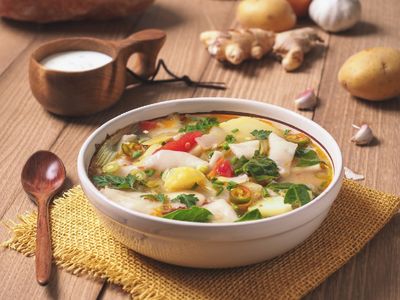
Thenthuk
A firm wheat dough rests while you build a clear, ginger-forward broth with beef, tomato and warming spices. When the broth is ready, the dough is rolled into a thick sheet, brushed with oil and cut into long strips. At the moment of cooking, each strip is held over the simmering broth and pinched into rough 3-4 cm squares that drop in. The noodles cook in 2-3 minutes. Greens and coriander finish.
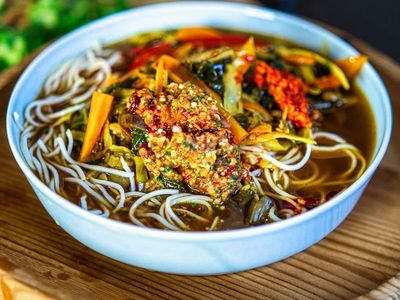
Thukpa
A simple wheat-flour dough rests while a clear, ginger-and-garlic-forward broth simmers with beef (standing in for yak), Sichuan peppercorn and a tomato. The dough is rolled and cut into thin noodles, or, if you prefer, store-bought egg noodles. Vegetables and greens go in at the end; fresh coriander and chilli on top. Honest, restorative, not fancy.
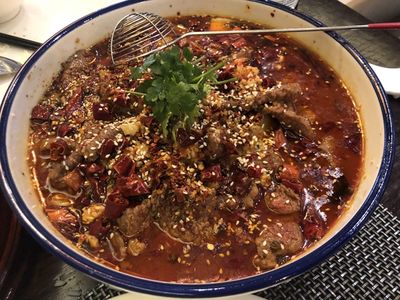
Shuizhu Niurou
Two sensations at once: the bright, immediate burn of dried chilli (la) sitting under the slow numbing-electric prickle of Sichuan peppercorn (ma). That mala pair is the whole point. Beneath that, the broth is salty and fermented-funky from doubanjiang, the deep umami of broad-bean paste that's been aged for months in clay vessels. The hot oil pour at the table is theatre but it does real work: it blooms the dried chillies and Sichuan peppercorn powder right before you smell them, so the aroma arrives in a wave. Texturally: gloriously tender silk-thin beef slices (the cornflour-and-egg-white marinade is what keeps them that way), crisp-on-the-edge bok choy or bean sprouts wilting under the heat, oil swimming on top. Easier than its restaurant-banquet reputation suggests once you have doubanjiang and Sichuan peppercorns in the pantry; the technique is mostly "don't overcook the beef" and "pour the oil while it's smoking". Originates in 1930s Chongqing as a riverboat-worker's dish, water and chillies were cheap, lean cuts of beef tough, then spread through Sichuan in the 1980s as the wider mala movement caught hold.