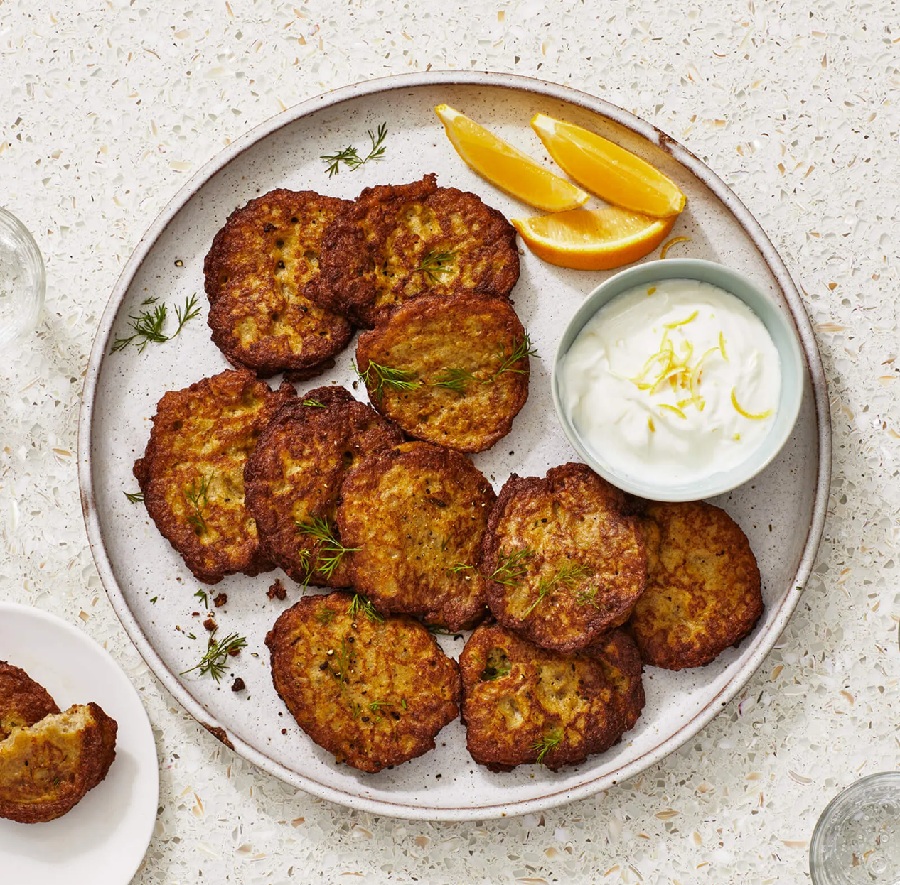
Kuku Sib Zamini
Persia's potato omelette: grated boiled potato folded with eggs, onion, turmeric and saffron, baked till just-set and gold.
Overview
Potatoes are boiled in their skins until tender (about 25 minutes); cooled slightly, peeled, grated on the coarse side. Onion is sautéed in oil with a pinch of turmeric until soft. Eggs are beaten with salt, pepper, saffron-water, baking powder and a tablespoon of flour. The grated potato and softened onion are folded through. The mixture is tipped into a buttered 24 cm round or square tin; baked at 180°C for 25-30 minutes until the top is gold and the centre is just set. Cooled slightly; cut into squares. Excellent with Greek yogurt or as part of a sabzi-khordan (Persian herb-and-cheese plate).
Ingredients
- 700 g waxy potatoes (about 4 medium - Charlotte, Yukon Gold or other waxy)
- 1 onion (large, finely diced)
- 3 tablespoons sunflower oil OR ghee
- 1 teaspoon ground turmeric
- 5 eggs (large, room temperature)
- 1 teaspoon baking powder
- 1 tablespoon plain flour
- 1 large pinch saffron threads (soaked in 2 tablespoons hot water)
- 1 teaspoon salt
- ½ teaspoon black pepper
- 1 teaspoon dried mint (optional)
- 2 tablespoons fresh chives (or spring onion, chopped, optional)
To finish
- 30 g unsalted butter (for the tin)
- 1 tablespoon olive oil (drizzle on top)
- Greek yogurt to serve
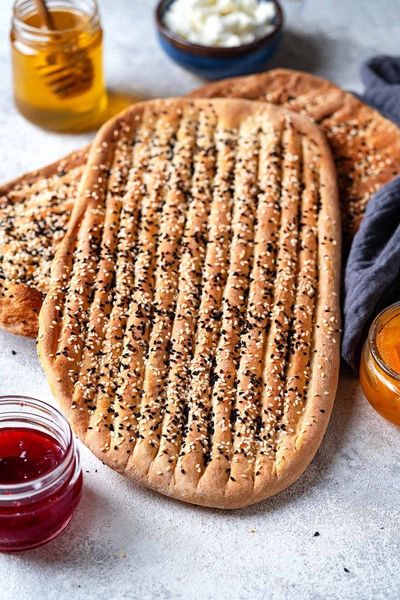
- Persian flatbread (sangak / barbari) or pita
Method
Stage 1 - Cook potatoes
- Place potatoes (skins on) in a pot of cold water; bring to a boil; cook 25 minutes until a knife slips in.
- Drain; cool 5 minutes; peel; grate on the coarse side of a box grater.
- The potatoes should still be slightly warm but not hot.
Stage 2 - Onion
- Heat oil or ghee in a wide pan over medium heat.
- Sauté onion 8 minutes until soft and just gold.
- Stir in turmeric; cook 30 seconds.
- Off heat; cool slightly.
Stage 3 - Egg mixture
- Beat eggs with baking powder, flour, saffron-water, salt, pepper and dried mint (if using) in a wide bowl.
Stage 4 - Combine
- Fold the grated potato and softened onion into the egg mixture.
- Add chopped chives if using.
Stage 5 - Bake
- Heat oven to 180°C (160°C fan).
- Butter a 24 cm round or 22 cm square tin generously.
- Pour in the mixture; smooth the top.
- Drizzle 1 tablespoon olive oil over.
- Bake 25-30 minutes until the top is deep gold and a skewer inserted comes out clean.
Stage 6 - Cool and cut
- Rest 10 minutes in the tin.
- Cut into 12 squares (or 6 wedges if round).
Stage 7 - Serve
- Plate warm with yogurt and bread.
- Or cool fully, refrigerate, and pack into bento boxes for a picnic. Excellent cold the next day on Persian flatbread with tomato slices.
Notes
- Coarse grate, slightly warm potato: Cold potato is too firm to grate into a fine texture; hot potato falls apart. Warm-but-not-hot is right.
- Saffron is the Persian signature: Even a small amount of saffron-water in the egg mix gives the dish its distinctive gold colour and faint floral aroma. Without it, you have a potato omelette, not a Persian kuku.
- Cool to room temp for sandwich use: The classic Tehran kuku sandwich is cold kuku slices on flatbread with sliced tomato, pickled cucumber and a smear of butter.
Storage
- Refrigerate 4 days; serves cold or warmed.
- Freezes 2 months in slices; defrost in fridge then warm or eat cold.
More like this
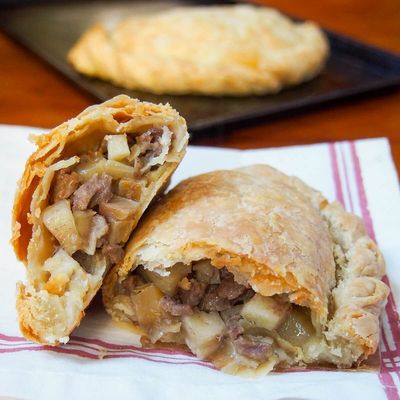
Cornish Pasty
Shortcrust pastry uses a mix of lard and butter for the right sturdy-but-flaky texture; chilled, rested for 30 minutes, rolled to 4 mm thick, and cut into 22 cm discs (a small plate works as a guide). Filling: beef skirt (cut into 5 mm cubes, never minced), potato (5 mm dice), swede (5 mm dice) and onion (5 mm dice), seasoned generously with salt and pepper. The filling is piled on half of each pastry disc, leaving a 1 cm border. The pastry is folded over; edges are crimped firmly with thumb-and-forefinger pressed-and-twisted rope crimps along the curved edge. Egg-washed; baked at 200°C for 15 min, then 180°C for 35-40 min until deep golden.
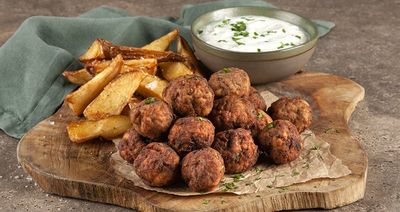
Keftedakia (Greek Mini Meatballs)
A grated onion (juice squeezed out) folds into beef-or-pork-and-beef mince with bread soaked in milk and squeezed dry, an egg, a generous amount of dried mint and oregano, parsley, garlic, salt and pepper. A tablespoon of ouzo or red wine adds depth. Mixture rests for 30 minutes (the flavours mingle, the bread fully absorbs). Rolls into walnut-sized balls, dusts in flour, pan-fries in olive oil 6-8 minutes turning often until deep brown and cooked through. Serves with tzatziki and lemon wedges.
Nigerian Meat Pie
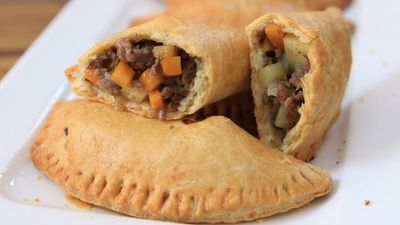
A short pastry of plain flour, butter, margarine (the mix gives Nigerian pies their distinctive texture, flakier than all-butter, sturdier than all-margarine), a pinch of baking powder, salt and cold water is made and rested. The filling: minced beef browned with onion, garlic, curry powder, thyme and a stock cube, then a small dice of carrot and potato added and cooked through with a splash of stock and a touch of cornflour to give a thick gravy. Pastry rolls out 4 mm thick, cuts into 15 cm rounds; filling goes on half; egg-wash glues; crimp; egg-wash on top. Bake at 200°C 30-35 minutes until deep gold.
Sambousek Bil Lahm
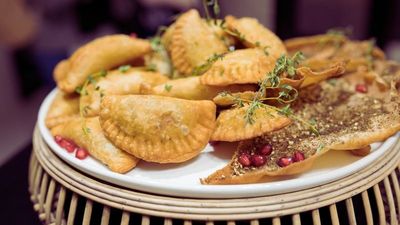
The meat-filled half-moon that sits next to the cheese version on every Levantine-Arabian table. You roll a soft butter-and-yogurt dough thin, stamp it into nine-centimetre rounds, and place a teaspoon of spiced lamb mince in the centre of each. The lamb is fragrant with baharat, onion, toasted pine nuts and a touch of pomegranate molasses that adds a sweet-sharp depth you can't quite place. The rounds fold into half-moons and crimp with a fork. From there they go either route: deep-fried at 170°C for three or four minutes per side, or baked at 200°C for eighteen to twenty minutes with an egg wash for shine. The pastry blisters lightly, the filling stays juicy. Eaten warm with a wedge of lemon, often as part of a meze spread alongside hummus, mutabbal, salata and warm flatbread.