Kashk O Bademjan
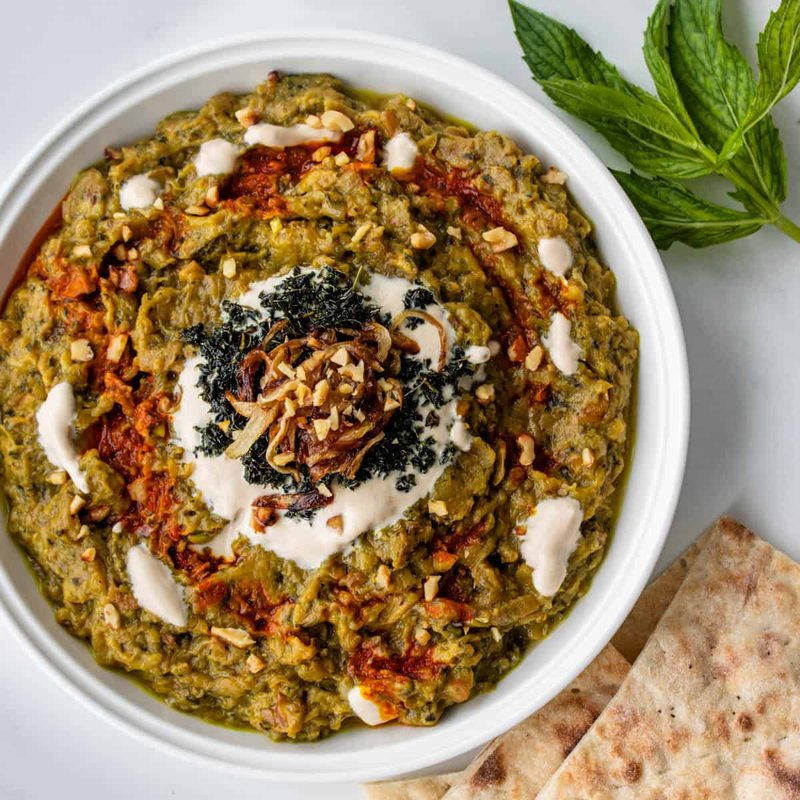
Persia's defining aubergine dip: roasted aubergines mashed with garlic and dried mint, swirled with kashk and topped with crispy onions and walnuts.
Overview
Aubergines are roasted whole until completely soft and the skin chars (oven, broiler, or open flame); cooled slightly, peeled, chopped. A wide pan is used to soften diced onion in oil until deep gold; turmeric and a pinch of saffron are stirred in; the chopped aubergine is added with a little water and simmers for 10 minutes to integrate into a thick mash. Garlic-and-dried-mint oil is prepared separately: crushed garlic is gently fried in olive oil with dried mint until fragrant. Most of this mint-oil is folded into the aubergine; the rest is reserved for garnish. Kashk (sold liquid or paste; thinned with water if paste) drizzles in lines across the plated dip; deep-fried onions, the reserved mint-oil, chopped walnuts, and a final scatter of dried mint top it.
Ingredients
Aubergine base
- 3 aubergines (large, about 800 g total)
- 4 tablespoons olive oil OR sunflower oil
- 2 onions (medium, finely diced)
- 4 garlic cloves (crushed)
- 1 teaspoon ground turmeric
- 1 large pinch saffron threads (soaked in 2 tablespoons hot water)
- 1 teaspoon salt (to taste)
- ½ teaspoon black pepper
- 100 ml water
Mint-and-garlic oil
- 3 tablespoons olive oil
- 4 garlic cloves (sliced thin)
- 2 tablespoons dried mint
Crispy fried onions
- 1 onion (large, sliced VERY thin)
- 3 tablespoons sunflower oil (for frying)
To plate
- 150 g kashk (Persian fermented whey, sold liquid OR thick paste at Iranian / Middle Eastern shops; if paste, thin with 3 tablespoons warm water to a pourable consistency)
- 30 g walnut halves (toasted, chopped to a rubble)
- 1 teaspoon extra dried mint
- 1 teaspoon Aleppo pepper
To serve
- Sangak, lavash, or pita bread (warm)
Method
Stage 1 - Roast aubergines
- Best (open flame): place whole aubergines directly over a gas burner; turn every 2 minutes for about 12-15 minutes until the skin is completely charred and the flesh has collapsed.
- Oven: heat to 220°C; pierce aubergines a few times; roast on a tray 40 minutes until completely soft.
- Broiler: 5 minutes per side under a hot grill until charred.
- Place in a bowl; cover with cling film 10 minutes (steams the skin off).
- Peel under cold running water; squeeze out excess liquid; chop coarsely.
Stage 2 - Crispy onions (do early; need cooling time)
- Heat 3 tablespoons sunflower oil over medium heat.
- Fry the thinly sliced onion 10-12 minutes until DEEP brown and crisp (not just gold - push the colour).
- Lift onto kitchen paper. Reserve.
Stage 3 - Aubergine base
- In a wide pan, heat 4 tablespoons olive oil over medium.
- Sauté diced onion 8 minutes until soft and just gold.
- Add crushed garlic; cook 1 minute.
- Stir in turmeric, saffron-water, salt and pepper; cook 30 seconds.
- Add the chopped roasted aubergine; mash gently with a wooden spoon to a rough purée.
- Add water; simmer 10 minutes - the mixture thickens to a thick spoonable dip.
- Taste; adjust salt.
Stage 4 - Mint and garlic oil
- In a small pan, heat 3 tablespoons olive oil over medium-low.
- Add the sliced garlic; cook 60 seconds until just gold.
- Off heat; immediately stir in dried mint (it should sizzle and turn deep green).
Stage 5 - Combine
- Pour two-thirds of the mint-and-garlic oil into the aubergine pan; stir.
- Reserve the other third for topping.
Stage 6 - Plate
- Spread the warm aubergine mixture in a wide shallow bowl.
- Drizzle the kashk in lines across the top (if too thick, thin with warm water to a pourable consistency).
- Scatter crispy fried onions.
- Drizzle the reserved mint-and-garlic oil.
- Scatter chopped walnuts.
- Sprinkle extra dried mint and Aleppo pepper.
Stage 7 - Serve
- Eat warm or at room temperature with warm sangak / lavash / pita for scooping.
- Each scoop should include some of every layer: the aubergine, kashk, fried onion, mint oil, walnut.
Notes
- Char the aubergine: The smoky note from charring the skin (open flame is best) is essential. Oven-baked aubergine gives a softer, milder dip; flame-charred gives the smoky kashk-o-bademjan character.
- Kashk is the heart: Without kashk this is just smoky baba ganoush. Kashk gives the salty-tangy backbone. If you can't find it: thick Greek yogurt + 1 tablespoon lemon + ½ teaspoon salt is a passable substitute.
- Deep-fried onions: deep brown: Pale fried onions don't have the right flavour or crunch. Push to deep brown, almost burnt at the edges.
Storage
- Refrigerate 4 days; bring to room temperature before serving, OR warm gently. Re-top with fresh fried onions and mint oil if the toppings have been mixed in.
- The aubergine base alone freezes 2 months; the toppings are fresh additions.
Recipes mentioned here
Lavash
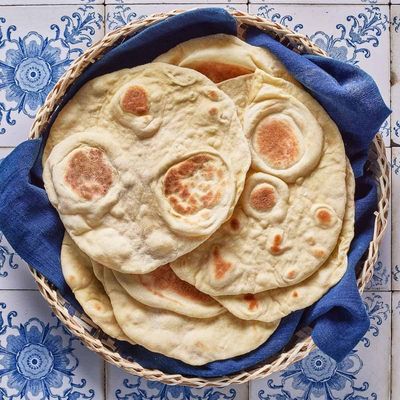
The paper-thin flatbread of the Caucasus, on UNESCO's Intangible Cultural Heritage list since 2014, and the bread that wraps every grilled meat from Yerevan to Baku. You make a dough from just three things (flour, water and salt) that is firmer than a pasta dough and smoother than a bread dough. Thirty minutes' rest under a damp cloth lets the gluten relax enough to roll. The dough divides into eight balls, each rolled paper-thin (you should be able to read newsprint through the sheet before it goes in the pan). Onto a heavy dry skillet over high heat for sixty to ninety seconds per side, just long enough to puff and blister. Stack the cooked sheets under a clean tea towel as you go so they stay pliable. Eaten the same day, torn around grilled meat, wrapped around kebabs, used as a plate, used as a napkin.
Baba Ganoush
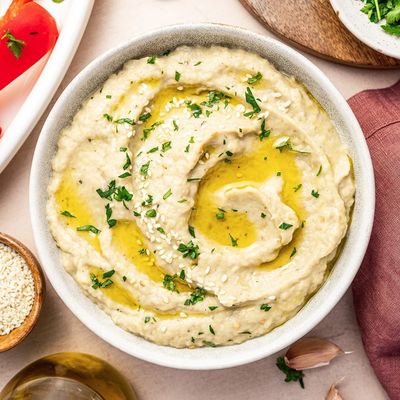
Aubergines char directly on a gas flame or under a hot grill until the skin is uniformly black and the flesh is collapsed inside. Steamed briefly under foil; peeled. Flesh chops, then mashes (don't blend, the texture is the point) with tahini, lemon, garlic, salt. Plate; pool olive oil; scatter pomegranate seeds and parsley.
More like this
Burmese Samosa
The Burmese take on the South Asian samosa, with a thinner, crisper pastry and a milder filling than its Indian cousin. You make a hot-water dough that rolls out very thin so the fried shell ends up glassy and crisp rather than bready. The filling is mild by Indian standards: turmeric, ginger, fried onion and a whisper of cumin folded into mashed potato and peas, finished with crushed peanuts for the nuttiness that marks the Burmese version. The triangles fry at moderate heat until amber and crackling, the pastry blistering as it goes. Eaten hot dipped in tamarind sauce, or torn into chunks for a samusa-thoke salad later.
Arayes
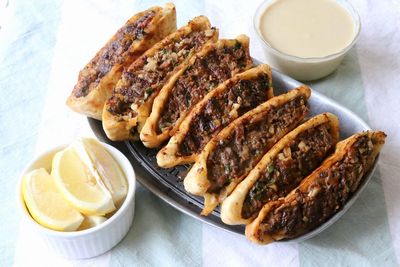
Lamb mince mixes with grated onion, parsley, allspice, baharat, pine nuts (optional) and salt. Pita pockets split open along one side; the filling presses thin (5-6 mm) into both halves. Brushed with olive oil; pan-fried or grilled hot 3-4 minutes per side until the bread is crisp and gold and the meat is just cooked.
Chilli oil
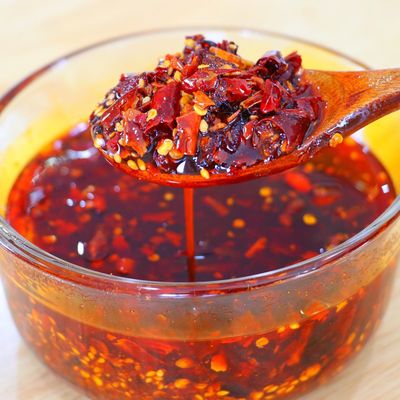
Two-stage flavour build: first a spice infusion (whole spices soaked briefly in water, then simmered slowly in vegetable oil with spring onion and ginger), then a sizzle (the hot strained oil poured over a heat-proof bowl of chilli flakes, smoked paprika, soy and Chinese vinegar). Cooling. Mixing in the textural elements: caster sugar, salt, chicken stock powder, crispy fried shallots and crispy fried garlic. Jarred, rested 24 hours so the flavours marry, stirred vigorously before each use because the oil and solids separate.
Gỏi Cuốn
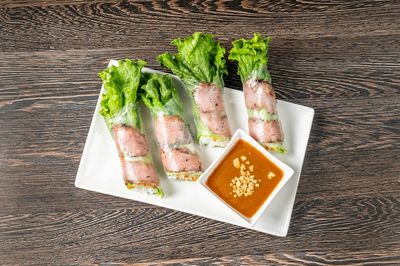
Pork belly is simmered until tender, prawns are poached briefly, and vermicelli is cooked just al dente. Everything cools to room temperature, then rice paper rounds are dipped briefly in warm water and rolled around lettuce, herbs and the protein with the pink of the prawns showing through the wrapper. The peanut-hoisin sauce is the make-or-break: it should be thick, sweet and lightly garlicky.