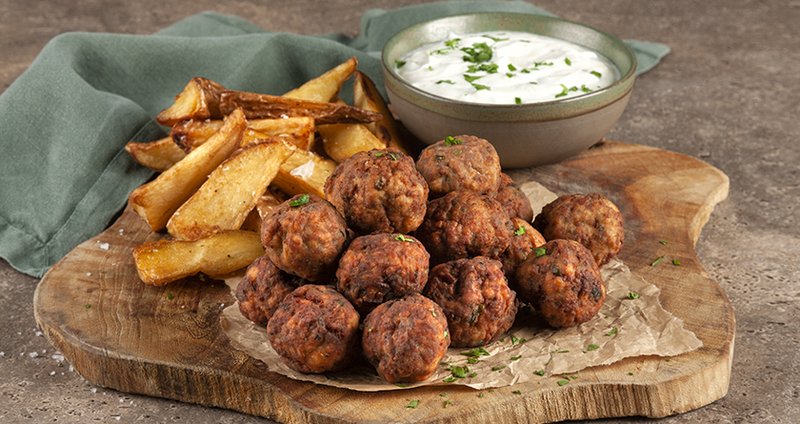
Keftedakia (Greek Mini Meatballs)
Greece's defining meze meatball: walnut-sized fried balls seasoned heavily with mint, oregano and grated onion. Eaten with tzatziki and lemon.
Overview
A grated onion (juice squeezed out) folds into beef-or-pork-and-beef mince with bread soaked in milk and squeezed dry, an egg, a generous amount of dried mint and oregano, parsley, garlic, salt and pepper. A tablespoon of ouzo or red wine adds depth. Mixture rests for 30 minutes (the flavours mingle, the bread fully absorbs). Rolls into walnut-sized balls, dusts in flour, pan-fries in olive oil 6-8 minutes turning often until deep brown and cooked through. Serves with tzatziki and lemon wedges.
Ingredients
Meatballs
- 500 g beef mince (or 50/50 beef and pork)
- 1 onion (large, grated, then squeezed dry through a tea towel - keep the juice for the pan)
- 60 g day-old white bread (crusts off, soaked in 100 ml milk, then squeezed dry)
- 1 egg (large)
- 3 garlic cloves (finely minced)
- 2 tablespoons fresh flat-leaf parsley (chopped)
- 1 tablespoon dried Greek oregano
- 2 teaspoons dried mint (or 1 tablespoon fresh)
- 1 tablespoon ouzo (or red wine)
- 1 tablespoon red-wine vinegar
- 1 teaspoon salt
- 1 teaspoon ground black pepper
- ¼ teaspoon ground allspice
- ¼ teaspoon ground cinnamon
Coating and frying
- 80 g plain flour (for dredging)
- 6 tablespoons olive oil
- 30 g butter
To serve
- Lemon wedges
- Tzatziki (or yogurt-and-lemon dip)
Method
Stage 1 - Squeeze the onion
- Grate the onion on the fine side of a box grater into a bowl.
- Tip into a clean tea towel; squeeze hard over a small bowl to capture the juice (reserve for the meat) and leave the pulp.
Stage 2 - Soak the bread
- Tear the bread into chunks; soak in 100 ml milk for 5 minutes.
- Squeeze hard to remove excess milk.
Stage 3 - Mix
- In a wide bowl, combine the mince, squeezed onion pulp, onion juice, soaked-and-squeezed bread, egg, minced garlic, parsley, oregano, mint, ouzo, vinegar, salt, pepper, allspice and cinnamon.
- Knead with clean hands 2-3 minutes until uniform and slightly tacky.
Stage 4 - Rest
- Cover; refrigerate 30 minutes minimum (1 hour is better).
Stage 5 - Roll
- With slightly damp hands, roll the mixture into balls the size of a large walnut (about 25 g each).
- Spread the flour on a plate; roll each ball through the flour to coat lightly; shake off excess.
Stage 6 - Fry
- Heat the olive oil and butter together in a wide frying pan over medium-high heat.
- Add the meatballs in a single layer (don't overcrowd - fry in 2-3 batches).
- Cook 6-8 minutes, turning every 2 minutes, until deep brown on all sides and cooked through.
- Lift onto a wire rack lined with kitchen paper.
Stage 7 - Serve
- Pile onto a warm platter.
- Surround with lemon wedges.
- Serve with tzatziki for dipping and warm pita on the side.
Notes
- Dry the onion, save the juice: undrained onion makes the meat slippery and the keftedakia fall apart in the pan. The juice goes back into the meat for flavour.
- Dried mint is correct: Greek keftedakia use dried mint and dried oregano, not fresh. The dried herbs have a punchier flavour that survives the cooking.
- Allspice and cinnamon, just a little: these warm spices are the Greek signature. Skip them and you've made any other Mediterranean meatball.
- Flour dredge for crust: light flour coating gives the seared brown crust. Skip and the meatballs steam in their own juices instead of frying.
Storage
- Keep 2 days refrigerated; reheat in a 160°C oven covered 12 minutes.
- Freeze cooked, 2 months; thaw overnight and reheat as above.
- The raw mixture keeps 1 day refrigerated; fry from cold.
More like this
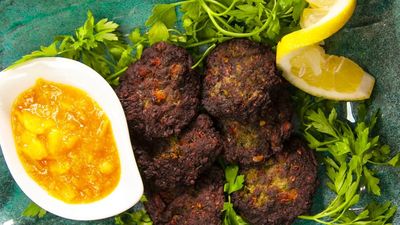
Aroog
Fine bulgur (#1 grade) soaks in hot water until soft and fluffy. Lamb or beef mince mixes with the bulgur, grated onion, lots of chopped parsley and coriander, ground baharat, cumin and a pinch of cinnamon. The mixture should be soft enough to spread, if it's too dry the aroog crumble. Small portions press onto a hot oiled pan and flatten to 1 cm thick discs; cook for 4-5 minutes per side over medium heat until deeply browned and the meat is just cooked through. Lift, drain briefly, eat hot with lemon and yoghurt.
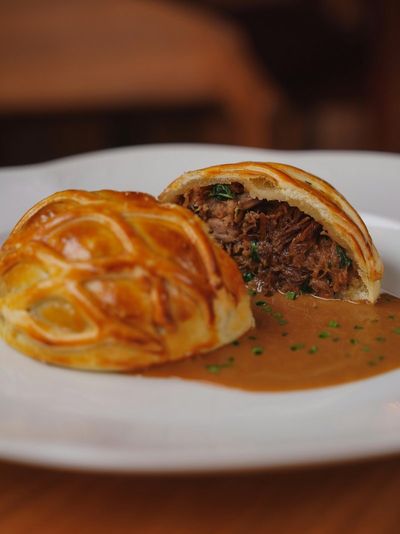
Beef Wellington
The defining British dinner-party showpiece, somewhere between French haute cuisine and English roast tradition, made famous in the modern era by Gordon Ramsay even if the Iron Duke himself probably never ate it. You sear a centre-cut beef fillet hard for colour, smear it with English mustard, wrap it in a tight blanket of mushroom duxelles and prosciutto, then encase the lot in all-butter puff pastry and roast at high heat. The pastry insulates the beef so it cooks gently to medium-rare while the crust crisps to deep mahogany above. The one technical trick the recipe insists on is drying the duxelles thoroughly so the pastry stays crisp underneath rather than going soggy from leaking mushroom water. Sliced at the table into thick rosy rounds, with a red-wine jus and roasted root vegetables on the side, the kind of plate that makes the evening feel like a special occasion before anyone says it.
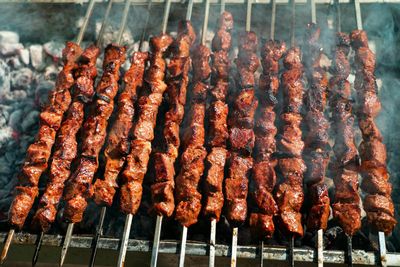
Lahori Beef Boti Kebab
Beef tenderloin or fillet is cut into 3 cm cubes and marinated in two stages. A first short rub with raw papaya, ginger-garlic, salt and a splash of vinegar tenderises the meat (papaya enzymes break down the muscle fibre). After 30 minutes the second marinade goes in: yogurt, Kashmiri chilli, garam masala, kasuri methi, mustard oil and a touch of besan. The beef sits for at least 3 hours, ideally overnight. Threaded onto skewers and grilled hot until charred at the edges; the inside should stay pink and juicy.
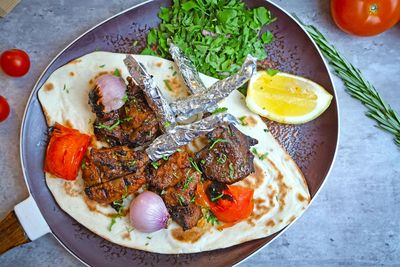
Lahori Chapli Kebab
Minced beef is mixed with crushed coriander seed, anardana (pomegranate seed) for sourness, finely chopped onion, green chilli, ginger and a generous handful of chopped fresh coriander. Egg, gram flour and a small amount of cornflour bind the mixture loosely. The patties are pressed paper-thin (chapli means slipper, after the shape) and shallow-fried hot in beef fat or oil until the edges crisp and the centre stays juicy.