Hokkien Mee
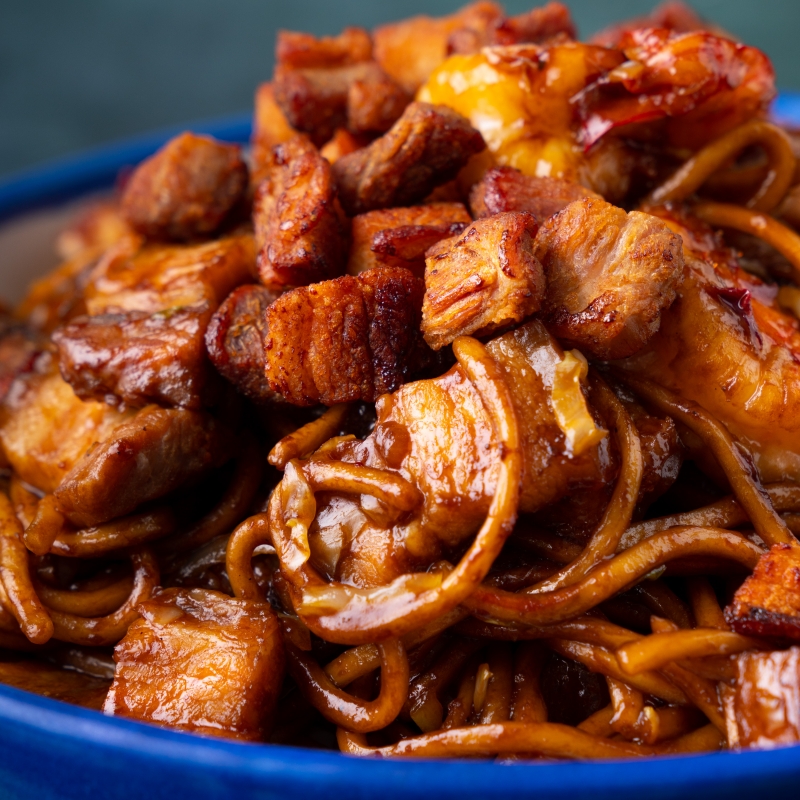
KL-style Hokkien mee is a Kuala Lumpur hawker classic, defined by thick yellow noodles braised in a dark, smoky soy gravy and crowned with crisp pork lardons. The dish takes its name from the Hokkien Chinese community who brought wok cooking to the Malay peninsula.
Overview
Thick fresh egg noodles are stir-fried hard in rendered pork fat, then braised in a glossy gravy of dark sweet soy, oyster sauce and a touch of sugar. Pork belly, prawns and cabbage round out the wok, with a final shower of crackling pork croutons providing the signature crunch. A fast, intensely flavoured dish that hinges on a hot wok and good kecap manis.
Ingredients
Crispy Pork Croutons
- 200 grams skinless pork belly (cut into small dice)
Marinade
- 1 tablespoon soy sauce
- 1 teaspoon sesame oil
- ¼ teaspoon ground white pepper
Stir-Fry Sauce
- 2 tablespoons oyster sauce
- ⅔ cup dark sweet soy sauce (e.g. kecap manis)
- 2 tablespoons soy sauce
- 1 teaspoon sugar
Stir-Fry
- 4 garlic cloves (finely chopped)
- 200 grams pork belly (thinly sliced)
- 8 prawns (peeled and deveined)
- 2 cups sliced cabbage
- 400 grams cooked hokkien noodles
- 1 tablespoon cornflour mixed with 1 tablespoon water
Method
Stage 1 - Render the Pork Croutons
- Place the diced pork belly in a cold frying pan and set over medium heat.
- Cook for about 10 minutes, stirring occasionally, until the pork is crisp and the fat has rendered.
- Drain the croutons on paper towel and reserve 1 tablespoon of the rendered pork fat for the wok.
Stage 2 - Marinate the Pork
- Combine the sliced pork belly with the soy sauce, sesame oil and white pepper.
- Set aside while you prepare the rest of the components.
Stage 3 - Mix the Stir-Fry Sauce
- In a small bowl, stir together the oyster sauce, kecap manis, soy sauce and sugar until smooth.
Stage 4 - Stir-Fry & Braise
- Heat the reserved pork fat in a wok over high heat until shimmering.
- Add the garlic and stir-fry for 30 seconds, until fragrant.
- Add the marinated pork slices and stir-fry for 2 to 3 minutes, until the edges colour.
- Add the prawns and stir-fry for another minute, until they curl and turn pink.
- Toss in the cabbage and stir-fry briefly to wilt.
- Add the noodles and pour over the stir-fry sauce. Toss vigorously until the noodles are evenly coated.
- Stir in the cornflour slurry and continue tossing until the sauce thickens and turns glossy.
Stage 5 - Serve
- Divide the noodles between bowls.
- Top each portion with a generous scattering of the crispy pork croutons.
- Serve immediately, while the gravy is still glossy and the croutons are crisp.
Notes
- Wok hei: A high heat is essential. The dish lives or dies by the smoky char picked up from a properly heated wok.
- Kecap manis: This dark Indonesian sweet soy sauce gives the gravy its near-black colour and treacly sweetness. There is no clean substitute, but a mixture of dark soy and a little brown sugar will do at a pinch.
- Pork croutons: Render the pork from a cold pan rather than a hot one, this draws out the fat slowly and gives crisper, less rubbery croutons.
- Noodle choice: Fresh thick yellow hokkien noodles are the right shape, holding the gravy in their grooves. Rinse off any oily coating before they hit the wok.
Variations
Seafood-only: Replace the pork belly slices with squid rings or extra prawns; keep the crispy pork croutons or swap them for fried garlic. Vegetarian: Drop the pork and prawns; use mushroom oyster sauce in place of regular oyster sauce, and finish with crispy fried shallots instead of pork croutons.
Serving
Serve with: A side of pickled green chillies in soy sauce to cut the richness Garnish with: Sliced spring onion and a wedge of lime
Storage
- Best eaten straight from the wok, the gravy thickens and the noodles soften on standing
- Leftover crispy pork croutons keep 2 days in an airtight container at room temperature
- Stir-fry sauce keeps 1 week refrigerated in a sealed jar
More like this
Indonesian Mee Goreng
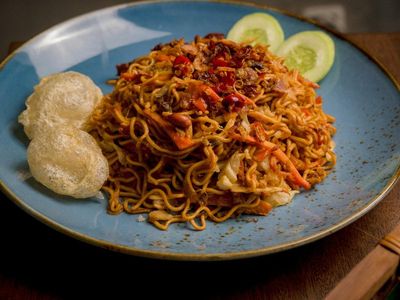
Fresh egg noodles tossed in a glossy, sweet-savoury sauce of kecap manis, soy, ketchup, sesame oil and shrimp paste, with pork, prawns, cabbage and bean sprouts. The dish is finished with thin egg ribbons and a scatter of spring onion. Quick to cook once the components are prepped, but rewards a properly hot wok and a sauce mixed in advance.
Mala Dry-Pot (Ganguo)
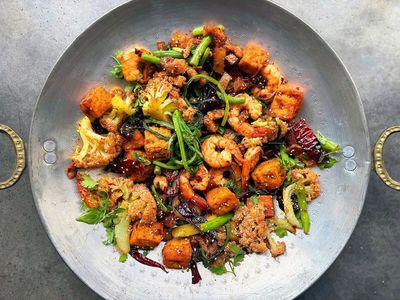
Ganguo, literally "dry pot", is the dry sister of hotpot. Where hotpot is a communal soup simmered at the table, dry pot is a wok composition: each ingredient pre-cooked separately, then everything tossed together at the last moment in a fragrant mala sauce based on Pixian doubanjiang, fermented black beans and chilli oil. The result lands somewhere between a stir-fry, a casserole and a giant heap of bar snacks. The dish is usually credited to Chongqing in the 1990s and exploded into nationwide popularity in the 2000s; it now anchors the menu of countless ganguo restaurants where you point at ingredients on a fridge and they appear minutes later in a single-handled wok at your table. Difficulty for a home cook is low if you accept the rhythm: blanch the vegetables, sear the proteins, then build the final dish from already-cooked components. The trick is restraint with the sauce, generous heat under the wok, and the willingness to commit to a long ingredient list. The recipe is endlessly flexible: lotus root, potato, cauliflower, mushrooms, squid, chicken wings, beef, fish balls, tofu skin, whatever you have, in any combination, totalling 1-1 ½ kg.
Prawn and Pork Pad Thai
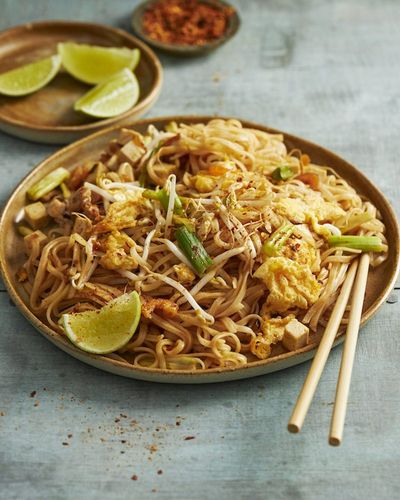
This classic Thai dish of noodles is both aromatic and lightly spicy, serving well as either a main course or a starter. Pad Thai combines stir-fried rice noodles with tender chicken, pork, and prawns in a balanced sauce of curry paste, oyster sauce, and fish sauce. Fresh herbs, crushed peanuts, and a squeeze of lime complete this iconic Thai street food favourite.
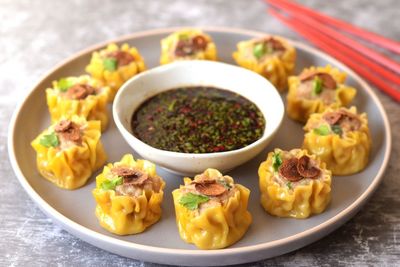
Kanom Jeeb
A filling of minced pork and chopped prawn binds with coriander root (pounded with garlic and white pepper into the traditional Thai "rak pak chee" paste), oyster sauce, soy sauce, sugar, sesame oil, and a beaten egg. The mixture chills for 20 minutes to firm. Square wonton wrappers go around the filling cupcake-style: filling in the centre, edges pulled up and pleated open around the meat, top brushed with a tiny smear of beaten egg and topped with a thin slice of carrot. Steamed in a bamboo basket over boiling water for 8 minutes. Dip is black soy sauce with sliced chilli and rice vinegar.