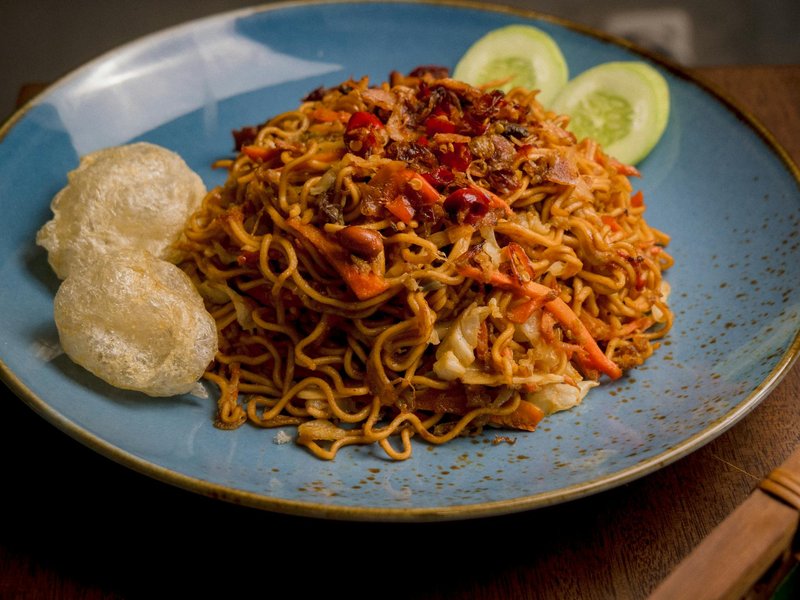
Indonesian Mee Goreng
Mee goreng (literally "fried noodles") is a hawker classic across Indonesia and Malaysia, a fast wok-fried tangle of noodles with kecap manis, soy and a hit of shrimp paste.
Overview
Fresh egg noodles tossed in a glossy, sweet-savoury sauce of kecap manis, soy, ketchup, sesame oil and shrimp paste, with pork, prawns, cabbage and bean sprouts. The dish is finished with thin egg ribbons and a scatter of spring onion. Quick to cook once the components are prepped, but rewards a properly hot wok and a sauce mixed in advance.
Ingredients
Sauce
- 3 tablespoons kecap manis (or dark sweet soy sauce)
- 3 tablespoons light soy sauce
- 2 tablespoons ketchup
- 1 tablespoon sesame oil
- 1 teaspoon shrimp paste
- 1 teaspoon chilli powder
Egg Ribbons
- 2 eggs (lightly beaten)
- 1 tablespoon vegetable oil
Stir-Fry
- 1 tablespoon vegetable oil
- 3 garlic cloves (chopped)
- 200 grams sliced pork (scotch fillet or pork fillet)
- 200 grams peeled and deveined prawns
- ¼ cup sliced white cabbage
- 400 grams fresh Chinese egg noodles
- ½ cup bean sprouts
- ¼ cup sliced spring onions
To Serve
- Sliced red chilli
- Lime wedges
Method
Stage 1 - Make the Egg Ribbons
- Lightly beat the eggs in a small bowl.
- Heat a wok or non-stick frying pan over medium-low heat.
- Add 1 tablespoon of vegetable oil and swirl to coat the pan.
- Pour in the egg, swirling and using a spatula to spread it across the pan.
- Cook undisturbed over low heat until the egg sets and releases.
- Slide onto a cutting board and slice into thin ribbons.
Stage 2 - Mix the Sauce
- In a small bowl, combine the kecap manis, light soy sauce, ketchup, sesame oil, shrimp paste and chilli powder.
- Stir until smooth.
Stage 3 - Stir-Fry & Combine
- Heat the remaining tablespoon of oil in a wok over high heat.
- Add the garlic and cook for 30 seconds, until fragrant.
- Add the pork and stir-fry until almost cooked through.
- Add the prawns and stir-fry until cooked.
- Add the cabbage, noodles, bean sprouts, spring onions and the sauce.
- Stir-fry until everything is well coated and glossy.
- Remove from the heat and divide between serving bowls.
Stage 4 - Plate Up
- Top each bowl with a generous tangle of the egg ribbons.
- Scatter with sliced red chilli.
- Serve with a wedge of lime.
Notes
- Kecap manis: This dark Indonesian sweet soy sauce is the backbone of the dish; there is no clean substitute, but a mixture of dark soy and brown sugar will do at a pinch.
- Shrimp paste: A small amount goes a long way. It mellows the ketchup and adds the funky depth that distinguishes mee goreng from a generic stir-fry.
- Wok hei: The dish lives or dies by the heat of the pan. The noodles should pick up a hint of char, not steam in their own moisture.
- Egg ribbons first: Cooking the egg flat and slicing it into ribbons (rather than scrambling it through the wok) keeps the noodles glossy and the egg distinct.
Variations
Chicken or beef: Replace the pork with thinly sliced chicken thigh or rump steak; cook for the same length of time. Vegetarian: Drop the pork, prawns and shrimp paste; double the cabbage, add sliced firm tofu, and use a teaspoon of light soy in place of the shrimp paste.
Serving
Serve with: Pickled green chillies in vinegar and a small bowl of sambal oelek for table seasoning Garnish with: Crispy fried shallots and a sprig of coriander
Storage
- Best eaten straight from the wok while the noodles are still glossy
- Leftovers keep 1 day refrigerated; reheat in a hot wok with a splash of water
- Sauce keeps 1 week refrigerated in a sealed jar
More like this
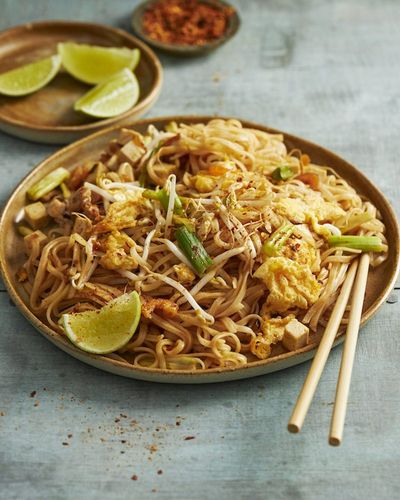
Prawn and Pork Pad Thai
This classic Thai dish of noodles is both aromatic and lightly spicy, serving well as either a main course or a starter. Pad Thai combines stir-fried rice noodles with tender chicken, pork, and prawns in a balanced sauce of curry paste, oyster sauce, and fish sauce. Fresh herbs, crushed peanuts, and a squeeze of lime complete this iconic Thai street food favourite.
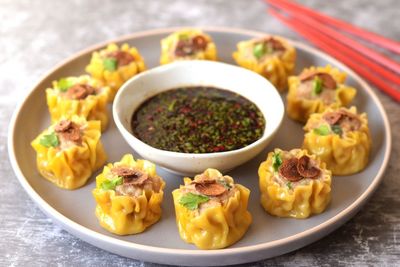
Kanom Jeeb
A filling of minced pork and chopped prawn binds with coriander root (pounded with garlic and white pepper into the traditional Thai "rak pak chee" paste), oyster sauce, soy sauce, sugar, sesame oil, and a beaten egg. The mixture chills for 20 minutes to firm. Square wonton wrappers go around the filling cupcake-style: filling in the centre, edges pulled up and pleated open around the meat, top brushed with a tiny smear of beaten egg and topped with a thin slice of carrot. Steamed in a bamboo basket over boiling water for 8 minutes. Dip is black soy sauce with sliced chilli and rice vinegar.
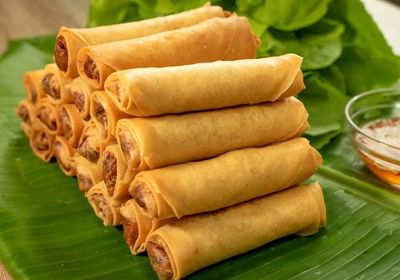
Chả Giò
A pork and prawn filling is bound with shredded carrot, glass noodles and reconstituted wood-ear mushrooms, then rolled tightly in moistened rice paper and fried twice for maximum crunch. The double-fry technique gives chả giò their characteristic bubbled, blistered crust. Served with cool lettuce leaves, herbs and a punchy nước chấm dipping sauce.
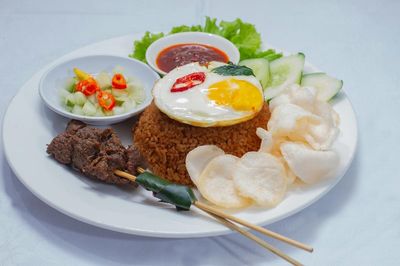
Beef Nasi Goreng
Indonesia's national fried rice, traditionally a way to put yesterday's leftovers to work and now a fixture from street stalls to weeknight kitchens. Beef mince keeps the cooking time short, while kecap manis, soy, shrimp paste and a crumbled stock cube layer the savouriness from four directions. The trick is pressing the rice into the wok and leaving it alone long enough to pick up a proper char before tossing.