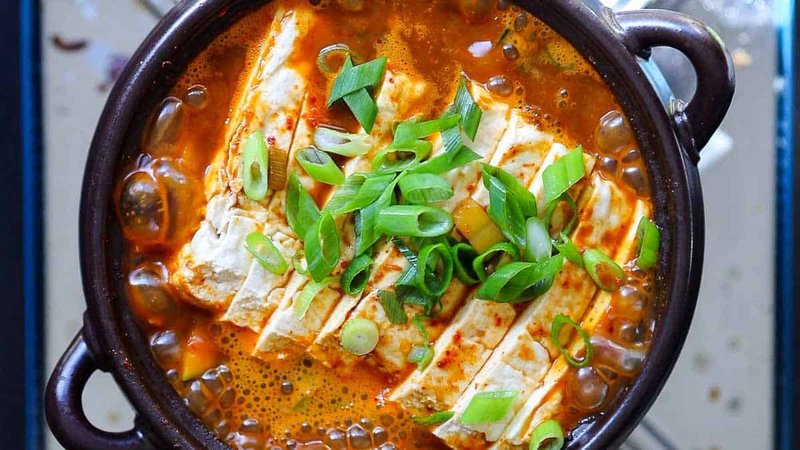
Doenjang Jjigae
Korea's everyday stew: tofu, courgette and clams simmered in a deep, funky doenjang broth. Served bubbling at the table.
Overview
A quick anchovy-and-kelp stock makes the broth backbone (the Korean kitchen standard, taking 10 minutes). Doenjang (about 3 tablespoons) whisks into the hot stock with a small spoonful of gochujang for warmth, never aggressive heat. The vegetables go in by sturdiness: potato first, then courgette and mushrooms, then onion and chilli, finally cubed tofu and clams (or anchovies) at the end. Simmers for 12-15 minutes total. A little minced garlic stirs in at the very end so it doesn't dull. Brought to the table in the cooking pot, still bubbling.
Ingredients
Stock
- 1 litre water
- 12 dried anchovies (about 20 g; gut the heads if very large)
- 1 piece dried kelp (kombu / dasima, about 5 × 5 cm)
- 4 dried shiitake mushrooms (optional, deepens the stock)
Stew
- 3 tablespoons doenjang (Korean fermented soybean paste)
- 1 teaspoon gochujang (Korean fermented chilli paste - for warmth, not full heat)
- 1 potato (medium, peeled, cubed 2 cm)
- 1 courgette (small, cut into half-moons 1 cm thick)
- 100 g fresh shiitake (or oyster mushrooms, sliced)
- 1 onion (medium, cut into wedges)
- 2 green chillies (sliced)
- 1 red chilli (sliced, optional, for colour)
- 350 g silken (or firm tofu, cubed 2 ½ cm)
- 200 g fresh clams (cleaned; or substitute 100 g peeled shrimp or extra dried anchovies)
- 4 garlic cloves (minced; added at the end)
- 2 spring onions (sliced, for serving)
- 1 teaspoon toasted sesame oil (to finish)
To serve
- Steamed short-grain rice
- Banchan (kimchi, oi-muchim, kongnamul muchim - see our recipes for these)
Method
Stage 1 - Stock
- Combine the water, dried anchovies, kelp and dried shiitake (if using) in a wide pot.
- Heat over medium; bring to just-simmering (not a rolling boil - kelp turns bitter if boiled).
- Simmer 10 minutes.
- Strain through a fine sieve into a clean pot (discard the anchovies and kelp; if you used dried shiitake, slice and save for the stew).
Stage 2 - Doenjang base
- Bring the strained stock to a simmer.
- Whisk in 3 tablespoons doenjang and 1 teaspoon gochujang until fully dissolved.
- Taste - the broth should be deeply savoury, slightly funky, gently warm. Add more doenjang if it tastes thin.
Stage 3 - Build the stew
- Add the cubed potato; simmer 5 minutes.
- Add the courgette, mushrooms, onion wedges and chilli; simmer 5 more minutes.
- Add the cubed tofu and clams; simmer 4-5 minutes until the clams open and the tofu is heated through.
Stage 4 - Finish
- Stir in the minced garlic in the LAST minute (raw-garlic top note is the signature finish).
- Off heat; drizzle the toasted sesame oil over.
- Scatter sliced spring onion.
Stage 5 - Serve
- Bring the pot (or a hot stone bowl / ttukbaegi if you have one) straight to the table - the stew should still be bubbling.
- Serve with steamed short-grain rice and a few small dishes of banchan.
- Each diner ladles a spoonful into rice; eats with chopsticks and a spoon.
Notes
- Doenjang isn't miso: the Korean version is more fermented, more pungent, less sweet. Korean grocers sell it in clay-coloured tubs. Substituting Japanese miso gives a much milder, sweeter stew - distinguishable as not-doenjang-jjigae.
- Gochujang is for warmth, not heat: doenjang jjigae is the comfort cousin of kimchi jjigae. The chilli paste is a teaspoon, not a tablespoon. Mild palates can skip; spicy palates should have kimchi jjigae instead.
- Garlic in LAST: the raw-garlic finish is the Korean signature. Adding garlic at the start dulls it into a generic background note.
- Anchovy-kelp stock is the Korean kitchen standard: Korean home cooks make this stock in 10 minutes and use it for everything - soups, stews, sauces. Once you have the dried anchovies and kelp in the pantry, it's faster than opening a stock cube.
Storage
- Keeps 3 days refrigerated; reheat gently.
- The flavour deepens overnight - day 2 is arguably better than day 1.
- Doesn't freeze well - tofu turns spongy.
More like this
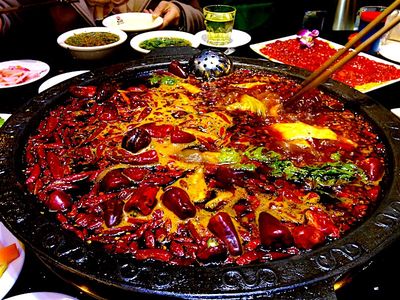
Sichuan Hot Pot
Two pots if you have them: a spicy red broth and a clear chicken broth. The red broth fries doubanjiang and chilli bean paste in beef tallow, adds Sichuan peppercorns, dried chillies, star anise, cassia, bay, ginger and garlic, then stock; simmers for 30 minutes. Diners cook their own ingredients in the simmering pot and dip in a small bowl of sesame oil + chopped garlic + coriander. The mala (numbing-hot) sensation comes from green Sichuan peppercorns + dried chilli together.
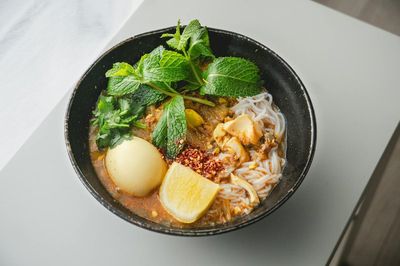
Malaysian Curry Laksa (Laksa Lemak)
A two-part dish: a deeply concentrated prawn-and-chicken stock built from roasted prawn shells, layered with a freshly pounded laksa paste of dried chilli, galangal, lemongrass and candlenuts. The two are joined with coconut cream to create a glossy, fragrant broth that bathes rice vermicelli, tofu puffs and prawns. Finished at the table with sambal, lime, fresh coriander and bean sprouts.
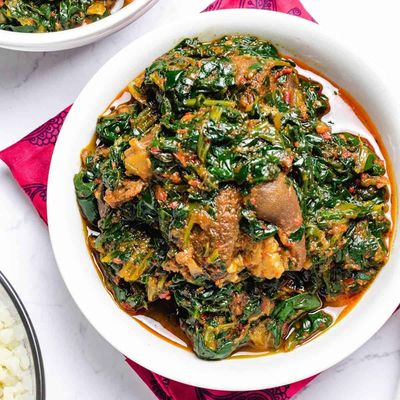
Efo Riro
Beef (or goat, or prawns) parboils briefly. Smoked fish soaks. A pepper paste of red bell pepper, Scotch bonnet, onion and tomato blitzes in the blender. Palm oil heats; the pepper paste fries for 10 minutes until reduced and the oil rises. Stock, meat, smoked fish, ground crayfish and iru go in; simmers for 15 minutes. Spinach goes in last, wilts in 5 minutes. Served with rice, eba, fufu or pounded yam.
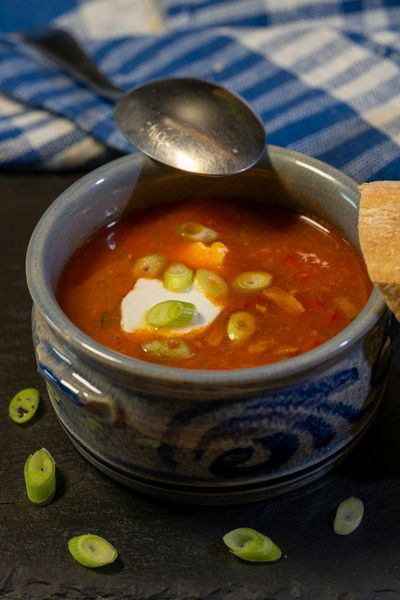
Shellfish Gumbo
A shellfish gumbo, lighter than the full Cajun "everything" version but built on the same foundations - a deep roux, the holy trinity of onion, celery and sweet pepper, and a slow-simmered broth that ties everything together. You cook a roux in oil until it goes to a peanut-butter brown (lighter than the full-Cajun chocolate roux but darker than blond), then soften the trinity in it before stock and herbs go in to build the soup. Mussels, prawns and crab go in towards the end and cook just briefly so they stay tender. A modern touch of fresh chilli lifts the heat across the back. Eaten over white rice in deep bowls, with hot sauce on the table and crusty bread to mop the last of the broth.