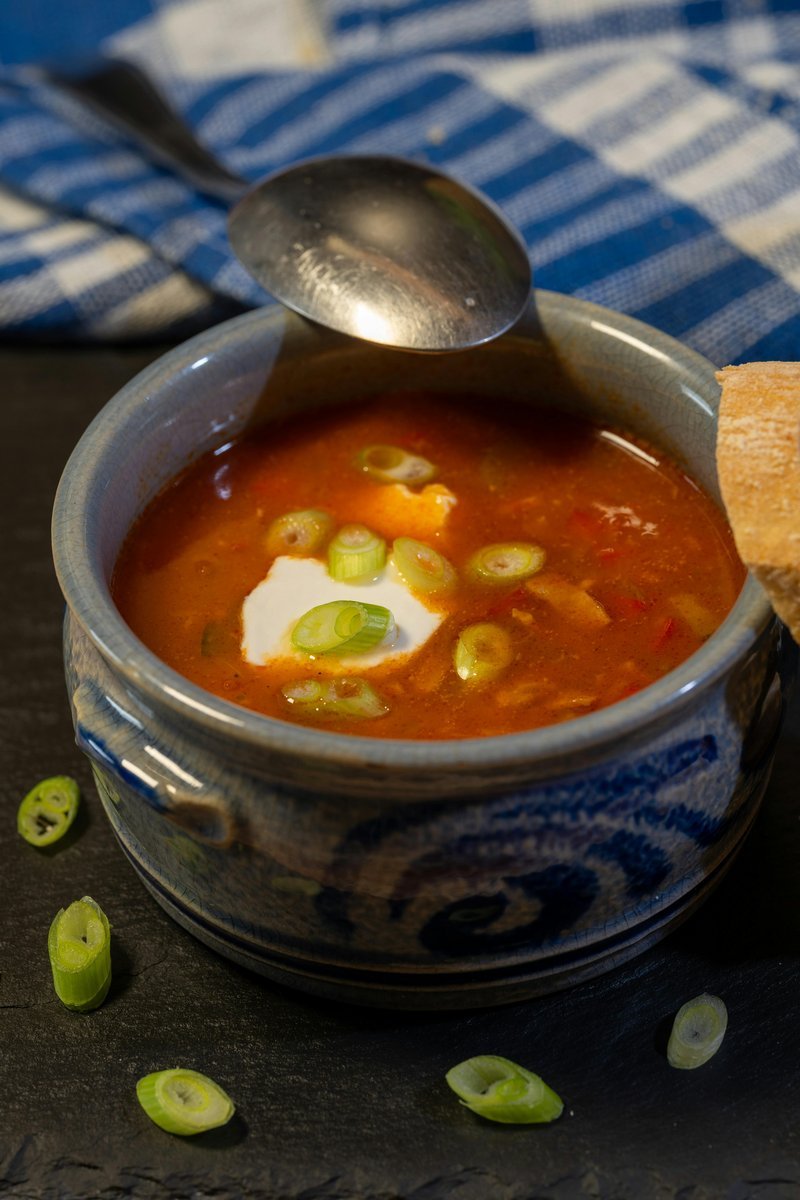
Shellfish Gumbo
Louisiana's shellfish gumbo: prawns, crab and crawfish in a chocolate-dark roux base with the trinity, file powder and Cajun spice.
Overview
A shellfish gumbo, lighter than the full Cajun "everything" version but built on the same foundations - a deep roux, the holy trinity of onion, celery and sweet pepper, and a slow-simmered broth that ties everything together. You cook a roux in oil until it goes to a peanut-butter brown (lighter than the full-Cajun chocolate roux but darker than blond), then soften the trinity in it before stock and herbs go in to build the soup. Mussels, prawns and crab go in towards the end and cook just briefly so they stay tender. A modern touch of fresh chilli lifts the heat across the back. Eaten over white rice in deep bowls, with hot sauce on the table and crusty bread to mop the last of the broth.
Serves: 6 Prep Time: 25 minutes Cook Time: 1 hour 4 minutes
Ingredients
Shellfish & Stock Base
- 450 grams fresh mussels
- 450 grams raw prawns (in their shells)
- 1 cooked crab (about 1 kg)
- Small bunch of parsley (leaves chopped and stalks reserved)
Roux & Holy Trinity
- 150 ml vegetable oil
- 115 grams plain flour
- 1 green pepper (deseeded and chopped)
- 1 onion (large, chopped)
- 2 celery sticks (sliced)
- 1 fresh green chilli (deseeded and chopped)
- 3 garlic cloves (finely chopped)
Protein & Aromatics
- 75 grams smoked spiced sausage (skinned and sliced)
- 1 tablespoon fresh thyme (chopped)
- 6 spring onions (sliced)
Serving
- 275 grams white long-grain rice
- Tabasco sauce (to taste)
- Salt to taste
Method
Stage 1 - Make the Shellfish Stock
- Wash the mussels in several changes of cold water, pulling away the black "beards".
- Discard any mussels that are broken, or those that do not close when tapped firmly.
- Bring 250 ml water to the boil in a deep pan.
- Add the prepared mussels, cover the pan tightly with a glass lid, and cook over high heat, shaking frequently, for 3 minutes.
- As the mussels open, lift them out with tongs into a chinois or fine-meshed conical sieve set over a bowl.
- Discard any mussels that fail to open.
- Shell the mussels, discarding most of the shells but reserving 12-18 for garnish.
- Peel the prawns and devein, setting the meat aside.
- Put all the prawn shells and heads into the pan.
- Remove the meat from the crab, separating the brown and white meat.
- Add all the pieces of crab shell to the pan and stir in 1 teaspoon of salt.
- Return the mussel liquid from the bowl to the pan and make it up to 2 litres with water.
- Bring the shellfish stock to the boil, skimming regularly.
- When there is no more froth on the surface, add the parsley stalks and simmer for 15 minutes.
- Cool the reduced stock, then add enough water to make it up to 2 litres.
Stage 2 - Make the Roux
- Heat the oil in a heavy pan over medium heat.
- Stir in the flour with a wooden spoon or whisk.
- Stir constantly until the roux reaches a golden-brown colour (about 5-8 minutes).
- Be careful not to burn it, adjust heat as needed.
Stage 3 - Build the Gumbo Base
- Immediately add the green pepper, onion, celery, chilli, and garlic to the roux (called "the holy trinity" plus chilli).
- Continue cooking for about 3 minutes until the onion is soft.
- Stir in the smoked sausage and cook for 1 minute.
- Reheat the shellfish stock in a separate pot.
Stage 4 - Combine Stock & Roux
- Stir the brown crab meat into the roux.
- Ladle in the hot stock a little at a time, stirring constantly until it has been smoothly incorporated.
- Bring to a low boil, partially cover the pan, then simmer for 30 minutes.
Stage 5 - Cook Rice & Finish Gumbo
- Meanwhile, cook the rice in plenty of lightly salted water until the grains are tender.
- Add the prawns, mussels, white crab meat, thyme, and spring onions to the gumbo.
- Return to the boil and season with salt if necessary.
- Taste and add a dash or two of Tabasco sauce to heighten the heat.
- Simmer for a further minute, then add the chopped parsley leaves and reserved mussel shells for garnish.
Notes
- The Holy Trinity: Onion, celery, and sweet pepper form the aromatic base of Cajun cooking, essential to authentic gumbo.
- Roux technique: Golden-brown roux takes time and requires constant stirring. Don't rush it; burnt roux ruined the dish.
- Stock-making: Fresh shellfish stock is crucial for authentic flavour. Don't skip this step.
- Serving: Gumbo is traditionally ladled over hot rice in soup plates rather than mixed together.
- Roux colour: Darker roux has deeper flavour but burns more easily; medium-brown is safest for beginners.
Variations
Chicken & Sausage Gumbo: Replace shellfish with diced chicken and additional smoked sausage; use chicken stock instead Vegetarian: Omit all proteins and make vegetable stock; add okra or extra vegetables for body Spicier version: Add cayenne pepper or hot sauce to the roux or at the finish With okra: Add 150g sliced okra during the final simmer for a traditional thickening agent
Serving
Serve in soup plates over hot rice with crusty bread and hot sauce on the side
Storage
- Keeps 3 days refrigerated
- Freezes well up to 3 months (remove mussel shells before freezing)
- Flavour improves after 24 hours as spices meld
More like this
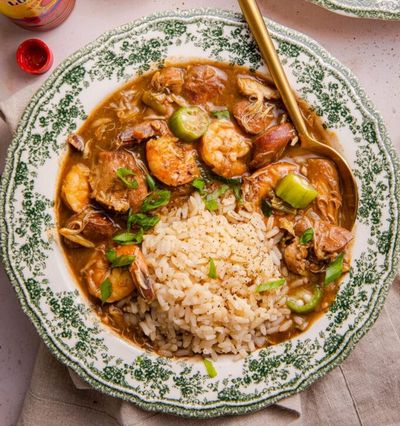
Authentic Cajun Gumbo
The "everything" Louisiana gumbo, chicken thighs, andouille, lump crab and shrimp all in one pot, and the dish where the technique matters more than the recipe. The roux is the single defining step and the line between Cajun gumbo and every other stew on earth: a full cup of oil and a full cup of flour cooked at medium-low for around 30 minutes, stirred without stopping, until the colour goes from blond to peanut butter to milk chocolate to dark chocolate. That's not flavour theatre; the long-cooked roux produces a deeply nutty, slightly bitter, profoundly savoury base that thickens the gumbo and gives it the distinctive almost-charred note no shortcut can replicate. Around the roux: the Cajun "holy trinity" of onion, bell pepper and celery; filé powder (ground sassafras leaves) added off heat as a second thickener; okra adding a third (and contributing its own slight slip); plus the four proteins, each adding a different layer. Flavour is dark, smoky, herbaceous, and slightly briny from the seafood. Smell is the roux toasting. Not difficult on technique but tremendously demanding on patience and attention; 30 minutes of unbroken stirring is the gateway, and if you walk away or rush it the roux burns and you start over. A dish that runs deep through Cajun and Creole Louisiana, with origins in the French settlers, the Choctaw (who contributed filé), West Africans (who contributed okra), and Spanish colonial traditions of Louisiana from the 1700s onwards.
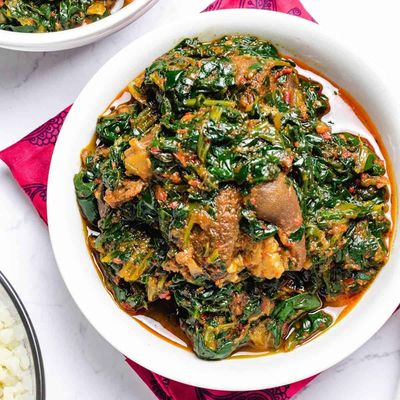
Efo Riro
Beef (or goat, or prawns) parboils briefly. Smoked fish soaks. A pepper paste of red bell pepper, Scotch bonnet, onion and tomato blitzes in the blender. Palm oil heats; the pepper paste fries for 10 minutes until reduced and the oil rises. Stock, meat, smoked fish, ground crayfish and iru go in; simmers for 15 minutes. Spinach goes in last, wilts in 5 minutes. Served with rice, eba, fufu or pounded yam.
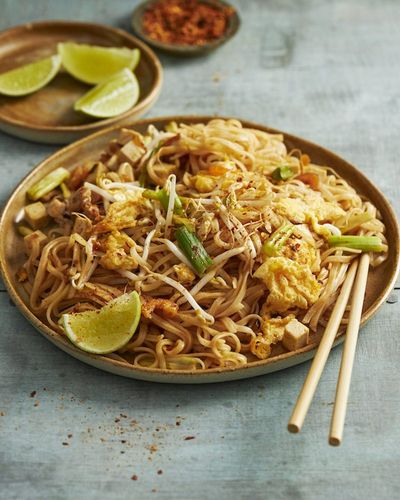
Prawn and Pork Pad Thai
This classic Thai dish of noodles is both aromatic and lightly spicy, serving well as either a main course or a starter. Pad Thai combines stir-fried rice noodles with tender chicken, pork, and prawns in a balanced sauce of curry paste, oyster sauce, and fish sauce. Fresh herbs, crushed peanuts, and a squeeze of lime complete this iconic Thai street food favourite.

Prik King
Prik king paste fries hard in oil until aromatic and the oil splits. Thinly sliced pork (or chicken) joins; sears for 4 minutes. Green beans (snake beans, French beans or fine green beans) go in for 5 minutes; fish sauce, palm sugar and torn kaffir lime leaves finish. Served over jasmine rice with fresh herbs.