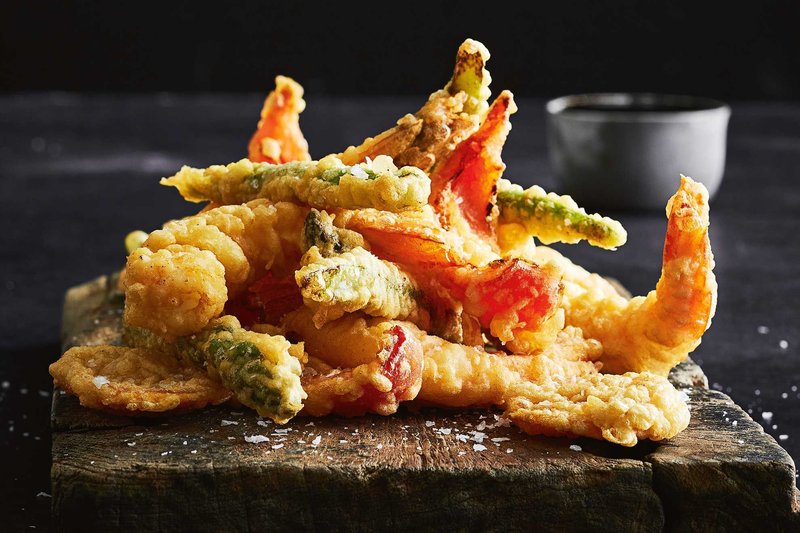
Vegetable and Prawn Tempura
Lightly battered, fried-fast vegetables and prawns with a paper-thin, lacy crust. The batter must be COLD and barely mixed; the oil must be hot. Serve straight from the fryer with a tentsuyu dipping sauce.
Overview
Ice-cold sparkling water meets soft flour in a barely-stirred batter; the batter goes onto sliced vegetables and prawns and into 180°C oil for 90 seconds. The lumps and dry patches in the batter are the goal; smooth batter gives a heavy crust.
Ingredients
Tempura
- 8 raw king prawns (large, peeled, tails on, deveined)
- 1 sweet potato (peeled, sliced 5 mm thick)
- 1 aubergine (small, cut into wedges)
- 1 courgette (sliced thick on the diagonal)
- 8 green beans (trimmed)
- 8 shiitake mushrooms (or chestnut)
- Vegetable oil for deep-frying
Batter
- 150 g plain flour
- 50 g cornflour
- 250 ml sparkling water (ice cold, straight from the fridge)
- 1 egg yolk (large)
- A few ice cubes (in the batter to keep it cold)
Tentsuyu (dipping sauce)
- 200 ml dashi
- 3 tablespoons soy sauce
- 3 tablespoons mirin
- 2 tablespoons grated daikon radish
- 1 teaspoon grated fresh ginger
Method
Stage 1 - Tentsuyu
- Combine dashi, soy and mirin in a small pan; bring just to the boil.
- Cool and divide between dipping bowls. Top each with grated daikon and ginger.
Stage 2 - Prep the prawns and vegetables
- Make 3-4 small cuts along the inner curve of each prawn to stop them curling.
- Pat all vegetables thoroughly dry; wet ingredients spit in the oil.
- Heat 5 cm of oil in a deep pan to 180°C.
Stage 3 - Make the batter
- Whisk the egg yolk into the cold water in a bowl set in a larger bowl of ice.
- Tip in the flour and cornflour and stir 5-6 strokes only - leave lumps and dry patches.
- Add a few ice cubes to keep it cold.
Stage 4 - Fry
- Dip each piece in the batter, lift out shaking off excess, and lower carefully into the oil.
- Fry 2-3 pieces at a time for 90 seconds until pale and crisp (don't let them brown).
- Drain on a wire rack; salt lightly.
- Eat the moment they come out; tempura softens within minutes.
Notes
- Cold batter, hot oil: This is the entire trick. Room-temperature batter or cold oil gives heavy, greasy tempura.
- Lumps are the goal: Smooth batter coats too thickly. The lacy edges come from undermixed flour.
- Wire rack to drain: Paper towels steam the underside; rack keeps the lacework intact.
Storage
- Eat immediately. Tempura doesn't keep, doesn't reheat well.
More like this
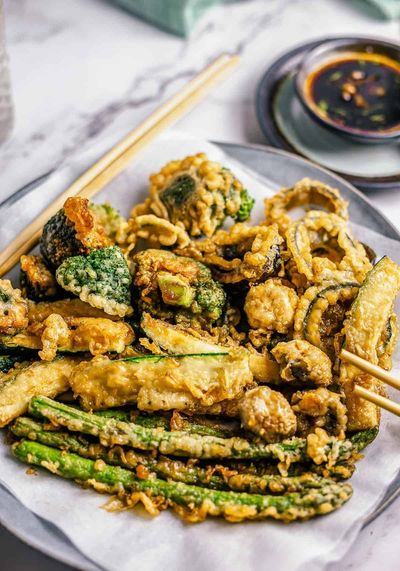
Vegetable Tempura
The batter is the technique: ice-cold sparkling water, plain flour, an egg yolk, mixed barely, the lumps and undissolved flour are deliberate. Vegetables are dusted in flour first to grip the batter, then dipped and dropped into 175°C oil. Each piece fries for 90 seconds to 2 minutes. The dipping sauce of dashi, soy and mirin warms; daikon and ginger grate fresh.
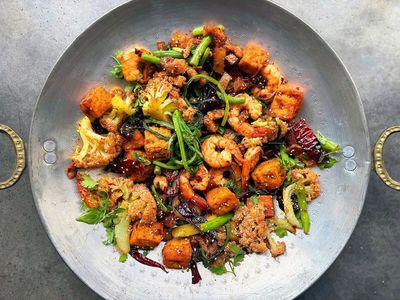
Mala Dry-Pot (Ganguo)
Ganguo, literally "dry pot", is the dry sister of hotpot. Where hotpot is a communal soup simmered at the table, dry pot is a wok composition: each ingredient pre-cooked separately, then everything tossed together at the last moment in a fragrant mala sauce based on Pixian doubanjiang, fermented black beans and chilli oil. The result lands somewhere between a stir-fry, a casserole and a giant heap of bar snacks. The dish is usually credited to Chongqing in the 1990s and exploded into nationwide popularity in the 2000s; it now anchors the menu of countless ganguo restaurants where you point at ingredients on a fridge and they appear minutes later in a single-handled wok at your table. Difficulty for a home cook is low if you accept the rhythm: blanch the vegetables, sear the proteins, then build the final dish from already-cooked components. The trick is restraint with the sauce, generous heat under the wok, and the willingness to commit to a long ingredient list. The recipe is endlessly flexible: lotus root, potato, cauliflower, mushrooms, squid, chicken wings, beef, fish balls, tofu skin, whatever you have, in any combination, totalling 1-1 ½ kg.
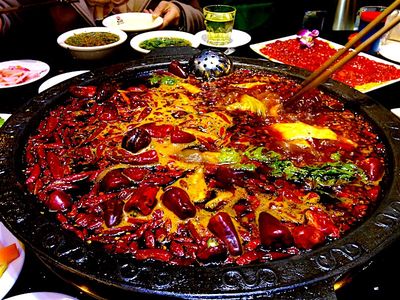
Sichuan Hot Pot
Two pots if you have them: a spicy red broth and a clear chicken broth. The red broth fries doubanjiang and chilli bean paste in beef tallow, adds Sichuan peppercorns, dried chillies, star anise, cassia, bay, ginger and garlic, then stock; simmers for 30 minutes. Diners cook their own ingredients in the simmering pot and dip in a small bowl of sesame oil + chopped garlic + coriander. The mala (numbing-hot) sensation comes from green Sichuan peppercorns + dried chilli together.
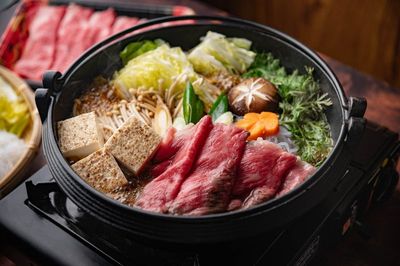
Beef Sukiyaki
A wide shallow pot is brushed with beef fat, the warishita sauce (soy-mirin-sake-sugar) is poured in, then thinly sliced beef and a colourful array of vegetables, tofu and shirataki noodles are added in batches as people eat. Each piece dips in raw egg yolk before going in the mouth. A portable hob at the table is traditional but not required.