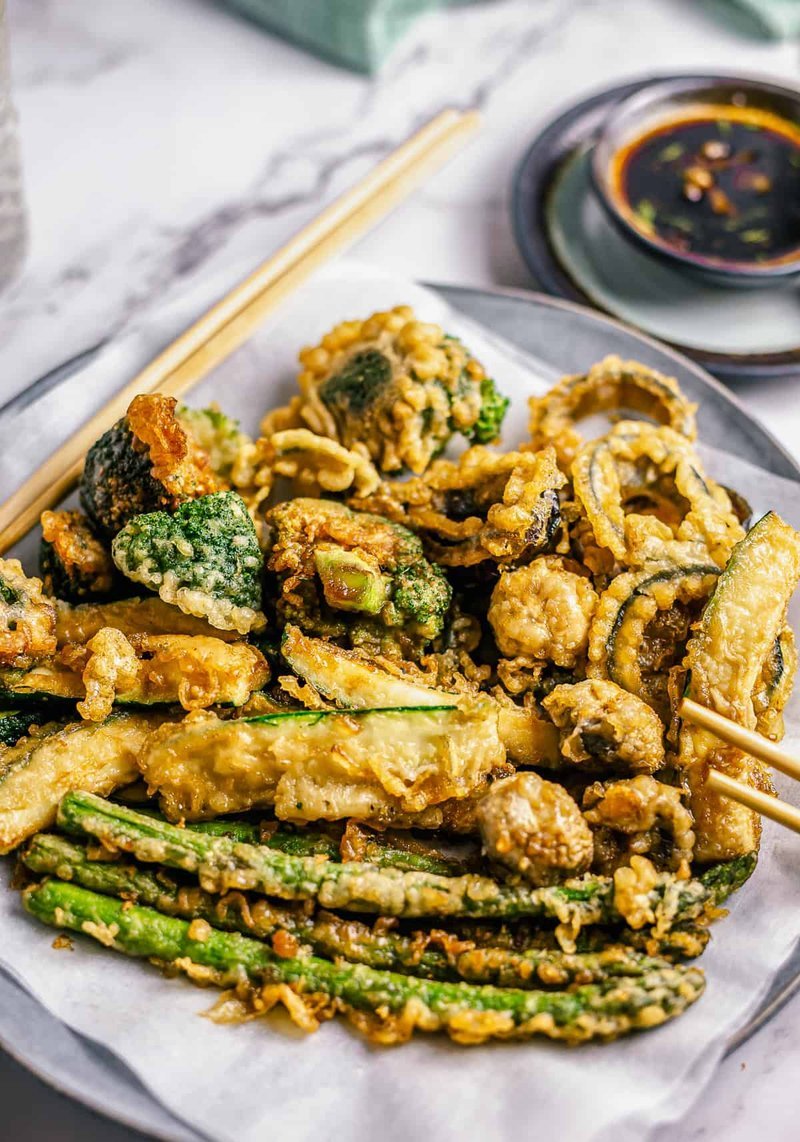
Vegetable Tempura
Japanese vegetable tempura: vegetables coated in a barely-mixed, ice-cold batter and deep-fried for under 2 minutes apiece. The batter shatters when bitten; the vegetables emerge just-cooked, distinct from each other. Tentsuyu dipping sauce on the side; grated daikon stirred through it at the table.
Overview
The batter is the technique: ice-cold sparkling water, plain flour, an egg yolk, mixed barely, the lumps and undissolved flour are deliberate. Vegetables are dusted in flour first to grip the batter, then dipped and dropped into 175°C oil. Each piece fries for 90 seconds to 2 minutes. The dipping sauce of dashi, soy and mirin warms; daikon and ginger grate fresh.
Ingredients
Batter
- 200 g plain flour (chilled in the freezer 30 min)
- 1 egg yolk (large)
- 300 ml ice-cold sparkling water
- A handful of ice cubes (to keep the batter cold)
Vegetables (any selection)
- 1 sweet potato (sliced 5 mm thick)
- 8 shiitake mushrooms (stems trimmed)
- 1 kabocha squash (small, sliced 5 mm thick crescents)
- 1 aubergine (medium, sliced 5 mm thick rounds)
- 8 green beans
- 1 red onion (cut into 2 cm wedges, kept together with a toothpick)
- 8 shiso leaves (or basil, optional)
Dusting and frying
- 50 g plain flour (for dusting)
- Vegetable oil (for deep-frying; about 1 ½ litres)
Tentsuyu (dipping sauce)
- 200 ml dashi (or vegetable stock for vegan)
- 4 tablespoons light soy sauce
- 4 tablespoons mirin
- 100 g daikon (finely grated)
- 2 cm fresh ginger (finely grated)
Method
Stage 1 - Sauce
- Combine the dashi, soy and mirin in a small pan; bring to a simmer; cook 1 minute.
- Pour into 4 small dipping bowls.
- Serve the grated daikon and ginger separately so guests can stir in to taste.
Stage 2 - Heat the oil
- Heat 5 cm of oil in a heavy pot or deep fryer to 175-180°C.
- Drop a tiny piece of batter to test - it should sink halfway, then float and sizzle.
Stage 3 - Batter (only when ready to fry)
- In a wide bowl, whisk the egg yolk into the cold sparkling water; add a few ice cubes to keep it cold.
- Add the chilled flour all at once; mix with chopsticks or a fork in 4-5 strokes only - leave lumps and dry patches; this is correct.
Stage 4 - Fry
- Working in small batches:
- Dust each vegetable in plain flour; dip into batter; let excess drip off.
- Slip carefully into the oil; fry 90 seconds to 2 minutes until pale golden and crisp.
- Lift onto a wire rack (not paper, which traps steam and softens the crust).
- Skim any batter scraps out of the oil between batches; re-check temperature.
Stage 5 - Serve
- Pile tempura onto a plate or rack, vegetables grouped together.
- Eat immediately with the dipping sauce, daikon and ginger.
Notes
- Cold cold cold: The temperature differential between the batter and the oil is what gives tempura its characteristic shattering crust. Lukewarm batter gives a soggy, doughy result.
- Lumpy batter is correct: Smooth, well-mixed batter develops gluten and goes chewy. Two or three streaks of flour visible - perfect.
- Pale, not deep golden: Tempura should be the colour of straw, not toast. Deep brown means overcooked vegetables and a heavy crust.
Storage
- Best eaten right away. Tempura goes soggy within minutes; refrigeration is murder. Re-crisp leftovers at 200°C for 4-5 minutes.
More like this
Yasai Ramen
Mushroom (dried shiitake) and kombu (kelp) infuse hot water for the broth base. Garlic-and-ginger oil fries; miso paste, soy and mirin make the tare. Noodles cook fresh; everything assembles in deep bowls with toppings stacked artfully.
Shoyu Ramen
Of the four main ramen styles, shoyu (soy) is the cleanest and most aromatic, leaning on a clear roasted-chicken broth rather than the milky richness of tonkotsu or the heavy punch of miso. The technique splits the work: a long, gentle simmer with kombu and shiitake builds the broth, and a separate seasoning sauce called tare goes in bowl by bowl at the end. That last step is what lets you tune the saltiness without compromising the broth's clarity.
Vegetable and Prawn Tempura
Ice-cold sparkling water meets soft flour in a barely-stirred batter; the batter goes onto sliced vegetables and prawns and into 180°C oil for 90 seconds. The lumps and dry patches in the batter are the goal; smooth batter gives a heavy crust.
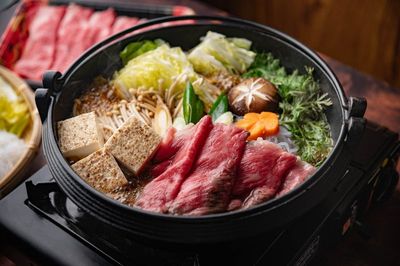
Beef Sukiyaki
A wide shallow pot is brushed with beef fat, the warishita sauce (soy-mirin-sake-sugar) is poured in, then thinly sliced beef and a colourful array of vegetables, tofu and shirataki noodles are added in batches as people eat. Each piece dips in raw egg yolk before going in the mouth. A portable hob at the table is traditional but not required.