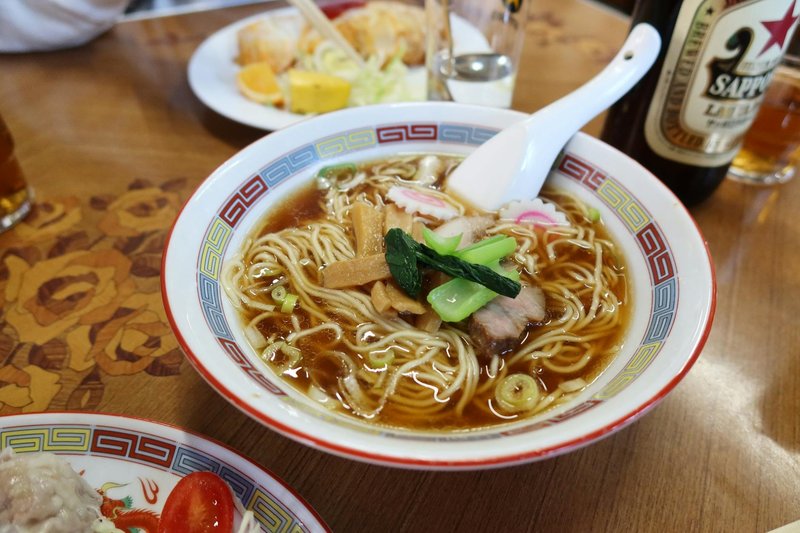
Shoyu Ramen
Shoyu ramen is the soy-sauce-based variant of Japan's iconic noodle soup, with a clean, golden chicken broth seasoned with kombu and shiitake.
Overview
Of the four main ramen styles, shoyu (soy) is the cleanest and most aromatic, leaning on a clear roasted-chicken broth rather than the milky richness of tonkotsu or the heavy punch of miso. The technique splits the work: a long, gentle simmer with kombu and shiitake builds the broth, and a separate seasoning sauce called tare goes in bowl by bowl at the end. That last step is what lets you tune the saltiness without compromising the broth's clarity.
Ingredients
Roasted Stock Base
- 2 kg chicken wings
- 2 carrots (cut into small pieces)
Broth
- 40 cm pieces kombu
- 6 dried shiitake mushrooms
- 6 spring onions (plus extra finely sliced to serve)
- 1 head of garlic (halved)
- 4 cm piece ginger (sliced)
- ¼ cup soy sauce
- 12 cups water
Tare (Seasoning Sauce)
- ¼ cup soy sauce
- 2 tablespoons mirin
To Serve
- Cooked ramen noodles
- Chashu pork (or any protein or vegetables you like)
- Medium-soft boiled eggs (halved)
- Reserved shiitake mushrooms (sliced, stems discarded)
- Finely sliced spring onion
Method
Stage 1 - Roast the Chicken
- Preheat the oven to 200°C (390°F).
- Cut the chicken wings through their joints into smaller pieces.
- Spread the wings and carrot pieces in a large roasting tin.
- Roast for 45 to 60 minutes, until deeply golden brown.
Stage 2 - Deglaze the Tin
- Transfer the roasting tin to the stovetop and turn the heat to high.
- When the roasting juices begin to bubble, pour in 2 cups of water.
- Use a wooden spoon to scrape up all the browned bits from the bottom of the pan.
- Tip the chicken, carrots and deglazing liquid into a large stock pot.
Stage 3 - Simmer the Broth
- Place the stock pot over high heat.
- Add the kombu, dried shiitake, the 6 spring onions, halved garlic head, sliced ginger and soy sauce.
- Top up with the remaining 10 cups of water.
- Bring to a simmer, then reduce the heat to low.
- Simmer gently for 3 hours, skimming the surface every so often.
Stage 4 - Make the Tare
- While the stock simmers, mix the soy sauce and mirin in a small bowl.
- Set aside.
Stage 5 - Strain the Broth
- Lift out and reserve the shiitake mushrooms.
- Discard the chicken, carrots, kombu, spring onions, garlic and ginger.
- Strain the broth through a fine mesh sieve into a clean saucepan.
- Taste and season with the tare a little at a time. Add almost all of it if needed; the right amount depends on the saltiness of your soy sauce and how much the broth has reduced.
Stage 6 - Plate Up
- Place cooked ramen noodles into each serving bowl.
- Ladle over the hot seasoned broth.
- Top with chashu pork (or your chosen protein).
- Slice the reserved shiitake mushrooms (discard the stems) and add to the bowls.
- Add ½ soft-boiled egg to each.
- Sprinkle with finely sliced spring onion.
Notes
- Roast first, simmer second: Roasting the wings and carrots before simmering builds the broth's golden colour and roasted depth. Don't skip this step.
- Kombu: Dried kelp, sold at Japanese and Asian grocers. Wipe (don't wash) before use; the white film is part of the umami. Add it at the start of the simmer; long cooking won't make it bitter the way it does in dashi.
- Tare: Adding the soy-mirin tare at the end (rather than during the simmer) lets you control saltiness in the final bowl. Start with half and build up.
- Eggs: For classic ramen eggs, soft-boil for 6 ½ minutes then plunge into ice water. For a marinated finish, steep peeled eggs in extra tare for a few hours before serving.
- Stock keeps well: The strained broth (before tare) freezes beautifully and is the most useful thing you can have in the freezer for a quick noodle bowl.
Variations
Vegetarian shoyu: Replace the chicken wings with a mix of mushrooms (3 cups dried) and umeboshi plums; double the kombu for body. Tonkotsu-style: Add 1 kg of pork bones with the chicken wings and simmer for 6 hours instead of 3 for a richer, cloudier broth. Cold soup: Chill the strained broth and serve as a hiyashi ramen with cold noodles in summer.
Serving
Serve with: A sheet of toasted nori on top, a few drops of chilli oil, and a wedge of lime Garnish with: A scatter of toasted sesame seeds and a curl of pickled bamboo (menma)
Storage
- Strained broth keeps 3 days refrigerated, or freezes well up to 3 months
- Tare keeps indefinitely refrigerated in a sealed jar
- Cooked noodles do not store well; cook fresh for each serving
- Soft-boiled eggs keep 2 days refrigerated
More like this
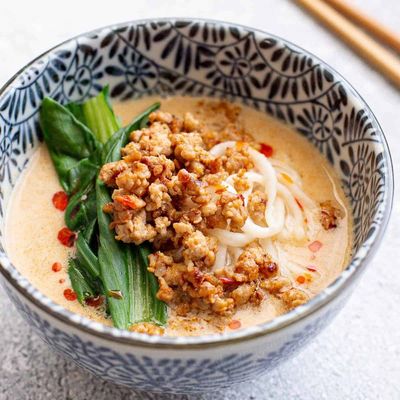
Tantanmen
Three components assemble at service. (1) Niku miso: ground pork stir-fries with garlic, ginger, doubanjiang and miso, then sweetened with sugar and finished with sesame oil. (2) Tare (concentrated seasoning paste): white sesame paste (tahini), soy sauce, rice vinegar, chilli oil, miso paste, garlic, whisked together. (3) Hot soup: chicken stock with a touch more sesame paste and chilli oil swirled in. Ramen noodles cook separately. Bowls layered: tare in the bottom, hot soup ladled over, cooked noodles, mound of niku miso, blanched bok choy, soft-boiled marinated egg, scallions, extra chilli oil.
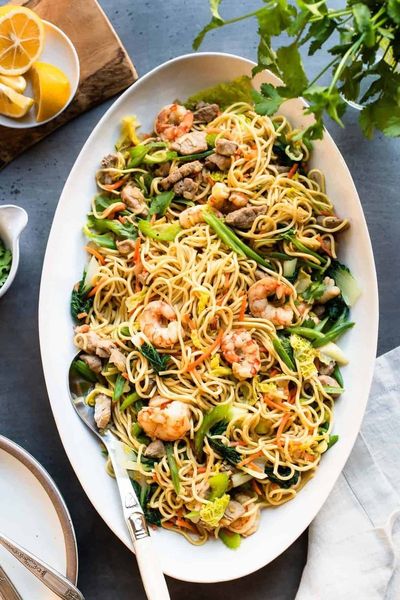
Pancit Canton
Aromatics fry, then chicken and prawns sauté fast. Vegetables and Chinese sausage join. The noodles soak briefly to soften, then go in the wok with sauce and stock to absorb everything in 5 minutes. Lemon or kalamansi at the table.
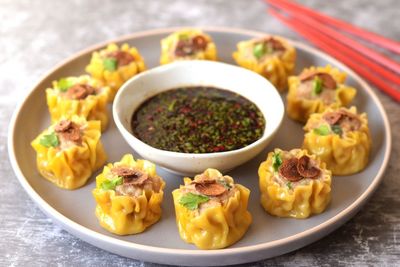
Kanom Jeeb
A filling of minced pork and chopped prawn binds with coriander root (pounded with garlic and white pepper into the traditional Thai "rak pak chee" paste), oyster sauce, soy sauce, sugar, sesame oil, and a beaten egg. The mixture chills for 20 minutes to firm. Square wonton wrappers go around the filling cupcake-style: filling in the centre, edges pulled up and pleated open around the meat, top brushed with a tiny smear of beaten egg and topped with a thin slice of carrot. Steamed in a bamboo basket over boiling water for 8 minutes. Dip is black soy sauce with sliced chilli and rice vinegar.
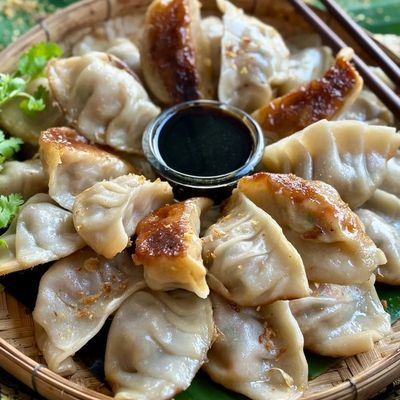
Pork Gyoza
A pork mince filling spiked with garlic, ginger, soy, sesame oil and finely chopped cabbage is wrapped in shop-bought gyoza skins, then pan-fried on the flat bottom and finished by steaming with a splash of water in the lidded pan. Serve with a soy-rice-vinegar-chilli oil dip.