Chả Giò
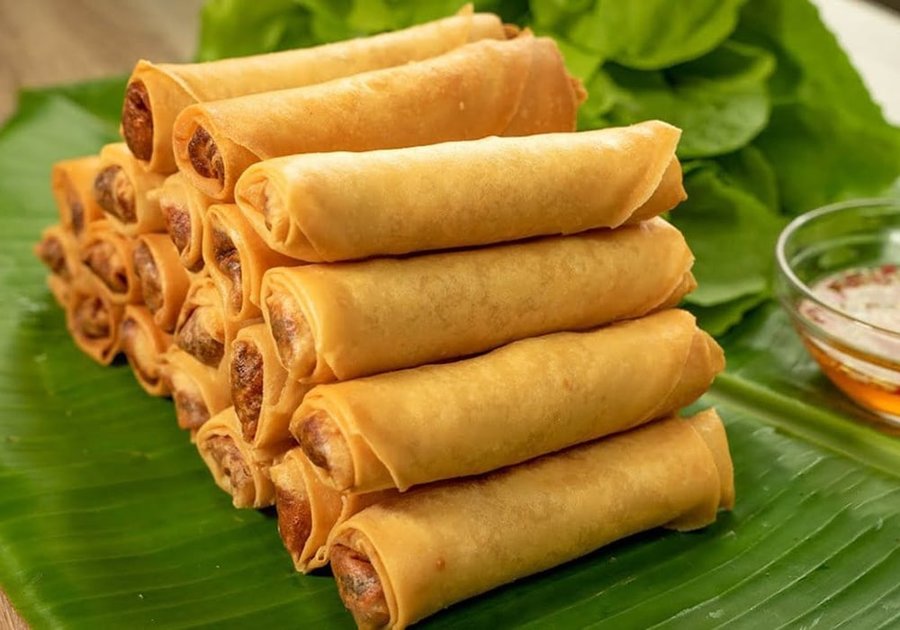
Chả giò are the deep-fried Vietnamese spring rolls (called nem rán in the north) - shatteringly crisp golden tubes of rice paper around a juicy pork, prawn and wood-ear mushroom filling. Eaten wrapped in lettuce and herbs, dunked in nước chấm, they are the special-occasion snack of every Vietnamese household.
Overview
A pork and prawn filling is bound with shredded carrot, glass noodles and reconstituted wood-ear mushrooms, then rolled tightly in moistened rice paper and fried twice for maximum crunch. The double-fry technique gives chả giò their characteristic bubbled, blistered crust. Served with cool lettuce leaves, herbs and a punchy nước chấm dipping sauce.
Ingredients
Filling
- 300 g pork mince (15 to 20 percent fat)
- 200 g raw prawns (peeled, deveined and finely chopped)
- 50 g dried wood-ear mushrooms (mộc nhĩ)
- 30 g dried glass noodles (mung bean vermicelli)
- 1 carrot (medium, very finely grated or julienned)
- 1 shallot (small, finely chopped)
- 3 garlic cloves (finely chopped)
- 2 spring onions (finely sliced)
- 1 egg yolk
- 1 tablespoon fish sauce
- 1 teaspoon caster sugar
- 1 teaspoon ground black pepper
- ½ teaspoon fine sea salt
Wrappers
- 20 sheets of rice paper (22 cm rounds; bánh tráng)
- 2 tablespoons rice vinegar mixed with 250 ml warm water (for dipping wrappers)
For frying
- 1 litre vegetable oil (or rapeseed oil)
Nước chấm dipping sauce
- 3 tablespoons fish sauce
- 3 tablespoons lime juice
- 3 tablespoons caster sugar
- 4 tablespoons warm water
- 2 garlic cloves (finely grated)
- 1-2 bird's-eye chillies (finely chopped)
- 1 tablespoon finely grated carrot (for floating in the sauce)
To serve
- 1 head butter lettuce (or little gem, separated into leaves)
- A large handful mint
- A large handful coriander
- A large handful Thai basil (or perilla leaves, if available)
Method
Stage 1 - Prep the dried ingredients
- Place the wood-ear mushrooms in a bowl and cover with hot water. Soak for 20 minutes until pliable. Drain, trim any tough stems, then chop finely.
- Place the glass noodles in a separate bowl and cover with warm water. Soak for 10 minutes until soft. Drain and cut into 2 cm lengths with kitchen scissors.
Stage 2 - Make the filling
- In a large mixing bowl, combine the pork, prawn, mushrooms, glass noodles, carrot, shallot, garlic, spring onions and egg yolk.
- Add the fish sauce, sugar, pepper and salt.
- Mix vigorously with one hand or a sturdy spoon for 2 minutes. The filling should become slightly sticky and bind together when squeezed. This is the gluten and protein cross-linking; it gives the cooked rolls a juicy, tight texture rather than crumbly.
- Cover and refrigerate for 15 minutes if you have time. Cold filling is easier to roll.
Stage 3 - Roll the spring rolls
- Pour the vinegar water onto a large flat plate.
- Dip a rice paper round in the vinegar water for 5 seconds; lift out and lay flat on a clean board. It will continue softening as you roll. The vinegar helps the wrappers blister and crisp.
- Place 1 generous tablespoon of filling along the lower third of the wrapper, shaped into a 8 cm long sausage.
- Fold the bottom of the wrapper up over the filling, tucking it under firmly. Fold the left and right sides in over the filling. Roll up tightly into a cigar shape, sealing the top edge against the roll.
- Place seam-side down on a tray lined with baking paper. Don't let the rolls touch or they'll stick together.
- Repeat for the remaining 19 wrappers.
Stage 4 - First fry (low and slow)
- Heat the oil in a deep saucepan or wok to 150 °C. Test with a wooden chopstick: small bubbles should rise lazily.
- Fry the rolls in batches of 4 or 5 for 5 minutes. They should be pale gold and the wrappers should look set but not browned.
- Lift out with a slotted spoon and drain on a wire rack over kitchen paper.
- Allow the rolls to rest at least 10 minutes (or up to several hours covered).
Stage 5 - Second fry (high and fast)
- Raise the oil temperature to 180 °C. A wooden chopstick should bubble actively.
- Return the rolls in batches and fry for 2 minutes, turning, until deep golden brown and blistered.
- Drain on a wire rack. Do not stack while draining; they'll go soggy where they touch.
Stage 6 - Make the dipping sauce
- In a small bowl, whisk the fish sauce, lime juice, sugar and warm water until the sugar dissolves.
- Stir in the garlic and chilli. Float the grated carrot on top.
Notes
- Double-fry technique: The first low fry cooks the filling through and sets the wrapper. The second high fry crisps and blisters the outside without overcooking the filling. Skipping the second fry gives pale, chewy rolls; skipping the first fry burns the outside before the pork cooks through.
- Vinegar in the dipping water: This is the Vietnamese trick for the blistered, glass-like crust. Without it, the rolls fry up smooth and slightly tough.
- Don't overfill: A tablespoon is plenty. Overstuffed rolls split during frying and steam from the inside out, ruining the crunch.
- Wood-ear mushrooms: Stocked at Asian grocers, sold dried in cellophane bags. They have no real flavour but contribute essential crunch. Soaked shiitake stems are a poor substitute; if you can't find wood-ear, just leave them out and add an extra 30 g of finely chopped carrot.
- Pork fat content: Lean mince makes dry rolls. If your butcher does only lean, ask for 100 g of unsmoked pork belly chopped fine and add it to the mix.
Variations
Beef and lemongrass: Replace pork with 300 g beef mince and add 2 tablespoons very finely chopped lemongrass. Crab rolls (chả giò cua): Replace half the pork with 200 g picked white crab meat. Vegetarian: Use 300 g crumbled firm tofu and 200 g grated taro in place of pork and prawn. Bind with 2 egg yolks instead of 1.
Serving
Serve with: lettuce leaves, fresh herbs and the nước chấm. Wrap each roll in a lettuce leaf with a few herb sprigs and dunk. Garnish with: rice vermicelli noodles on the side to wrap with lettuce-and-roll bundles for a fuller meal.
Storage
- Best eaten within 30 minutes of the second fry
- Filling can be made 1 day ahead and refrigerated
- Rolls can be rolled and frozen raw on a tray, then transferred to a freezer bag. Fry from frozen, adding 2 minutes to the first fry
- Once cooked, leftovers keep 2 days refrigerated and reheat in a 200 °C oven for 6 minutes (microwaving turns them rubbery)
More like this
Kanom Jeeb
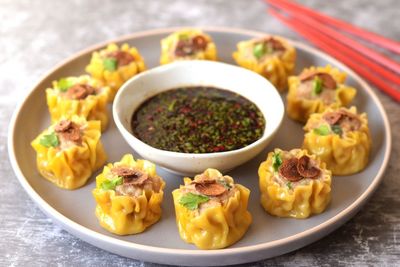
A filling of minced pork and chopped prawn binds with coriander root (pounded with garlic and white pepper into the traditional Thai "rak pak chee" paste), oyster sauce, soy sauce, sugar, sesame oil, and a beaten egg. The mixture chills for 20 minutes to firm. Square wonton wrappers go around the filling cupcake-style: filling in the centre, edges pulled up and pleated open around the meat, top brushed with a tiny smear of beaten egg and topped with a thin slice of carrot. Steamed in a bamboo basket over boiling water for 8 minutes. Dip is black soy sauce with sliced chilli and rice vinegar.
Gỏi Cuốn
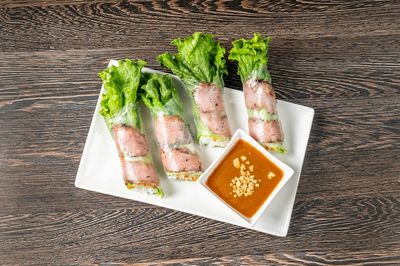
Pork belly is simmered until tender, prawns are poached briefly, and vermicelli is cooked just al dente. Everything cools to room temperature, then rice paper rounds are dipped briefly in warm water and rolled around lettuce, herbs and the protein with the pink of the prawns showing through the wrapper. The peanut-hoisin sauce is the make-or-break: it should be thick, sweet and lightly garlicky.
Indonesian Mee Goreng
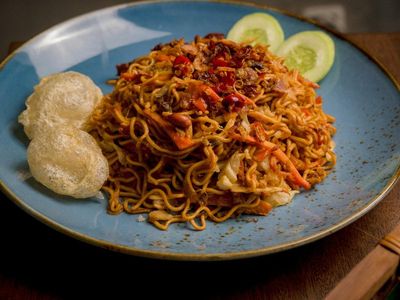
Fresh egg noodles tossed in a glossy, sweet-savoury sauce of kecap manis, soy, ketchup, sesame oil and shrimp paste, with pork, prawns, cabbage and bean sprouts. The dish is finished with thin egg ribbons and a scatter of spring onion. Quick to cook once the components are prepped, but rewards a properly hot wok and a sauce mixed in advance.
Prawn and Pork Pad Thai
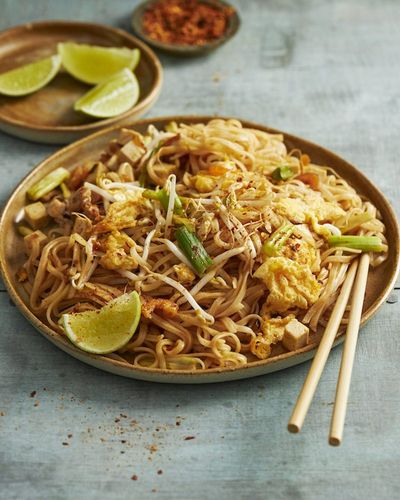
This classic Thai dish of noodles is both aromatic and lightly spicy, serving well as either a main course or a starter. Pad Thai combines stir-fried rice noodles with tender chicken, pork, and prawns in a balanced sauce of curry paste, oyster sauce, and fish sauce. Fresh herbs, crushed peanuts, and a squeeze of lime complete this iconic Thai street food favourite.