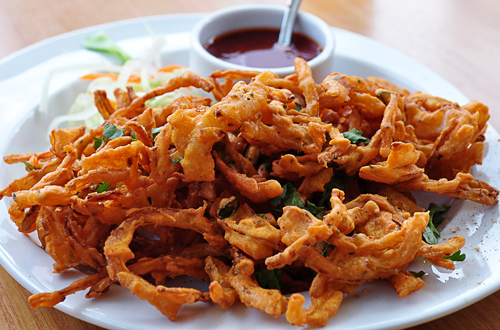
Onion Bhajis
India's onion bhajis: sliced onion bound in a spiced gram-flour batter and deep-fried into crisp golden clusters. A popular accompaniment to a takeaway curry, irresistible freshly made with a cucumber-and-yoghurt relish on the side.
Overview
Onion bhajis are golden, crispy fritters made from sliced onions bound in a spiced gram flour batter and deep fried until crunchy and cooked through. The combination of chilli, turmeric, coriander, and curry leaves gives them a warmly aromatic flavour that pairs perfectly with cooling yoghurt-based dips. Freshly made, they are a satisfying vegetarian snack or side dish alongside a curry.
Ingredients
- 250 grams gram flour
- 1 teaspoon chilli powder
- 1 teaspoon ground turmeric
- 1 teaspoon coriander seeds (crushed)
- 3 onions (large, sliced)
- 6 fresh curry leaves
- sunflower oil (for deep frying)
- salt
Method
- Combine the gram flour, chilli powder, turmeric, coriander seeds and a pinch of salt in a bowl.
- Gradually add enough water to make a thick batter which will hold the onion together.
- Mix the onions and curry leaves into the batter.
- Fill a heavy-based saucepan one-third full with sunflower oil and heat to 180°C.
- Take two spoonfuls of the onion batter and carefully lower them into the hot oil in batches.
- Deep fry for 1 - 2 minutes, or until golden all over and cooked through.
- Drain on kitchen paper.
- Sprinkle with salt and serve warm.
Notes
- The batter should be thick enough to coat and hold the onions together; add water gradually to avoid making it too thin.
- Maintain the oil at 180°C throughout frying, too cool and the bhajis absorb excess oil, too hot and they brown before cooking through.
- Fry in batches to keep the oil temperature stable and prevent the bhajis from sticking together.
- Drain on kitchen paper immediately after frying and season with salt while still hot for the best flavour.
Serving
Serve with: cucumber and yoghurt raita, mango chutney, or mint chutney; pairs well with curry as a side Temperature: warm, served immediately after frying Amount: 2-3 bhajis per person as a starter or side
Storage
- Best eaten fresh and warm; the texture deteriorates as they cool and soften.
- Leftovers can be stored in an airtight container in the refrigerator for up to 1 day.
- Reheat in an oven at 180°C for 5-8 minutes to restore some crispness; avoid microwaving as it makes them soggy.
Recipes mentioned here
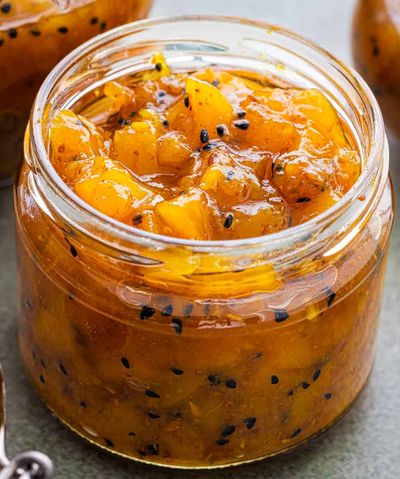
Mango Chutney
This is the foundational chutney of Indian kitchens. Unripe green mangoes, simmered slowly with sugar and vinegar in a gentle spice base, transformed into a thick, concentrated condiment. The sweet and sour balance allows the mango's subtle character to shine. This is shelf-stable and improves with age; make it in batches and keep jars on hand year-round.
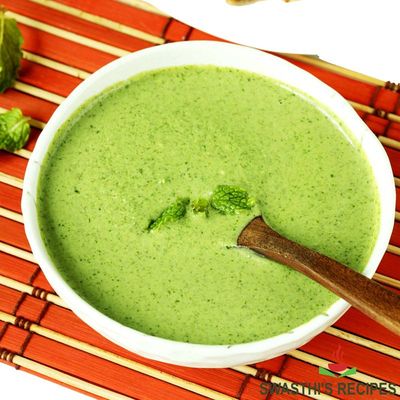
Mint Chutney
Mint chutney is the Indian restaurant staple for good reason. A bright green blend of fresh yoghurt, mint leaves, and aromatics creates a versatile condiment that soothes and refreshes. Unlike many chutneys that are cooked, this one is assembled fresh and chilled, maintaining the mint's vibrant character. Quick to prepare, it lasts several days refrigerated.
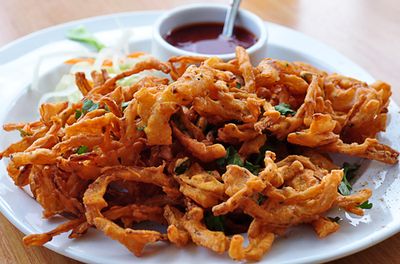
Onion Bhajis
Onion bhajis are the simplest fritters yet utterly addictive. Thinly sliced onions are coated in a spiced chickpea flour batter, then briefly deep-fried until golden and crispy. They're light and delicate, with an irresistible crispness that shatters between your teeth. Serve immediately while hot and crunchy, accompanied by chutney or yoghurt relish. This is takeaway food at its finest, made fresh at home.
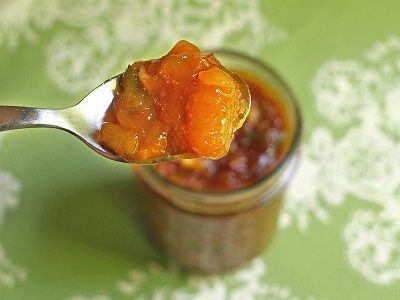
Mango Chutney
A delicate, fruity preserve balanced with warm spice notes and bright acidity. This mango chutney captures the sweetness of ripe fruit while nigella seeds and warm spices provide intricate flavour layers perfect alongside curries, game, and cheese selections.
More like this
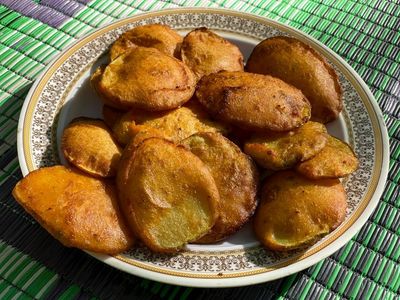
Vegetable Pakora
Gram (chickpea) flour combines with rice flour for extra crispness, with ajwain, chilli, turmeric and a pinch of baking soda for the airy texture. Cold water makes a thick coating batter (not pancake-thin). Mixed vegetables are tossed in the batter and dropped into hot oil in clusters; each one stays loose, with crisp tendrils of onion and the soft give of potato inside. Two batches: the second fry gives the deep-fried lacquered crunch.*
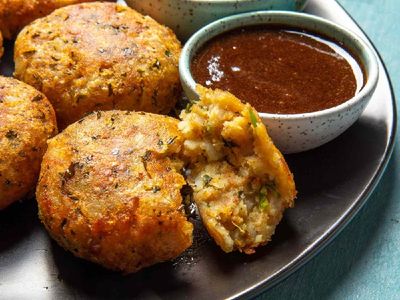
Aloo Tikki
Floury potatoes boil in their skins, then mash dry. A spice paste of green chilli, ginger and roasted cumin folds in with chopped coriander, mint and amchur for sourness. Cornflour and gram flour bind without making the tikki gummy. Patties form, chill to firm up, then shallow-fry in shallow oil on a flat pan for 4-5 minutes per side until deep gold and crisp with a soft interior. The chilled rest is what stops them falling apart.
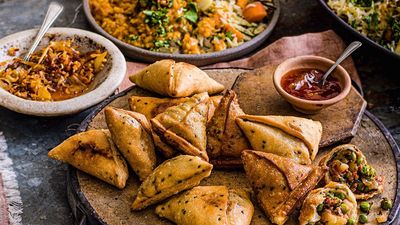
Samosa
A stiff oil-rich plain-flour dough (maida) rolls thin and crisps in the fryer with the characteristic blistered surface. The filling is dry: boiled potato, peas, ginger, green chilli, cumin, coriander seed, garam masala and amchur (dried mango powder) for sourness. The pastry is rolled into ovals, halved into semicircles, formed into cones, stuffed, sealed and fried in two stages: low-temperature first to set the pastry without browning, then a hot finish to blister and crisp.
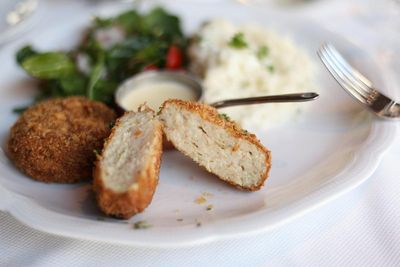
Fishcakes
Thai fishcakes (often called ‘tod mun pla’ on menus) are known for their spongy consistency, which I’m not fond of; that sponginess comes from the egg, so I tend to leave it out. Fishcakes are usually deep-fried in street stalls and restaurants, but I find it much easier to shallow-fry them. These are great served with sweet chilli sauce, Thai seafood dipping sauce and/or cucumber and chilli relish.