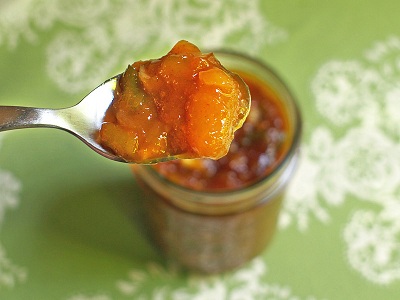
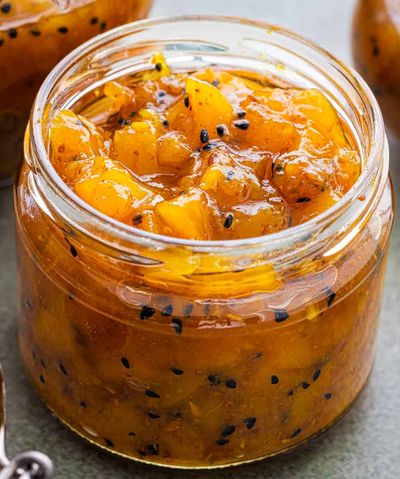
Mango Chutney
This lightly spiced, sweet chutney provides a lovely contrast to a spicy meal and is perhaps one of the best known and loved Indian chutneys.
Overview
A delicate, fruity preserve balanced with warm spice notes and bright acidity. This mango chutney captures the sweetness of ripe fruit while nigella seeds and warm spices provide intricate flavour layers perfect alongside curries, game, and cheese selections.
Ingredients
Aromatics & spices
- 1 tablespoon sunflower oil
- 1 teaspoon ginger (finely grated)
- 1 garlic cloves (crushed)
- 5 cloves
- 1 star anise
- 2 cinnamon sticks
- 5 black peppercorns
- 2 tablespoons nigella seeds
- ½ teaspoon mild chilli powder
Fruit & binding
- 800 grams ripe but firm mango flesh (chopped)
- 400 ml white wine vinegar
- 270 grams caster sugar
- sea salt
Method
Stage 1 - Toast spices
- Heat the sunflower oil in a saucepan over a medium heat.
- Add the ginger, garlic, cloves, star anise, cinnamon, peppercorns, nigella seeds and chilli powder and stir-fry for 1-2 minutes.
Stage 2 - Cook chutney
- Add the mango, vinegar and sugar and bring to the boil.
- Reduce the heat to low and cook for 45 minutes, or until the mixture is jam-like.
Stage 3 - Jar and store
- Season with sea salt to taste and pour into hot sterilized jam jars.
- Seal and leave to cool before storing in the refrigerator for up to 2 months.
Notes
- Mango selection: Use fruit that is ripe but still firm; overripe mangoes will become too soft and lose structure.
- Nigella seeds: These tiny, onion-scented seeds are essential to authentic mango chutney; they add subtle complexity.
- Spices: Toast the whole spices briefly to release their oils; this amplifies flavour significantly.
Serving
Serve alongside curries, with roasted game and charcuterie, or as part of a cheese board. Also excellent with pâté and cold roasted meats.
Storage
- Keeps refrigerated for up to 2 months in sealed glass jars.
- Does not freeze well due to sugar content and texture changes.
- Best eaten after 2-3 days once flavours have developed; improves over time.
More like this
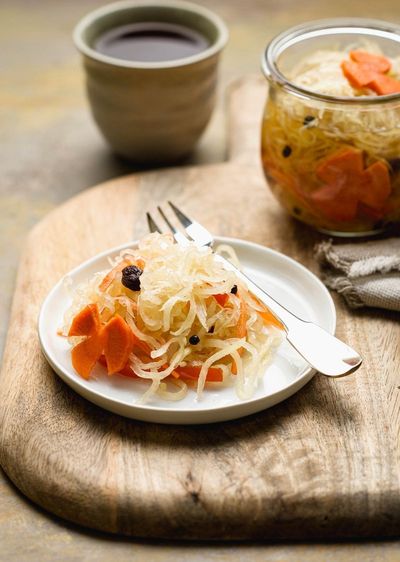
Atchara
Green papaya is peeled, seeded and shredded on a coarse grater. Carrot, ginger, garlic, red pepper, onion and raisins are all prepared in matching shreds. The vegetables are salted and rested for 1 hour to draw water; rinsed and squeezed dry. A syrup of cane vinegar, sugar and whole peppercorns simmers for 5 minutes. Hot syrup is poured over the vegetables in a sterilised jar. The jar is sealed, cooled and refrigerated overnight before eating. Improves over the following week.
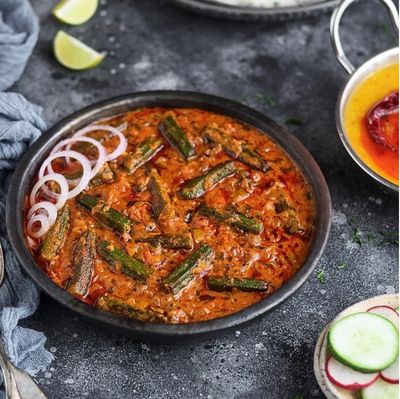
Bhindi Masala
The okra is washed, dried thoroughly and trimmed, then cut into 2 cm pieces. A dry-fry over high heat for 10 minutes cooks away the surface moisture that causes slime. Onion is then browned with whole cumin in a separate go, ginger and garlic added, tomato cooked down with the ground spices, and the dry-fried okra folded in for a final dry simmer. Finished with garam masala, amchur and coriander.
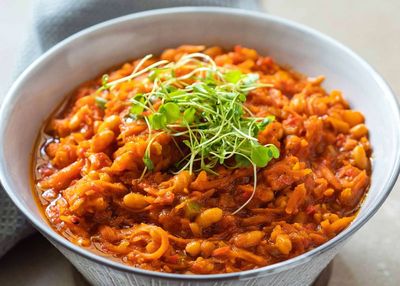
Chakalaka
Onion is softened in oil; garlic, ginger and curry powder bloom. Carrots cook briefly to tender-crisp. Peppers (red and green) and chillies join. Tomatoes simmer everything down. Tinned baked beans go in last with a splash of vinegar to balance. Eaten warm or at room temperature; tastes better the next day.
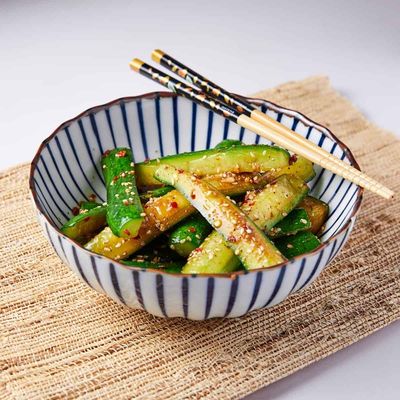
Chinese Pickled Cucumber
Cucumbers are cut into spears (or smashed-and-torn for a rougher texture), salted heavily in a colander 30 minutes to weep, then patted dry. A brine of rice vinegar, sugar, light soy, water, sliced ginger, Sichuan peppercorns and dried red chillies brings to a gentle simmer just to dissolve the sugar; cools to room temperature. The drained cucumber goes into a jar; the cooled brine pours over to submerge; refrigerated for 1 hour minimum (overnight ideal). Eats cold straight from the jar.