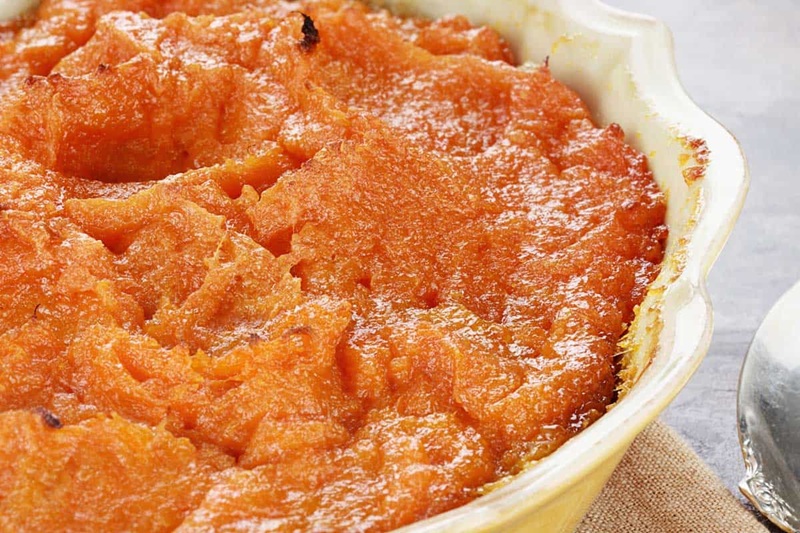
Boniato Mash
Boniato is the Caribbean white-fleshed sweet potato, drier and less sugary than the orange American kind, with a soft chestnut sweetness when cooked. Mashed with butter, garlic, sour orange and a splash of olive oil, it's the Cuban answer to mashed potato: rich, gently sweet, fragrant with citrus.
Overview
Boniato is peeled, cubed and simmered in salted water until completely tender. Once drained, the boniato is returned to the warm pot to steam-dry, then mashed with butter, warmed garlic-infused olive oil, sour orange juice (or a lime-and-orange substitute), salt and pepper. The texture should be soft and spoonable, not stiff. Sour orange is the signature; without it the mash tastes flat.
Ingredients
- 1 kg boniato (Caribbean white sweet potato)
- 1 teaspoon salt (for the cooking water)
- 60 g unsalted butter
- 3 tablespoons olive oil
- 4 garlic cloves (finely sliced)
- 3 tablespoons sour orange juice (naranja agria, or 2 tablespoons fresh orange juice + 1 tablespoon lime juice)
- ½ teaspoon ground cumin
- salt
- pepper
- 1 tablespoon fresh coriander (or flat-leaf parsley, chopped, to finish)
Method
Stage 1 - Cook the boniato
- Peel the boniato (the dark pinkish-brown skin comes off easily with a vegetable peeler) and cut into 4 cm cubes.
- Place in a large pot; cover with cold water by 3 cm. Add the salt.
- Bring to the boil; reduce to a steady simmer.
- Cook 18-22 minutes until completely tender when pierced with a knife. The pieces should yield with almost no resistance.
Stage 2 - Garlic oil
- While the boniato cooks, gently warm the olive oil in a small pan over low heat.
- Add the sliced garlic; cook 3-4 minutes until pale gold and fragrant. Don't brown: bitter garlic ruins the mash.
- Take off the heat; let the garlic continue to infuse the oil.
Stage 3 - Mash
- Drain the boniato thoroughly. Return to the empty hot pot; place over low heat for 1 minute to steam off excess moisture, shaking the pot.
- Add the butter; mash with a potato masher or pass through a ricer for the smoothest result.
- Stir in the garlic oil (garlic and all), the sour orange juice and the cumin.
- Season generously with salt and pepper. The mash absorbs salt readily; taste twice.
- If it's stiff, beat in a splash of warm milk or the boniato cooking water until soft and spoonable.
Stage 4 - Serve
- Pile into a warm dish; drizzle with a little extra olive oil.
- Scatter with coriander or parsley.
- Serve immediately.
Notes
- Boniato vs sweet potato: Boniato (sold in Latin and Caribbean shops) has white-cream flesh, drier and less sugary than the orange American sweet potato. If unavailable: a 70/30 mix of floury potato and orange sweet potato approximates the flavour and texture. Pure orange sweet potato alone gives a sweeter, wetter mash.
- Sour orange (naranja agria): The defining citrus of Cuban cooking, available bottled in Latin shops as "naranja agria". Substitute is 2 parts orange juice to 1 part lime juice; add a teaspoon of grapefruit juice if you have it.
- Don't burn the garlic: Gold and fragrant is the goal. Brown garlic turns bitter and overwhelms the mash.
- Mash, don't whip: Boniato can go gluey if whipped in a food processor. Stick to a masher or ricer.
Variations
With pork drippings: Replace half the butter with rendered pork fat from a mojo pork roast. Traditional, decadent. Spicy: Mash in a finely chopped seeded scotch bonnet, or ½ teaspoon dried red chilli flakes with the garlic. Cilantro-heavy: Fold in 3 tablespoons of finely chopped coriander at the end for a green-flecked version.
Serving
Serve with: Mojo pork (lechon), ropa vieja, grilled chicken thighs, fried fish. Pairs especially well with anything roast and citrus-marinated. Garnish with: Fresh coriander, a lime wedge, a final drizzle of olive oil.
Storage
- Keeps 3 days refrigerated.
- Reheat gently with a splash of milk or stock; the mash dries out in the fridge.
- Freezes 2 months; the texture is slightly looser after thawing.
More like this
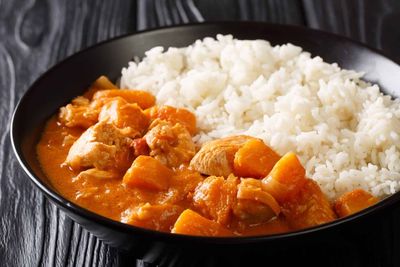
Domoda
Chicken thighs (or lamb) are browned, onions and tomato cooked down with garlic and a single whole chilli, then the meat simmers in stock until tender. A loose peanut paste is stirred in for the final 20 minutes, kept thin enough to ladle. Sweet potato or pumpkin softens in the sauce. A spoon of lime juice at the end balances the richness.
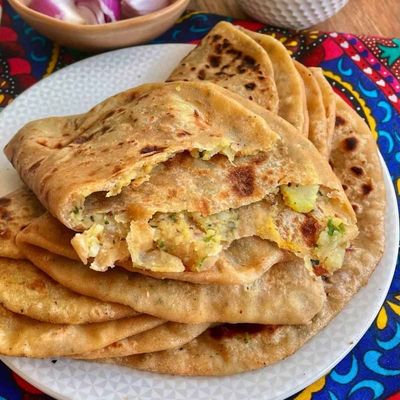
Aloo Paratha
Whole-wheat (atta) flour is mixed with salt and just enough warm water to make a soft dough; rests for 20 minutes. Potatoes boil whole, peel hot, mash with cumin, garam masala, ginger, green chilli, amchoor and coriander. The dough divides into balls. Each ball flattens into a small disc; a heaped spoon of potato sits in the middle; the dough pleats up around the filling and pinches closed; flattens again carefully; rolls out gently to a 20 cm disc. Each cooks on a hot tawa or non-stick pan with ghee, 2 minutes per side, until crispy and gold.

Empanadas Colombianas
Yellow-corn masarepa hydrates with water, salt and a pinch of paprika for colour. Beef mince cooks with onion, tomato cumin and oregano; cooked potato dices fold in for body. The dough divides; each ball flattens between two pieces of cling film into thin discs; filling goes in the centre; folded into a half-moon, sealed with damp fingers, fried.
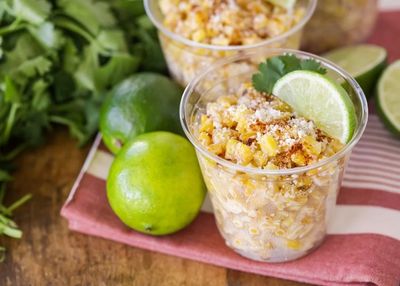
Esquites
Corn kernels, fresh in season, frozen the rest of the year, are charred in a hot dry pan with a bit of oil until many kernels are blackened. Off the heat: mayo, sour cream, lime, garlic, chilli powder and cheese are folded through. Coriander and more cheese top each bowl.