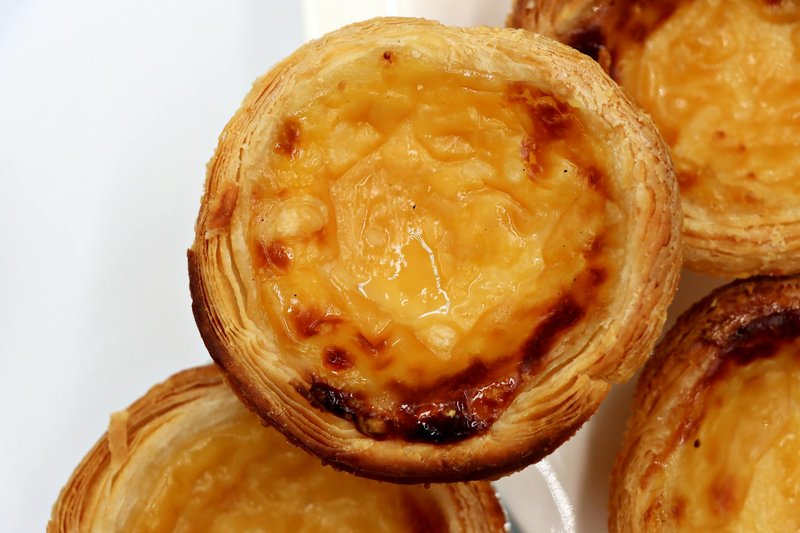
Hong Kong Egg Tarts
Cantonese egg tarts: small biscuit-style shortcrust shells filled with a delicate yellow custard, baked till just-set and matte.
Overview
The shortcrust uses lard (or vegetable shortening + butter) for the right crumbly texture; sugar gives the slight sweetness; egg yolk binds. Rolled to 3 mm thick, cut into discs slightly larger than the muffin-tin wells, gently pressed in, chilled. The custard: eggs whisk with hot sugar syrup (sugar dissolved in just-boiled water, cooled) and a small amount of evaporated milk for richness, plus vanilla. Strained twice for a glassy finish, ladled into the chilled shells, baked at 220°C for the first 8 minutes (to set the pastry edges) then 180°C for 12-15 more (until the custard is just-set with no visible jiggle in the centre).
Ingredients
Pastry
- 200 g plain flour
- 30 g cornflour
- 60 g icing sugar (sifted)
- A pinch of salt
- 130 g cold lard (cubed, OR 80 g cold butter + 50 g vegetable shortening)
- 1 egg yolk (large)
- 1 tablespoon cold water (if needed)
Custard
- 4 eggs (large)
- 150 g caster sugar
- 200 ml water (just-boiled)
- 100 ml evaporated milk (NOT condensed; sold in tins)
- 1 teaspoon vanilla extract
Equipment
- A 12-cup muffin tin, OR 12 individual tart tins (about 7 cm diameter)
Method
Stage 1 - Pastry
- In a wide bowl, whisk flour, cornflour, icing sugar and salt.
- Rub in the cold lard (or butter + shortening) with fingertips until the mixture resembles coarse breadcrumbs.
- Add the egg yolk; mix with a fork.
- Bring together with your hands into a dough - add the cold water only if needed.
- Press into a thick disc; wrap in cling film; refrigerate 30 minutes.
Stage 2 - Roll and line
- Lightly grease the muffin tin wells.
- Roll the dough on a floured surface to about 3 mm thick.
- Cut out 12 circles, about 9 cm in diameter (slightly larger than the wells - a saucer or biscuit cutter works).
- Press each circle gently into a muffin well, easing the dough up the sides so it just reaches the top edge.
- Don't stretch the dough or it'll shrink during baking.
- Refrigerate the lined tin 15 minutes while you make the custard.
Stage 3 - Sugar syrup
- Place 150 g sugar in a heatproof jug; pour in 200 ml just-boiled water.
- Stir to dissolve completely.
- Cool to room temperature.
Stage 4 - Custard
- In a separate bowl, whisk the 4 eggs lightly - just enough to combine, not to foam.
- Slowly whisk in the cooled sugar syrup.
- Whisk in the evaporated milk and vanilla extract.
- Strain the custard through a fine sieve into a clean jug (catches the chalazae and any foam).
- Strain a SECOND time - Hong Kong egg tarts have a perfectly smooth glassy custard, and twice-straining is the trick.
- Let stand 5 minutes; gently skim off any foam from the surface (foam gives a pocked baked surface).
Stage 5 - Fill
- Heat oven to 220°C (200°C fan).
- Carefully pour the custard into each chilled pastry shell to about 90% full (not all the way; the custard expands slightly as it bakes).
Stage 6 - Bake
- Bake at 220°C for 8 minutes (sets the pastry edges).
- Reduce heat to 180°C (160°C fan); bake another 12-15 minutes.
- The custard is done when set but with the slightest jiggle in the very centre when the tin is tapped - NOT puffed, NOT cracked. If the custard puffs significantly, your oven is too hot; open the door briefly to release heat.
Stage 7 - Cool
- Cool in the tin 5 minutes (the custard finishes setting).
- Lift out gently - use a knife around the edges if they stick.
- Cool on a rack to warm or room temperature.
Stage 8 - Serve
- Eat warm or at room temperature. Cold tarts are still good but the custard texture is best when slightly warm.
Notes
- Lard gives the right pastry: The Cantonese shell is crumbly-tender, not flaky. Lard (or vegetable shortening) gives that texture; pure butter gives a slightly chewier shell. Both work; lard is the traditional choice.
- Twice-strained custard: This is the single tip that separates great Hong Kong egg tarts from mediocre ones. The smooth glassy yellow surface comes from straining out every speck of egg-white string and every air bubble.
- Watch the oven: A custard that puffs and cracks was baked too hot or too long. The ideal is a flat matte yellow surface with no browning. If your custards consistently crack, drop the temperature 10°C and add 2 minutes.
Storage
- Best within 4 hours of baking.
- Refrigerate 2 days; bring to room temperature 30 minutes before serving (or re-warm at 150°C 5 minutes - careful not to overcook the custard).
- Don't freeze; the custard texture suffers on thaw.
More like this
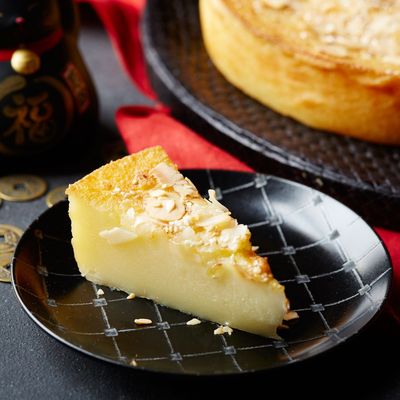
Nian Gao
Glutinous rice flour and a small amount of rice flour for bite, dissolved in brown-sugar syrup made with water (just-boiled), with a glug of oil for sheen and the faintest pinch of salt. Poured into a greased cake pan, steamed for an hour, cooled overnight. The cake firms up dramatically as it cools, going from pourable batter to a sliceable, translucent amber slab. Best eaten on Day 2, sliced and pan-fried in beaten egg.
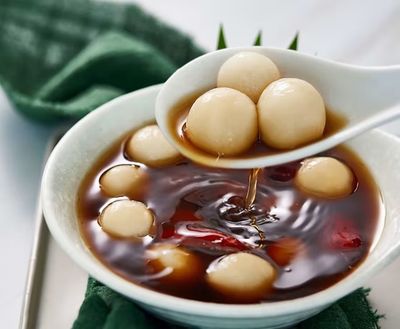
Tang Yuan
Filling: black sesame seeds toasted in a dry pan, ground to a paste with sugar and softened lard (or butter); chilled until firm enough to roll into 16 small balls; frozen on a tray. Dough: glutinous rice flour mixed with just-boiled water (the hot water gelatinises some of the starch, giving the dough its characteristic chew) into a smooth pliable ball; rested briefly. Each piece of dough flattens between palms, takes a frozen filling ball, wraps around, rolls smooth, a hidden ball-in-ball. Boiled in water until they float and the outer dough is translucent (about 4 minutes from when the water comes back to boiling). Served in small bowls in a hot ginger-osmanthus syrup.
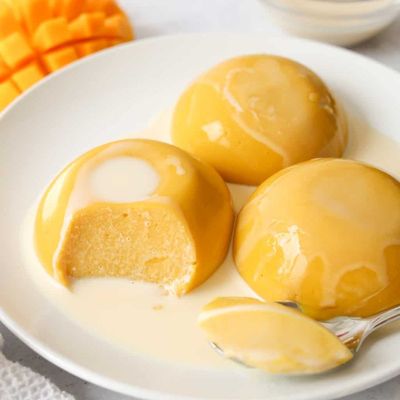
Mango Pudding
Ripe mango (Alphonso or Nam Dok Mai if available; any sweet ripe mango works) blends to a smooth puree with sugar and lime juice. Powdered gelatin blooms in cold milk 5 minutes. Half the milk warms to dissolve sugar; the bloomed gelatin stirs in to dissolve. The warm milk pours into the mango puree along with the cold remaining milk, evaporated milk and a splash of double cream. Whisked smooth, ladled into 6 small moulds or glasses, refrigerated for 4-6 hours until set. Served with diced fresh mango and a drizzle of evaporated milk.
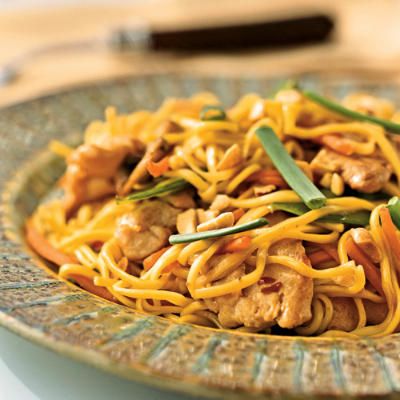
Chow Mein
Chow mein literally means 'stir-fried noodles' and this contemporary dish is equally popular throughout southern China as it is worldwide. Fresh egg noodles are quickly stir-fried with protein and vegetables, creating a harmonious balance of textures and flavours. The keys to success are properly cooked noodles, high-heat wok cooking, and precise timing.