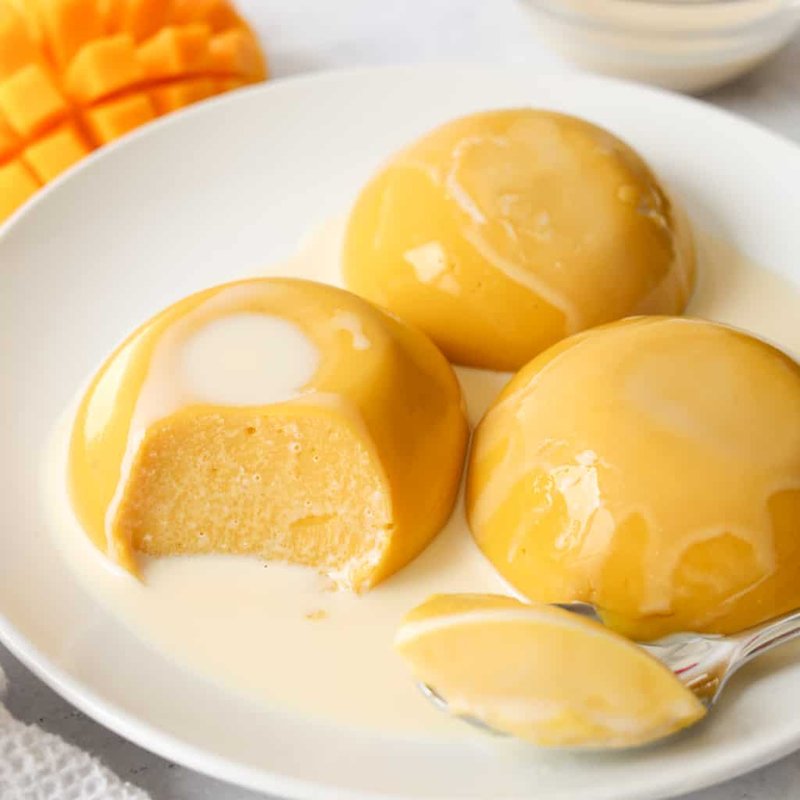
Mango Pudding
Hong Kong's cold dessert: a wobbly pale-orange pudding of ripe mango set with gelatin, lightened with evaporated milk and cream.
Overview
Ripe mango (Alphonso or Nam Dok Mai if available; any sweet ripe mango works) blends to a smooth puree with sugar and lime juice. Powdered gelatin blooms in cold milk 5 minutes. Half the milk warms to dissolve sugar; the bloomed gelatin stirs in to dissolve. The warm milk pours into the mango puree along with the cold remaining milk, evaporated milk and a splash of double cream. Whisked smooth, ladled into 6 small moulds or glasses, refrigerated for 4-6 hours until set. Served with diced fresh mango and a drizzle of evaporated milk.
Ingredients
Pudding
- 400 g ripe mango flesh (about 2 large mangoes - peeled, stones removed, weighed)
- 80 g caster sugar (more or less depending on mango sweetness)
- 1 tablespoon lime juice (cuts the sweetness, brightens flavour)
- 12 g powdered gelatin (about 2 ½ teaspoons, or 6 sheets)
- 150 ml whole milk (cold, for blooming the gelatin)
- 150 ml whole milk (additional, for the syrup)
- 150 ml evaporated milk (tinned)
- 60 ml double cream
To serve
- 1 ripe mango (extra, diced into small cubes for topping)
- 60 ml evaporated milk (for drizzling)
- A few mint leaves (optional)
- A pinch of toasted coconut flakes (optional)
Method
Stage 1 - Mango puree
- Cube the 400 g mango flesh.
- Place in a blender with the sugar and lime juice.
- Blend smooth.
- Taste; if your mango is intensely sweet, reduce sugar to 60 g; if slightly tart, increase to 100 g.
- Reserve in a wide bowl.
Stage 2 - Bloom the gelatin
- Sprinkle the powdered gelatin over 150 ml COLD milk in a small bowl.
- Let stand 5 minutes - the gelatin swells and looks slightly spongy.
Stage 3 - Warm milk
- In a small saucepan, warm the OTHER 150 ml of milk to just below a simmer (steam rising, no bubbles).
- Off heat; tip in the bloomed gelatin mixture.
- Whisk until the gelatin fully dissolves - no specks remain.
Stage 4 - Combine
- Pour the warm gelatin-milk into the mango puree, whisking constantly.
- Whisk in the evaporated milk and double cream.
- Strain through a fine sieve into a measuring jug (removes fibers, gives a silky pudding).
Stage 5 - Pour
- Lightly oil 6 small dariole moulds or pour directly into 6 serving glasses (about 130 ml each).
- Ladle the mixture in.
- Cool 15 minutes at room temperature (the gelatin sets more evenly from a gradual chill).
Stage 6 - Set
- Cover each with cling film (don't let it touch the surface).
- Refrigerate at least 4 hours, ideally overnight.
- The puddings are set when they wobble but don't slosh.
Stage 7 - Unmould (optional)
- To unmould from dariole moulds: dip the bottom in hot tap water for 5-8 seconds; run a knife around the edge; invert onto a plate.
- If serving in glasses, skip this step.
Stage 8 - Serve
- Top each pudding with a generous spoonful of diced fresh mango.
- Drizzle 1 tablespoon evaporated milk over.
- Garnish with a mint leaf and / or a pinch of toasted coconut.
- Eat cold.
Notes
- Mango ripeness matters more than variety: Underripe mango makes a sour, fibrous pudding. Choose mangoes that yield slightly to gentle pressure and smell fragrant at the stem. If the only mango available is underripe, leave at room temperature 2-3 days.
- Gelatin proportion is gentle: Hong Kong mango pudding should wobble freely; this isn't a firm panna cotta. The 12 g gelatin for 750 ml of liquid gives a soft tender set. More and the pudding becomes rubbery; less and it won't hold its shape.
- Evaporated milk on top is the signature: The Hong Kong restaurant presentation has a small pour of evaporated milk over the unmoulded pudding - like a creamy moat. Don't substitute condensed milk (too sweet) or fresh cream (too rich).
Storage
- Refrigerate 3 days, covered.
- Once garnished, eat the same day; the diced mango weeps overnight.
- Doesn't freeze well.
More like this
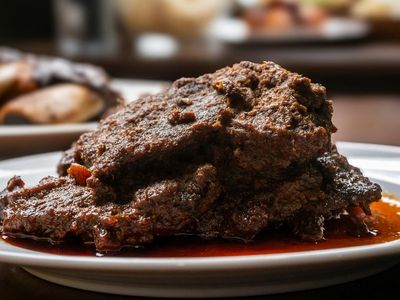
Beef Rendang
Rendang is a spicy meat dish which originated from the Minangkabau ethnic group of Indonesia, and is now commonly served across the country. One of the characteristic foods of Minangkabau culture, it is served at ceremonial occasions and to honour guests. This rich, aromatic curry features beef slowly simmered in coconut milk and spices until deeply flavoured.
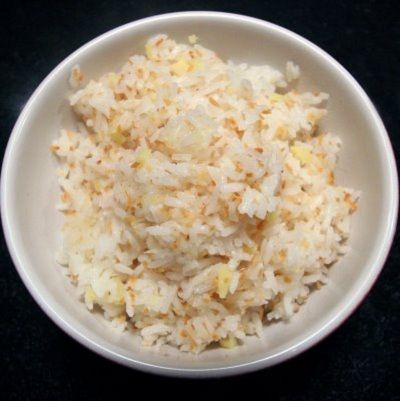
Coconut Rice
Coconut rice represents the intersection of technique and flavor in Indian cooking. The tempering of mustard and cumin seeds in hot oil releases their volatile aromatics, which then permeate the rice as it cooks. Curry leaves contribute herbaceous depth without overwhelming the dish. Coconut cream adds richness and subtle sweetness, creating a rice that's inherently interesting yet supportive of spiced dishes. The final resting period is crucial, steam completes the cooking while the flavors meld. This rice should taste aromatic with individual grains remaining separate.
Chicken Ceylon
A bright and spicy Sri Lankan-inspired curry with a curry-house spin, featuring aromatic spices, coconut, and fresh curry leaves. It works beautifully as a banquet dish and can be extra hot with extra bird’s eye chillies and chilli powder. The subtle sweet-tang tuning makes it a favorite with rice and mild dhal.
Spicy Peanut Balls
Spicy peanut balls are deep-fried rice balls seasoned with garlic, ginger, chilli, soy sauce, and lime, then coated in chopped peanuts for a satisfying crunch. They make an excellent snack or starter, and pair naturally with a chilli dipping sauce.