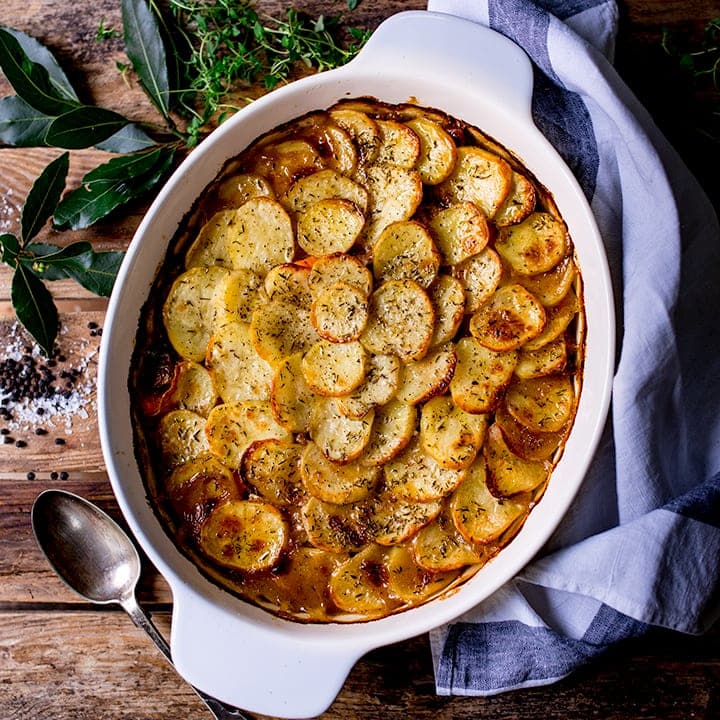
Lancashire Hotpot
Northern English layered casserole: lamb and onions sealed under overlapping discs of potato that crisp golden in the oven while the stew braises beneath. Slow-cooked, frugal, and the textbook example of how three ingredients become greater than their sum.
Overview
The defining dish of the north-west of England, the one-pot supper invented to feed mill workers in the cotton towns of Lancashire from a single tough cut of lamb and a layer of potatoes. You layer lamb shoulder or middle-neck chunks with onions and stock in a deep dish, top with overlapping slices of waxy potatoes that protect the meat below while crisping golden above, and put the whole thing into a low oven for hours. Time and gentle heat do the rest: the lamb tenderises, the onions melt down into the gravy, the potato top crisps into a thatched roof of pale brown discs. Eaten with pickled red cabbage on the side, exactly as it would have been on a Pendle table a hundred years ago.
Ingredients
- 700 g lamb shoulder (or middle-neck, cut into 3 cm chunks)
- 2 tablespoons plain flour
- 2 tablespoons vegetable oil
- 2 onions (sliced)
- 2 carrots (sliced)
- 1 tablespoon Worcestershire sauce
- 1 teaspoon fresh thyme leaves
- 500 ml lamb (or beef stock)
- 1 kg waxy potatoes (Charlotte or similar), peeled and sliced 5 mm thick
- 50 g unsalted butter (melted)
- salt
- pepper
Method
Stage 1 - Brown the lamb
- Heat the oven to 160°C (140°C fan).
- Toss the lamb in flour seasoned with salt and pepper.
- Heat the oil in a heavy ovenproof casserole and brown the lamb in batches. Set aside.
Stage 2 - Build the layers
- In the same pan, cook the onions and carrots over medium heat for 8 minutes.
- Stir in the Worcestershire and thyme.
- Return the lamb to the pan and pour in the stock. Bring to a simmer.
- Arrange the sliced potatoes in overlapping rounds across the surface, completely covering the lamb.
- Brush the potatoes generously with melted butter and season with salt.
Stage 3 - Bake
- Cover the casserole with a tight-fitting lid (or foil) and bake for 1 ½ hours.
- Remove the lid, increase the oven to 200°C (180°C fan), and bake another 30 minutes until the potatoes are deep golden and crisp.
- Rest 10 minutes before serving.
Notes
- Waxy potatoes hold their shape: Floury potatoes (Maris Piper, King Edward) crumble into the stock and turn it cloudy. Charlotte, Maris Peer or new potatoes keep their slices.
- Don't skip the butter brush: It's what crisps the top layer.
- Middle-neck of lamb is traditional: A bony cut that makes a richer braise. Shoulder is easier to find and works fine.
Storage
- Keeps 3 days refrigerated. Reheat at 180°C for 20 minutes (the top can be re-crisped under a hot grill for 2-3 minutes).
- Freezes well for up to 2 months; the potato top will need re-crisping after defrosting.
More like this
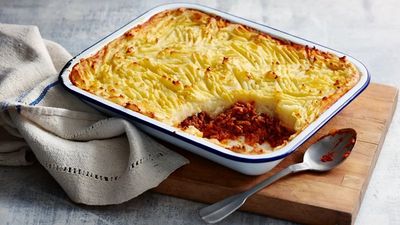
Shepherd's Pie
The lamb cousin of cottage pie, and the original of the two (cottage pie came later as a beef variant when lamb was harder to find). You brown lamb mince with onion, carrot and celery, then simmer with stock, tomato purée, Worcestershire and rosemary until the gravy is thick enough to hold a spoon upright. Top with garlic-butter mash piled in rough peaks that catch and crisp in the oven, and bake until the surface is deep gold. The lamb gives it a heavier, more savoury character than cottage pie's beef. That's what marks it as shepherd's rather than cottage. Eaten with peas, a spoonful of mint sauce on the side if you're being traditional, and a glass of bitter or a strong red.
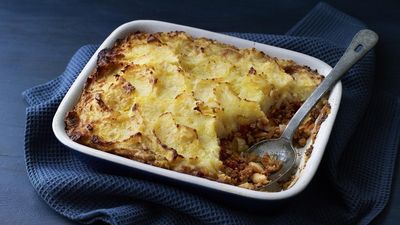
Cottage Pie
The textbook British family dinner, the dish that turns up on every primary-school menu and most weeknight tables. You brown beef mince with onion, carrot and celery, then simmer it down with stock, a spoon of tomato purée, a slosh of red wine and a generous splash of Worcestershire into a thick savoury gravy. Top with cheddar mash piled rough so the peaks catch and crisp in the oven, and bake until the surface is deep gold and the gravy bubbles around the edges. Forgiving, freezer-friendly, exactly as good on Wednesday from leftovers as on Sunday from the oven. A green vegetable and a spoon of brown sauce on the plate, a bowl of trifle waiting in the fridge for after.
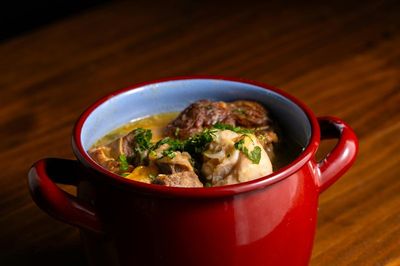
Irish Stew
Irish stew is the epitome of rustic, peasant cooking elevated to comfort food status. Middle neck of lamb simmers gently with potatoes, onions, carrots, and cabbage in a light broth, with the potatoes gradually breaking down to thicken the sauce naturally. The result is a one-pot wonder that's wholesome, deeply flavorful, and warming, the kind of dish that feeds both body and soul on cold days.
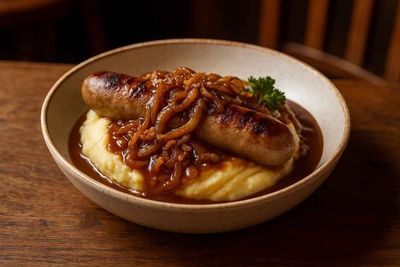
Bangers and Mash
British pub comfort food in its truest form, the dish you order when the weather is grim and you want something to push the day's mood around. You slow-pan-fry good sausages so the skins blister and the fat renders properly, build a soft butter-and-milk mash that tastes of potato rather than dairy, and ladle over a dark onion gravy stiffened with mustard and a few thyme leaves. The onions need long, low cooking until they're collapsed and almost jammy; rushing them is the only way to ruin the dish. Eaten on a winter Tuesday with a pint of bitter or a glass of red, the mash mountain pushed slightly to one side so the gravy can pool around it.