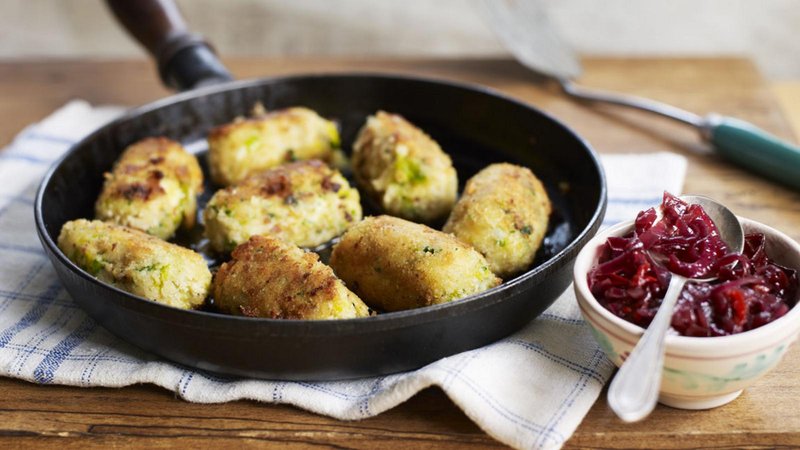
Glamorgan Sausages
Welsh leek-and-cheese sausages, breadcrumb-coated and fried until crisp. The "sausage" is a misnomer - there's no meat, no skin, just a tightly bound mixture of caerphilly, leeks and sage rolled and shallow-fried. A 19th-century Glamorgan classic.
Overview
The Welsh vegetarian sausage, named after the south Wales county of Glamorgan and traditionally made with caerphilly, the crumbly slightly-acidic white Welsh cheese. You soften leeks in butter (slowly, until they're pale gold and sweet), then mix them with grated caerphilly (or mature cheddar if caerphilly is hard to find), breadcrumbs, mustard, sage and beaten egg. The mixture chills in the fridge for an hour to firm up, then rolls into sausage shapes, gets a flour-egg-breadcrumb coat, and fries until deep gold and crisp on the outside. Eaten with chutney and mashed potato, or sliced into a roll with a bit of salad for lunch. A wartime substitute for meat sausages that became a permanent fixture of the Welsh table.
Ingredients
- 2 leeks (medium, white and pale green only, very finely chopped)
- 30 g unsalted butter
- 200 g caerphilly cheese (or mature cheddar; grated)
- 200 g fresh white breadcrumbs (plus 100 g for coating)
- 2 tablespoons fresh sage (chopped) or 1 teaspoon dried
- 1 tablespoon English mustard
- 2 teaspoons fresh thyme leaves
- 2 eggs (large, 1 for binding, 1 beaten for coating)
- 50 g plain flour (for coating)
- salt
- pepper
- 4 tablespoons sunflower oil (or vegetable oil, for frying)
Method
Stage 1 - Leeks
- Melt the butter in a pan over medium-low heat; cook the leeks 8-10 minutes until soft and silky but not coloured. Cool fully.
Stage 2 - Mix
- Combine the cooled leeks, cheese, 200 g of the breadcrumbs, sage, thyme, mustard, 1 egg, salt and plenty of black pepper. Mix until cohesive - should hold its shape when pressed.
- Cover and chill 30 minutes (firms the mix; makes shaping easier).
Stage 3 - Shape and coat
- Divide the mixture into 8 equal portions. Roll each into a sausage shape about 8 cm long.
- Set up a coating station: flour, beaten egg, remaining breadcrumbs.
- Roll each sausage in flour, then egg, then breadcrumbs.
Stage 4 - Fry
- Heat the oil in a frying pan over medium heat.
- Fry the sausages 6-8 minutes, turning to colour all sides. The breadcrumb coat should be deep golden and crisp; the centre warm and just-set.
Notes
- Caerphilly is traditional: A crumbly, tangy Welsh cheese. Mature cheddar works; Lancashire and Wensleydale also good substitutes.
- Don't skip the chill: Warm mixture cracks while shaping and falls apart in the pan.
- Serve with: A sharp chutney, mustard, or mashed potatoes.
Storage
- Keeps 3 days refrigerated; reheat in a hot oven (180°C) for 8 minutes to re-crisp.
- Freeze raw or cooked for 2 months.
More like this
Cheese and Onion Pie
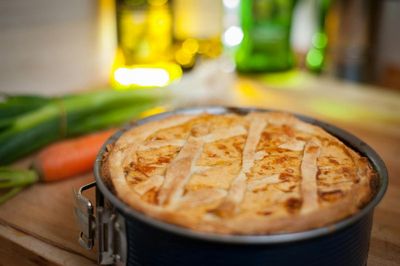
A British pub-and-cafe classic, the vegetarian counter to the meat pies on every menu from Pendle to Penzance. You cook onions slowly in butter until they're very soft and sweet (this is the only step that matters; rush it and the pie tastes raw), then bind them with mashed potato and grated mature cheddar so the filling slices cleanly rather than collapsing the moment a knife touches it. The pie sits in a shortcrust pastry case with a shortcrust lid, gets an egg wash for shine, and bakes until the top is deep gold. Eaten warm with HP sauce or pickled red cabbage on the side, often with chips and gravy if it's a proper pub plate.
Welsh Rarebit
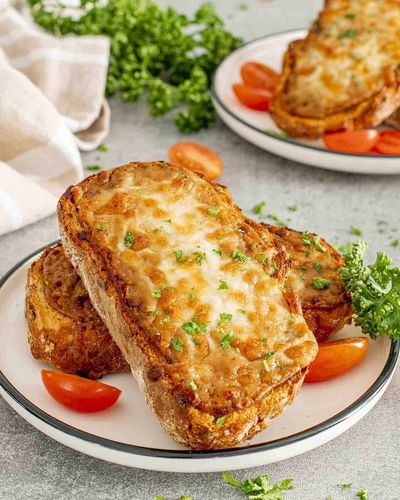
The Welsh take on cheese on toast, and a substantially better dish than the name suggests. You build a thick cheese sauce from a roux of butter and flour cooked together, ale and milk whisked in to loosen, then mature cheddar melted in with mustard and a hit of Worcestershire. The mixture should be thick enough to spread with a spoon, not pour. Pile it onto thick-cut toasted bread (white or wholemeal, never sourdough), and slide under a hot grill until the top is bubbling and freckled with gold. Eaten standing at the kitchen counter while it's still too hot, with a pickle or a glass of cold ale on the side. The Welsh have always taken cheese seriously; this is the simplest argument for why.
Baked Chocolate Cheesecake with Espresso Sauce
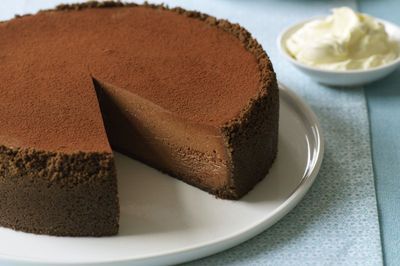
A rich and elegant chocolate cheesecake with a delicate shortcrust pastry base, silky chocolate-cream cheese filling, and a distinctive espresso-coffee liqueur sauce. This sophisticated dessert balances the intensity of chocolate with the subtle bitterness of coffee, creating a complex flavor profile suitable for elegant entertaining.
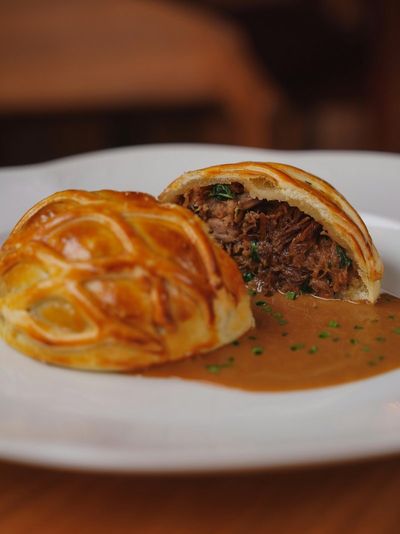
Beef Wellington
The defining British dinner-party showpiece, somewhere between French haute cuisine and English roast tradition, made famous in the modern era by Gordon Ramsay even if the Iron Duke himself probably never ate it. You sear a centre-cut beef fillet hard for colour, smear it with English mustard, wrap it in a tight blanket of mushroom duxelles and prosciutto, then encase the lot in all-butter puff pastry and roast at high heat. The pastry insulates the beef so it cooks gently to medium-rare while the crust crisps to deep mahogany above. The one technical trick the recipe insists on is drying the duxelles thoroughly so the pastry stays crisp underneath rather than going soggy from leaking mushroom water. Sliced at the table into thick rosy rounds, with a red-wine jus and roasted root vegetables on the side, the kind of plate that makes the evening feel like a special occasion before anyone says it.