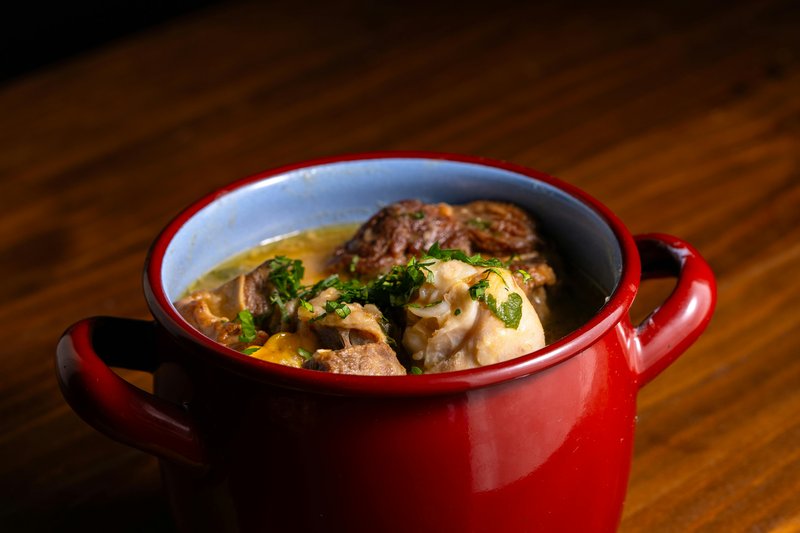
Irish Stew
This humble yet deeply satisfying stew is a cornerstone of Irish cooking: lamb, potatoes, and onions combine in the simplest way to create something far greater than the sum of its parts. It requires patience but not precision, comfort food at its finest.
Overview
Irish stew is the epitome of rustic, peasant cooking elevated to comfort food status. Middle neck of lamb simmers gently with potatoes, onions, carrots, and cabbage in a light broth, with the potatoes gradually breaking down to thicken the sauce naturally. The result is a one-pot wonder that's wholesome, deeply flavorful, and warming, the kind of dish that feeds both body and soul on cold days.
Ingredients
Meat & Base
- 750 grams middle neck of lamb (cut into chunks)
- 100 grams butter
- 1 ½ litres chicken stock
- 1 Bouquet Garni
- 1 garlic clove
- salt
- pepper
Vegetables
- 4 onions (sliced)
- 450 grams potatoes (peeled and cut into 2 cm dice)
- 175 grams carrots (diced)
- 6 celery sticks (cut into 2 cm dice)
- 225 grams savoy cabbage (shredded)
Garnish
- 2 teaspoons parsley (freshly chopped)
Method
Stage 1 - Blanch Lamb
- Place lamb with cold water in a large pan and bring to the boil.
- As soon as the water reaches a boil, drain and refresh the lamb under cold water. Drain well.
- This removes impurities and ensures a clear broth.
Stage 2 - Begin Stew
- Melt butter in a large braising pan and add sliced onions, half the diced potatoes, and the garlic.
- Add the bouquet garni and sweat gently for 2 minutes.
- Add the blanched lamb and cover with chicken stock.
- Bring to a simmer, cover, and cook for 30 minutes.
Stage 3 - Add Root Vegetables
- After 30 minutes, the meat should be half-cooked and some potatoes will have begun to break down and thicken the stock naturally.
- Add diced carrots and cook for a further 10 minutes.
- Add the remaining potatoes and diced celery; cook for 15-20 minutes until potatoes are soft but not completely pureed (some firmness should remain).
Stage 4 - Finish & Serve
- Add the shredded cabbage and cook for another 2-3 minutes until all vegetables and meat are tender.
- Taste and season carefully with salt and pepper.
- Remove the bouquet garni.
- Serve immediately in deep bowls, topped with fresh chopped parsley.
Notes
- Blanching the Lamb: This initial blanching clears the broth of impurities, creating a clearer, more refined stock.
- Potato Thickening: Adding potatoes in two stages, half early to thicken, half later to retain texture, creates the ideal consistency.
- Vegetable Timing: Each vegetable is added at a precise moment to ensure proper doneness; carrots enter first due to longer cooking time.
- Natural Thickening: Resist the urge to over-mash; the stew should have a rustic, chunky texture with just enough broken potatoes to thicken the broth.
Variations
Pearl Barley Version: Substitute 75g pearl barley for the celery for a heartier, more substantial stew. Summer Variation: Replace cabbage with fresh spring greens and add fresh peas in the final minutes. Modern Irish: Include 2 bay leaves and 2 teaspoons fresh thyme for added herbaceous depth.
Serving
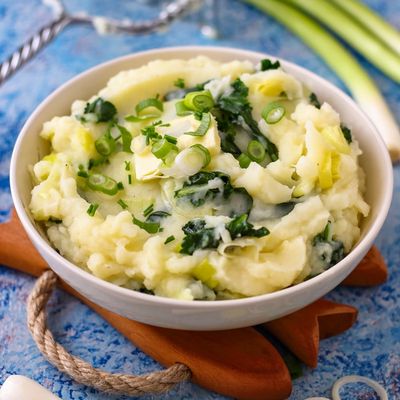
Serve with: Thick crusty bread for soaking up the broth, or colcannon (mashed potatoes with cabbage) Garnish with: Fresh flat-leaf parsley and a light grinding of black pepper
Storage
- Keeps 4-5 days refrigerated; flavors actually improve after 24 hours
- Freezes well up to 3 months (the potatoes may soften slightly upon reheating)
- Best served hot and piping; reheat gently to avoid breaking apart the tender meat
More like this
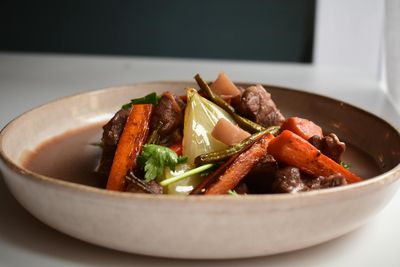
Beef and Guinness Stew
Chuck steak in big chunks, dredged in seasoned flour and browned in batches in a heavy pot until properly dark. Onions cooked low and slow in the same pot to draw out their sugar. The beef returned, a bottle of Guinness poured over with stock and a spoon of treacle, brought to a simmer and tucked into a low oven for two hours. The last half-hour gets carrots, potatoes and a handful of pearl barley to thicken the broth. Finished with parsley and a chunk of soda bread for mopping.
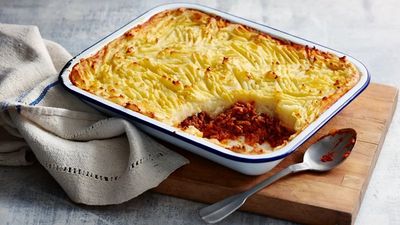
Shepherd's Pie
The lamb cousin of cottage pie, and the original of the two (cottage pie came later as a beef variant when lamb was harder to find). You brown lamb mince with onion, carrot and celery, then simmer with stock, tomato purée, Worcestershire and rosemary until the gravy is thick enough to hold a spoon upright. Top with garlic-butter mash piled in rough peaks that catch and crisp in the oven, and bake until the surface is deep gold. The lamb gives it a heavier, more savoury character than cottage pie's beef. That's what marks it as shepherd's rather than cottage. Eaten with peas, a spoonful of mint sauce on the side if you're being traditional, and a glass of bitter or a strong red.
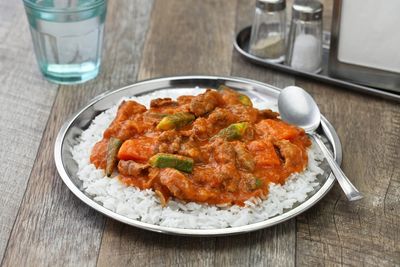
Mafé
Bone-in beef or lamb is browned, then simmered with onions, garlic, tomato and stock. Smooth peanut butter is whisked in halfway and the stew thickens to a velvety coating. Chunks of cassava, sweet potato and cabbage cook in the sauce towards the end. Serve over plain steamed white rice.
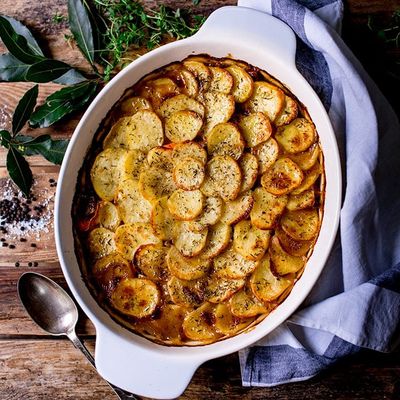
Lancashire Hotpot
The defining dish of the north-west of England, the one-pot supper invented to feed mill workers in the cotton towns of Lancashire from a single tough cut of lamb and a layer of potatoes. You layer lamb shoulder or middle-neck chunks with onions and stock in a deep dish, top with overlapping slices of waxy potatoes that protect the meat below while crisping golden above, and put the whole thing into a low oven for hours. Time and gentle heat do the rest: the lamb tenderises, the onions melt down into the gravy, the potato top crisps into a thatched roof of pale brown discs. Eaten with pickled red cabbage on the side, exactly as it would have been on a Pendle table a hundred years ago.